We provide daily dive trips and dive courses around Mabul, Sipadan and Semporna area.
Looking for tips and tricks about diving, marine life or what to do in Borneo? Follow us on our blog for weekly updates from the team!







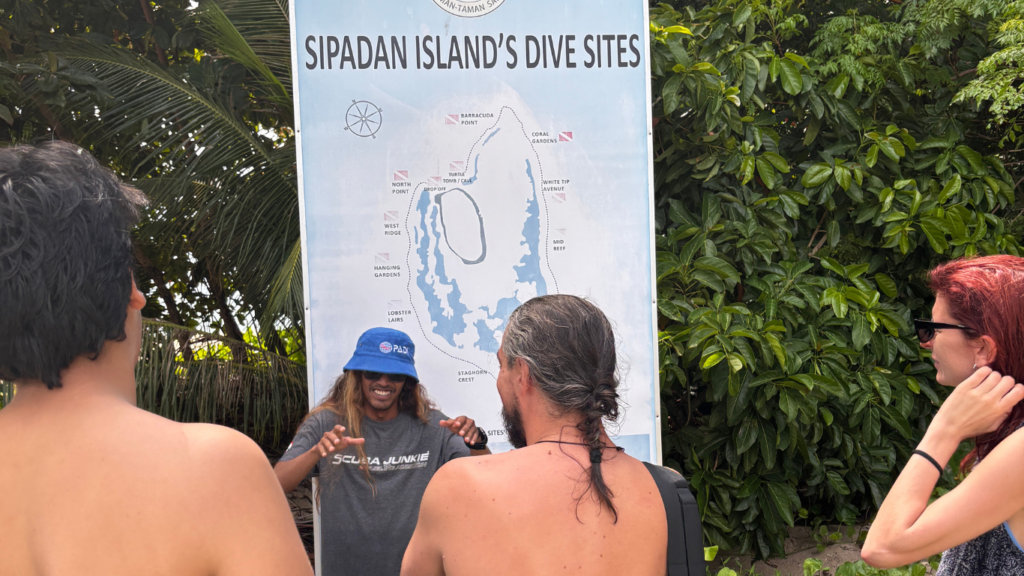
You’re on the boat, your gear is ready, and everyone is eager to jump in. It’s exciting, especially when you’re about to dive somewhere you’ve been dreaming about for months.
Then your guide stands up and starts the dive briefing.
For some divers, that’s the moment to pay attention. For others, it’s the perfect time to adjust a mask, chat with a buddy, or take one last look at the ocean.
We’ve all seen it.
But here’s the thing: the dive has already started.
Every experienced diver knows the saying, “Plan your dive. Dive your plan.“ That plan begins with the dive briefing. It’s the moment where everyone on the boat shares the same information, understands the same plan, and knows what to expect once they descend.
A good dive briefing isn’t there to delay the fun. It helps make sure the fun lasts for the entire dive.
One of the biggest misconceptions in diving is that if you’ve dived a site before, you already know it.
The truth is, no two dives are ever the same.
The current changes. Visibility changes. Marine life moves. Even the people you’re diving with make each dive different.
A dive briefing isn’t there because guides enjoy talking. Well… some of them probably do, but that’s not really the point.
The point is to make sure everyone enters the water with the same understanding of the dive ahead. The more you know before the dive, the more you can relax and enjoy it once you’re underwater.
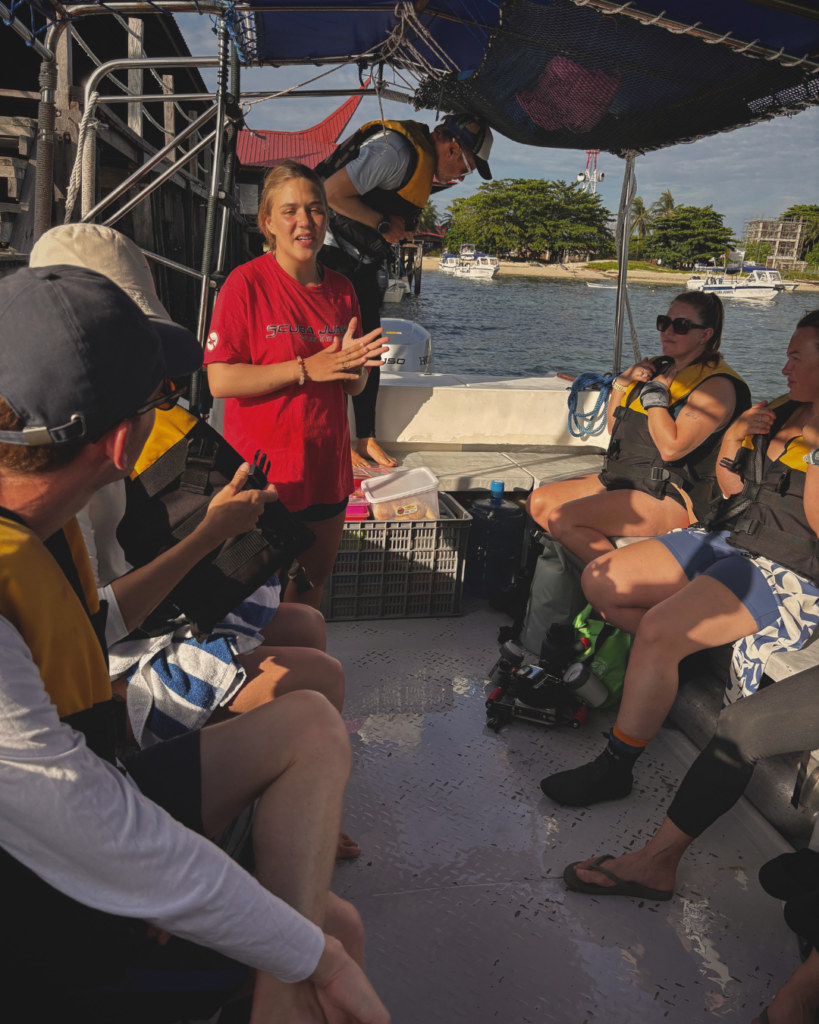
Every briefing should start by introducing the dive site.
Whether it’s your first visit or your fiftieth, knowing where you are helps put everything else into context. It also gives your guide the chance to explain what makes that particular site special and what you can expect to see.
This is where the guide paints a picture of the dive.
Will you be following a reef wall? Swimming over a sandy bottom? Drifting with the current? Is there a section of the reef where turtles usually rest or where schools of fish often gather?
The more you can visualise the dive before entering the water, the easier it is to relax once you’re underwater.
It sounds simple, but it’s important.
Who will be leading the group? Where should divers position themselves? Is there someone bringing up the rear?
Knowing who to follow avoids confusion once the dive begins.
Every dive site is different.
Some dives begin with a giant stride, others with a back roll or a shore entry. The exit can also vary depending on sea conditions or the boat you’re diving from.
Knowing exactly how you’ll enter and leave the water helps everyone feel more confident.
This is where the famous saying comes to life.
Your guide should explain the planned route, the maximum depth, the expected dive time, air management, and when the group will begin heading back or ascending for the safety stop.
When everyone understands the plan, the dive feels much more relaxed.
Nobody likes thinking about emergencies, but everyone feels better knowing there’s a plan.
A good dive briefing should explain what to do if you lose your buddy, run low on air, surface away from the group, or need assistance.
Most of the time, you’ll never need this information.
But if you do, you’ll be glad you listened.
Not every dive centre uses exactly the same signals.
Reviewing the standard signals, along with any local ones, helps make communication underwater clear and avoids unnecessary confusion.
Your guide should confirm buddy pairs before the dive and remind everyone to complete a proper buddy check.
A buddy check isn’t just a quick “Are you ready?”
It’s the moment where you and your buddy check each other’s equipment, making sure everything is working properly before entering the water.
Many small mistakes are caught during buddy checks, which is exactly why they remain such an important part of every dive.
One of the most enjoyable parts of any dive briefing is hearing about the marine life you might encounter.
Your guide may point out where turtles often rest, where reef sharks are commonly seen, or where tiny critters like nudibranchs can be found.
This is also the perfect opportunity to explain how to enjoy these encounters responsibly by maintaining good buoyancy, avoiding contact with the reef, and giving marine life the space it deserves.
After all, we’re visitors in their home.
Before anyone enters the water, your guide should always ask one simple question:
“Does anyone have any questions?”
Never be afraid to ask.
It doesn’t matter whether you’re on your tenth dive or your thousandth. If something isn’t clear, it’s always better to ask on the boat than wonder about it underwater.
Chances are, someone else was thinking exactly the same thing.
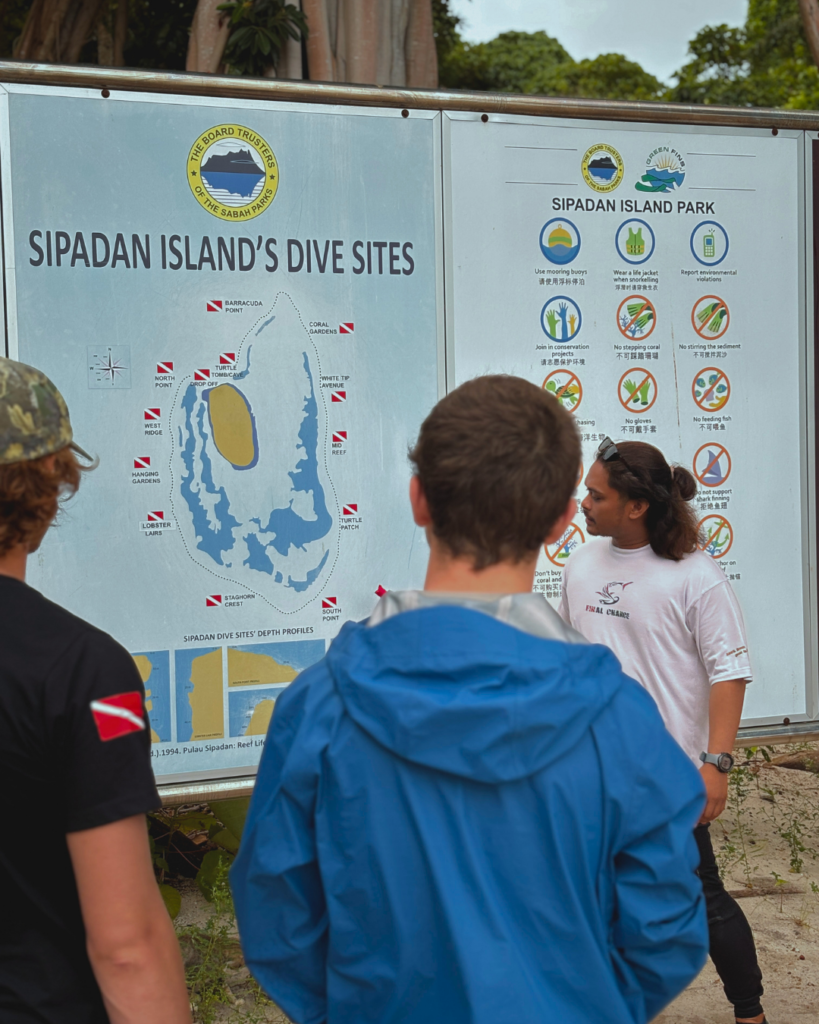
The best dive briefings don’t feel like someone reading from a checklist.
They feel like an invitation.
They build excitement. They help you imagine the dive before it even begins, and they make you feel confident about the plan.
When a guide explains where the current might take you, points out the cleaning station where sharks are sometimes seen, or shares a funny story from the previous day’s dive, they’re doing much more than passing on information.
They’re helping you connect with the dive before you even enter the water.
And that’s something you’ll remember long after you’ve climbed back onto the boat.
A dive briefing ensures everyone understands the dive plan, the conditions, and the safety procedures before entering the water.
Absolutely. Every dive is different, even at familiar dive sites.
Understanding the dive plan, emergency procedures, and feeling confident enough to ask questions.
A buddy check is when you and your buddy inspect each other’s equipment before the dive to catch any issues before entering the water.
Yes. PADI professionals are trained to provide comprehensive dive briefings before every dive.
Of course. In fact, your guide wants you to. A good question on the boat can prevent confusion underwater.
A dive briefing might only take a few minutes, but it sets the tone for the entire dive.
It’s where the plan comes together, where questions are answered, and where excitement meets preparation.
So next time your guide starts the briefing, give them your full attention. You might be surprised by how much more confident—and how much more enjoyable—your dive becomes.
After all, there’s a reason divers have been saying it for generations:
Plan your dive. Dive your plan.