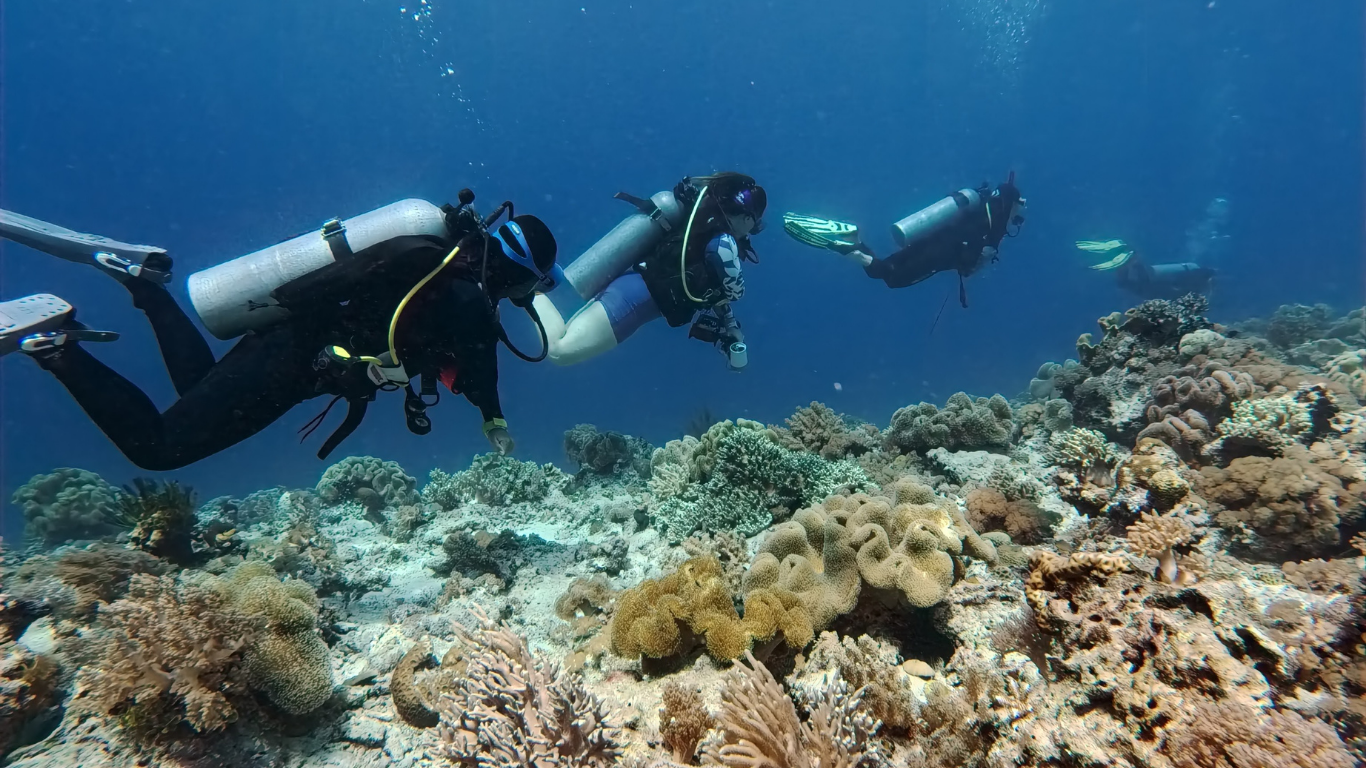
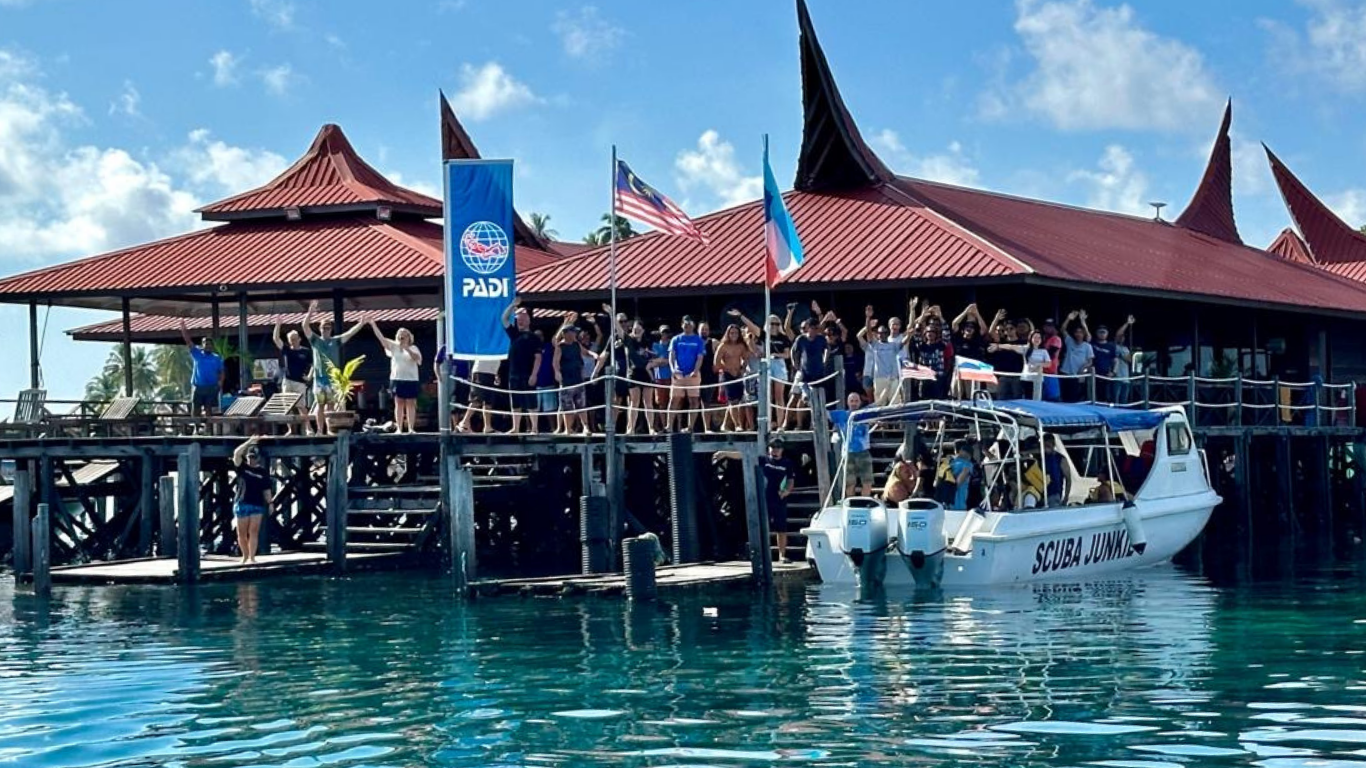
We provide daily dive trips and dive courses around Mabul, Sipadan and Semporna area.
Looking for tips and tricks about diving, marine life or what to do in Borneo? Follow us on our blog for weekly updates from the team!




Scuba diving air consumption is one of the most talked-about — and most misunderstood — topics in recreational diving.
New divers often worry about being the first low on air, while experienced divers sometimes treat low air consumption like a badge of honor. Somewhere along the way, breathing underwater stopped being a learning process and started feeling like a competition.
At Scuba Junkie Sipadan, we see this mindset daily — and it’s something worth changing.
Let’s clear something up.
Scuba Diving Air consumption is not a competition.
And it never should be.
Air consumption is one of the few numbers divers can easily see and compare. Depth, time, and remaining pressure are right there on the gauge — simple, measurable, and tempting to judge.
For new divers, this often turns into anxiety:
For more experienced divers, it can quietly become ego:
But here’s the truth: air consumption alone tells you very little about how good a diver actually is.
One of the biggest misconceptions in scuba diving is that good air consumption comes from “breathing better.” In reality, it’s the result of multiple factors working together, often developed over years.
Overweighted divers work harder to stay neutral. More effort = more breathing. Proper weighting takes time, adjustments, and honest feedback.
A diver swimming vertically creates drag and wastes energy. Efficient trim and buoyancy reduce effort — but they don’t happen overnight.
Different exposure suits, fins, tank sizes, and configurations all affect comfort and workload. New gear often means higher air consumption until the diver adapts.
Current, surge, cold water, low visibility, and task loading all increase breathing. Comparing air consumption from different dives — or different environments — is meaningless.
Stress, excitement, nerves, and even overthinking breathing will increase air usage. Calmness comes with familiarity and confidence, not pressure.
This one matters more than most people admit. A diver who dives every week will almost always breathe less than someone returning after months out of the water — regardless of certification level.
This is the part many people don’t talk about.
Even highly experienced divers:
That doesn’t make them worse divers.
It makes them human.
Good divers don’t aim to “always be perfect.”
They adapt, notice changes, and adjust safely.
Turning air consumption into a competition creates real problems:
Diving should be about situational awareness, buddy communication, and enjoyment — not proving who used the least gas.
Instead of asking:
Try:
Instead of comparing:
Good instructors and guides don’t show off their air consumption.
They use it as a teaching tool, not a flex.
If you’re new to diving and reading this, here’s what you need to hear:
You are learning a completely new way of moving, breathing, and existing in an environment humans were never built for.
Air consumption improves naturally with:
Anyone who tells you otherwise has forgotten what it felt like to be new.
The best diving cultures aren’t built on comparison.
They’re built on patience, humility, and shared curiosity.
So the next time someone surfaces with 100 bar — smile, don’t judge.
And the next time you surface with 50 — know that you’re exactly where you should be.
Because in diving, the goal isn’t to breathe less.
It’s to dive better, safer, and kinder — together.
Improving scuba diving air consumption comes naturally with comfort, experience, and time in the water — not comparison or pressure.