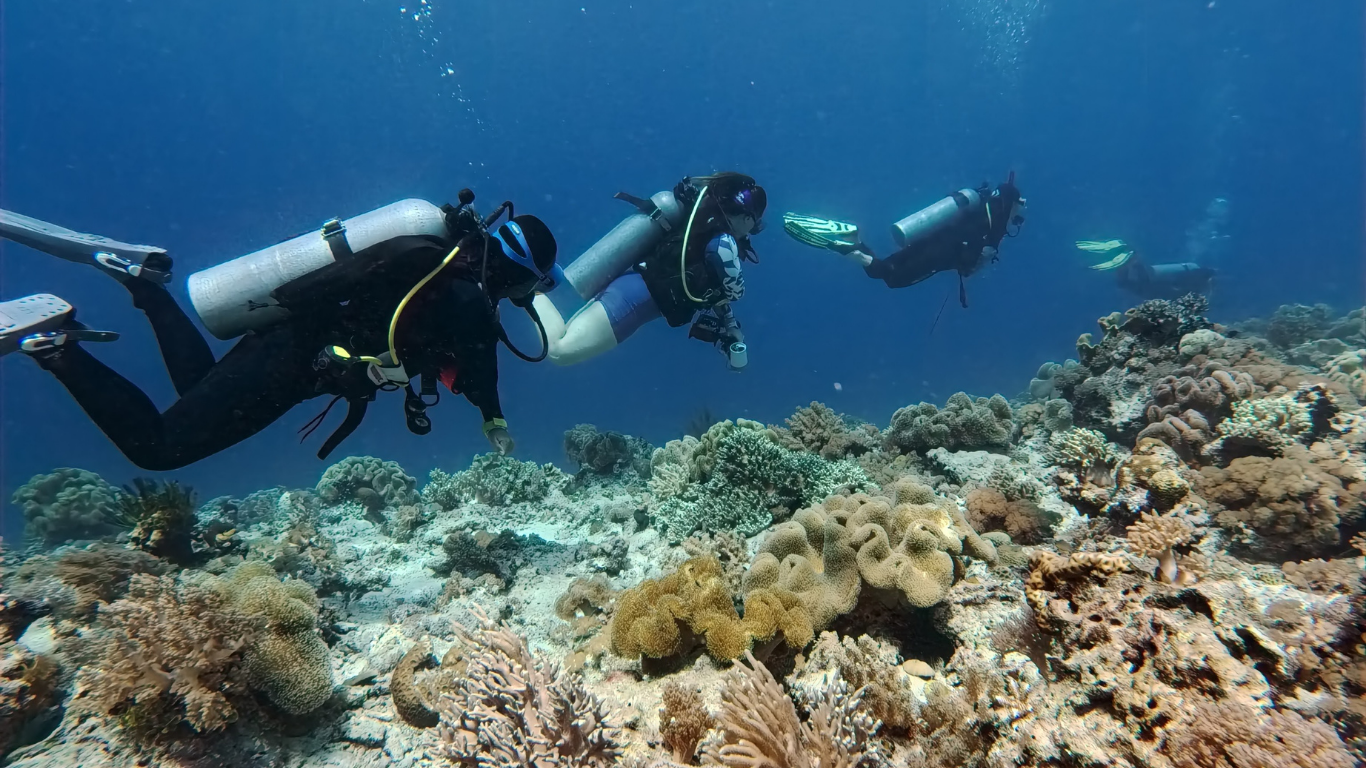
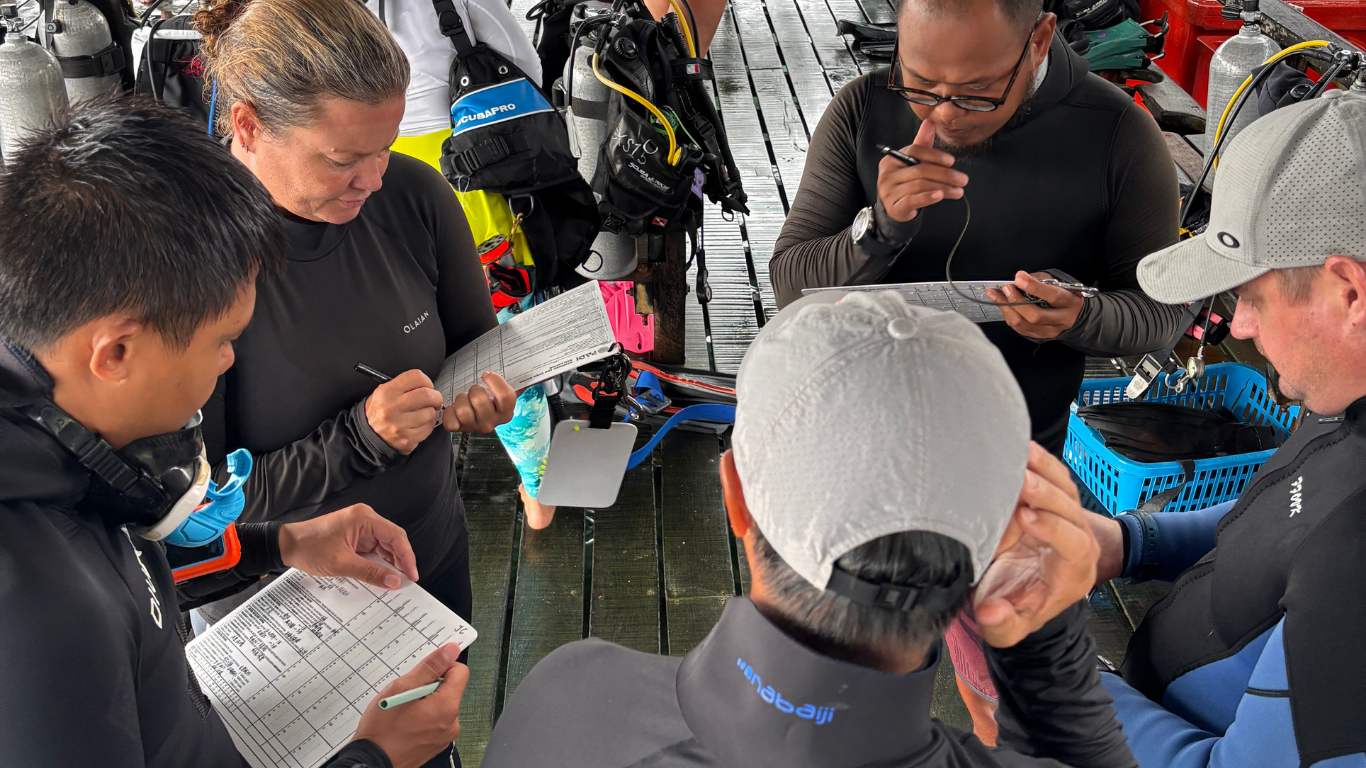
We provide daily dive trips and dive courses around Mabul, Sipadan and Semporna area.
Looking for tips and tricks about diving, marine life or what to do in Borneo? Follow us on our blog for weekly updates from the team!





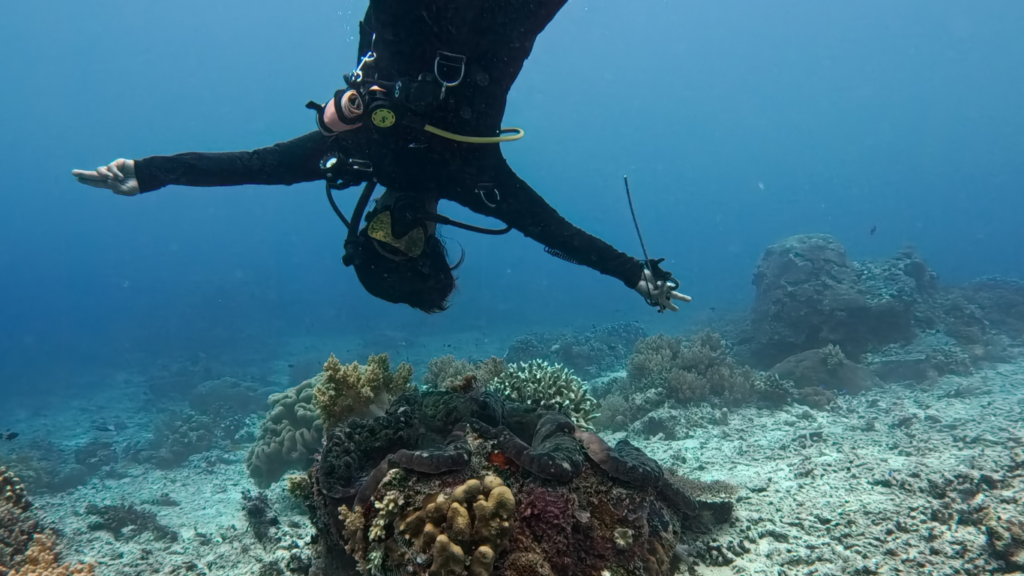
You’re at 35 metres. The visibility is great, you’re comfortable, and everything feels strangely… amazing.
Maybe too amazing.
Your buddy gives you a signal and, for some reason, it takes you a few seconds longer than usual to understand it. You check your pressure gauge, look away, and immediately forget what number you just saw. Or perhaps you feel incredibly confident, relaxed and convinced that everything is completely under control.
Welcome to one of the strangest effects of deep diving.
Gas narcosis explained simply is this: as we descend and breathe compressed gas at increasing pressure, certain gases can temporarily affect the way our brain works. Judgment, concentration, coordination and reaction time can all change, sometimes without the diver realizing it is happening.
Divers often call this being “narced.” You may also have heard names such as nitrogen narcosis, depth intoxication or rapture of the deep.
It can sound funny, and sometimes it certainly feels funny. But when your ability to make decisions underwater is affected, it deserves to be taken seriously.
Gas narcosis is a temporary, reversible change in brain function caused by breathing gases under increased pressure. For recreational divers breathing compressed air, nitrogen is the main gas associated with narcosis.
As you descend, the surrounding pressure increases. The partial pressure of the nitrogen you breathe increases with it, producing a greater narcotic effect on the central nervous system. Researchers still do not completely understand the exact mechanism, but the effect on cognition and behaviour is well established.
The deeper you go, the stronger the potential effect becomes.
Meaningful impairment can occur around 30 metres, although there is no magic depth at which every diver suddenly becomes narced. One person may notice obvious effects while another feels completely normal at the same depth. Even more importantly, the same diver can react differently from one dive to another.
That unpredictability is part of what makes narcosis interesting and potentially dangerous.
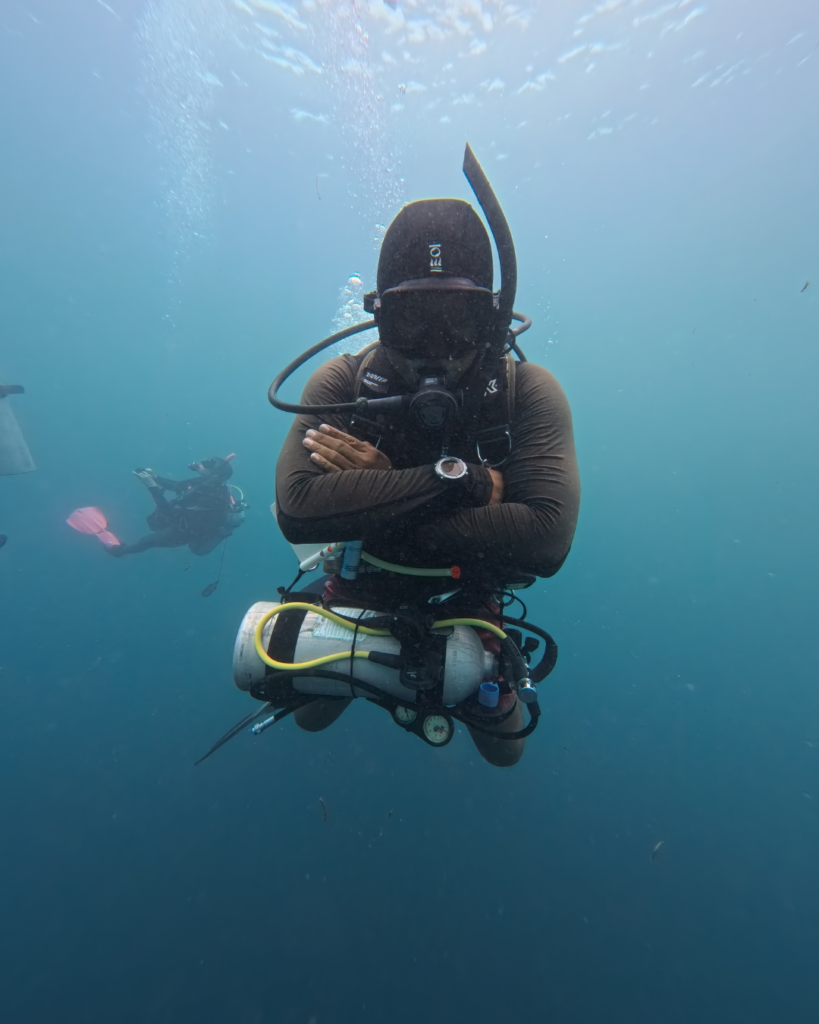
Air is roughly 78% nitrogen. At the surface, breathing it obviously does not make us narced.
Underwater, however, pressure changes everything.
At 10 metres, the surrounding absolute pressure is approximately twice what it is at the surface. At 20 metres it is approximately three times, at 30 metres four times, and at 40 metres five times.
As total pressure increases, so does the partial pressure of the nitrogen in the breathing gas. At sufficient pressure, inert gases can interfere with normal nervous-system function and produce an anaesthetic-like effect.
What does that mean in English?
Imagine having a couple of drinks at a party. You might feel relaxed and confident. You may think you’re being extremely funny. Your friends might have a slightly different opinion.
More importantly, you may not realize that your reactions and judgment have slowed.
Narcosis can be similar in one important respect: the person affected may not recognize how impaired they are.
This is why the old diving idea of comparing narcosis to having a martini for every additional 10 metres of depth is memorable, but shouldn’t be taken literally. Narcosis varies too much between people and between dives for that to be a reliable rule.
This is where things get interesting, because being narced does not feel the same for everyone.
One diver might experience euphoria and think the dive is absolutely fantastic. Another might become anxious or uncomfortable. Someone else might struggle with a simple task that would normally take seconds.
Common effects include reduced concentration, slower reasoning, impaired judgment, memory problems, overconfidence, euphoria, anxiety and reduced manual coordination.
Imagine your guide asks you to read your gauge and signal your remaining gas. Normally, this takes seconds. At depth, you look at the gauge. You know what it says. You know the signal.
But somehow connecting those two pieces of information suddenly requires much more concentration.
That is the real concern with narcosis. It does not need to make you completely confused to become relevant. A small reduction in judgment or reaction time can matter when you’re deep underwater.
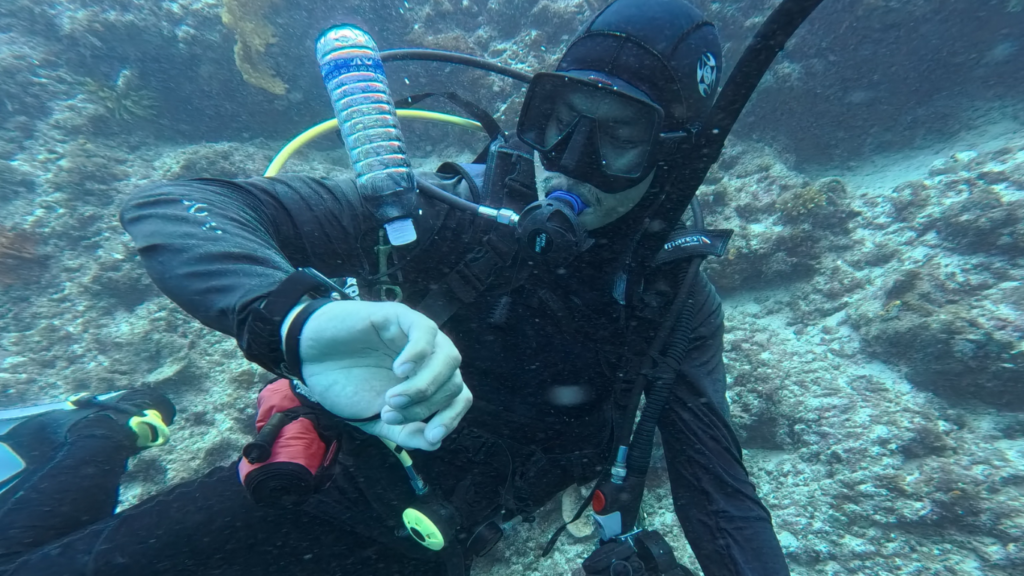
One of the biggest mistakes divers can make is thinking, “I’ve been to 35 metres before and I was fine, so narcosis doesn’t affect me.”
It does not work like that.
Susceptibility varies between divers and can even vary in the same diver from day to day. Fatigue, anxiety, alcohol, cold and increased carbon dioxide levels associated with exertion can worsen impairment.
Imagine doing the same deep dive twice. On the first dive you’re rested, relaxed and swimming gently in perfect conditions. On the second you’re tired, fighting current and breathing heavily.
The number on your depth gauge may be identical.
Your experience may not be.
This is another reason good deep-diving decisions should be based on how you feel today, not simply on what you have successfully done before.
Narcosis itself is generally reversible and does not usually cause direct injury. The danger comes from what you might do while your judgment is impaired.
A narced diver might forget to monitor gas, descend deeper without noticing, respond poorly to a problem, become separated from a buddy, make an inappropriate ascent or struggle with a task that would normally be easy.
This is why “I actually enjoy being narced” is not quite the flex it might sound like.
Feeling euphoric is one possible effect. Overconfidence is another.
And underwater, those two can be a dangerous combination.
The solution to gas narcosis is surprisingly simple: reduce the depth.
As you ascend to a shallower depth, the partial pressure of the narcotic gas decreases and symptoms normally improve rapidly.
This is why recognizing narcosis in yourself and your buddy matters. If something suddenly feels wrong at depth, if a simple task becomes strangely difficult, or if your buddy starts behaving unusually, depth should be part of what you consider.
You do not prove anything by staying deep and trying to “fight” narcosis.
A controlled ascent to a shallower depth is the appropriate response. If symptoms do not resolve normally after becoming shallower, the dive should be ended and the situation treated seriously, because other diving-related conditions can produce neurological symptoms.
You cannot train yourself to become immune to pressure, but you can reduce your exposure and make better decisions around it.
The simplest tool is depth. Shallower depth means lower partial pressure and therefore less narcotic effect. Being rested, avoiding alcohol before diving, staying warm, managing anxiety and avoiding unnecessary exertion also remove factors associated with greater impairment.
Training matters too, but perhaps not for the reason people think.
Deep-diving training does not magically stop you from getting narced. It teaches you to plan deep dives properly, recognize changes in yourself and others, manage gas and depth, and respond appropriately when something does not feel right.
Experience can make you more familiar with the environment. It does not make the laws of physics disappear.
This distinction is important.
Gas narcosis happens at depth because of the increased partial pressure of narcotic gases. Symptoms generally improve quickly when the diver ascends to a shallower depth.
Decompression sickness is different. It involves inert gas coming out of solution and forming problematic bubbles in the body during or after pressure reduction. Symptoms can occur after ascent and require medical assessment and potentially hyperbaric treatment.
In simple terms, narcosis is about what increased gas pressure is doing to your brain while you are deep. Decompression sickness is about what can happen as dissolved inert gas leaves your tissues during and after ascent.
They both involve diving and inert gases, but they are not the same problem.

Deep diving can be incredible. Walls disappear beneath you, certain wrecks become accessible, and the experience itself can challenge you to become a more thoughtful diver.
But deeper does not automatically mean better.
Understanding gas narcosis explained through both the science and the real-life experience helps us understand why deep diving requires additional awareness. Narcosis can be funny in a meme. Underwater, impaired judgment deserves respect.
Know your limits, pay attention to your buddy, stay aware of how you feel, and remember that becoming shallower is always an option.
And now we want to hear from you.
Have you ever been narced? What did it feel like, and when did you realize it was happening?
There is no exact depth that affects every diver equally. Cognitive impairment can become noticeable around 30 metres, but individual responses vary significantly and effects generally become stronger as depth increases.
The terms are often used interchangeably in recreational diving because nitrogen is the main narcotic gas in compressed air. Gas narcosis is the broader and more accurate term because other gases can also have narcotic properties.
No. Experience may help a diver recognize and manage the effects, but it does not make someone immune. A diver’s response can also vary between dives.
The primary response is to ascend in a controlled manner to a shallower depth. The symptoms usually improve rapidly as ambient pressure and the partial pressure of the narcotic gas decrease.
Yes. Euphoria and overconfidence are possible effects, but narcosis can also cause anxiety, impaired concentration, poor judgment and slower reactions. Not everyone experiences it in the same way.
No. Gas narcosis occurs at depth because of increased gas partial pressures and normally improves after ascending shallower. Decompression sickness has a different mechanism involving inert gas coming out of solution during or after pressure reduction and requires appropriate medical assessment.