We provide daily dive trips and dive courses around Mabul, Sipadan and Semporna area.
Looking for tips and tricks about diving, marine life or what to do in Borneo? Follow us on our blog for weekly updates from the team!






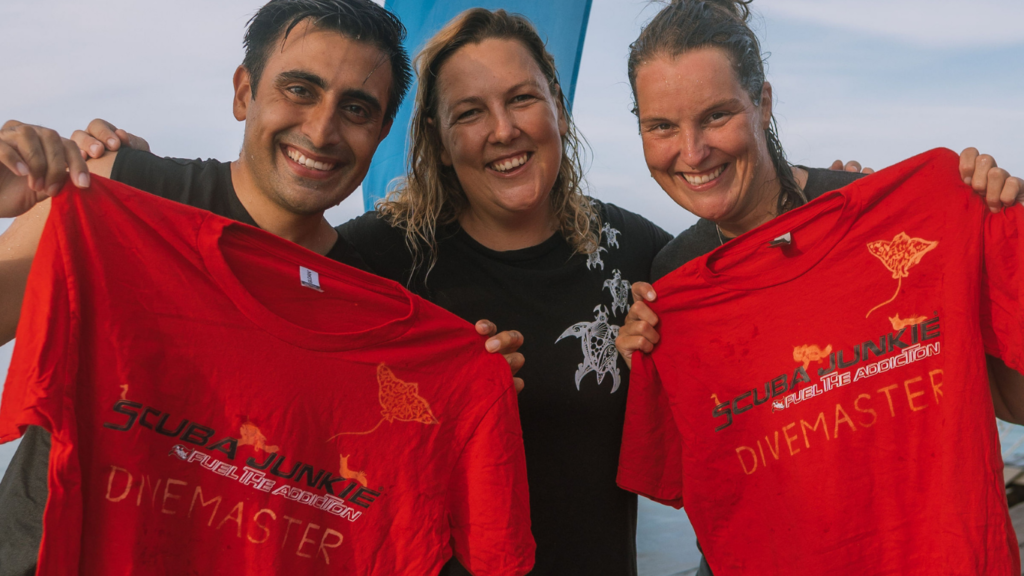
If you think Divemaster training course is just about diving perfectly, looking cool underwater, and logging dives… well let’s just say that’s only a tiny part of the story.
The Divemaster course is where diving stops being just fun and starts becoming responsibility-with-fins. It’s the first step into the professional diving world, and it comes with laughs, stress, teamwork, fun, problem-solving, and moments where you think:
“Can this actually happen in real life??”
Welcome to Divemaster training.
One of the biggest surprises for many trainees is this:
Divemaster training is not about you anymore.
You’re trained to watch others, anticipate issues, and solve problems before they become real emergencies. And the best way to learn that?
By being surrounded by people who intentionally make your life difficult.
During training dives, Divemaster candidates often guide already-certified divers or instructors who pretend to be “customers.” These “customers” may:
These dives are lovingly known as “hell dives.”
No real danger, lots of learning, and plenty of laughter afterward.
Ah yes… the famous “stress test.”
If you’ve spent more than five minutes researching Divemaster training online, you’ve probably heard people talking about it.
Candidates talk about it.
Instructors joke about it.
And future Divemasters usually worry about it far more than they need to.
Here’s the thing though: what most people call the “stress test” is actually the Equipment Exchange.
And despite its reputation, it’s not about seeing how much stress you can handle before your brain melts underwater.
It’s about planning, communication, and teamwork.
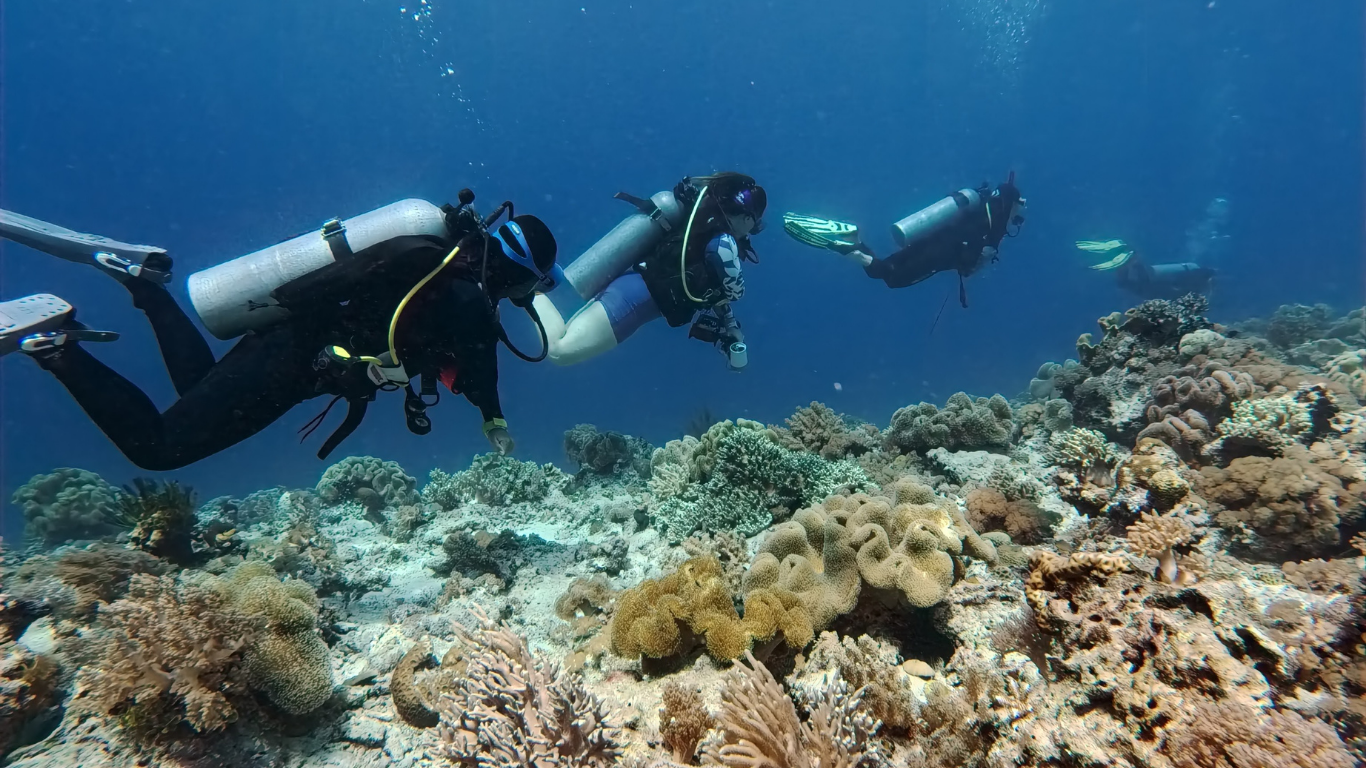
During the exercise, two candidates (or a candidate and an instructor if you’re the only trainee) exchange scuba equipment underwater while sharing a single regulator.
Sounds simple when written down.
It usually sounds a lot less simple during the briefing.
Before getting in the water, candidates have to work together and plan the exercise. They need to agree on the order of the equipment exchange, decide which signals they’ll use, and make sure everyone understands exactly what’s going to happen.
And honestly, that’s one of the biggest lessons.
As a Divemaster, planning matters.
A lot.
Whether you’re organising a dive, briefing divers, or helping manage a group, good preparation makes everything easier.
The Equipment Exchange is no different.
The candidates who rush usually struggle.
The candidates who communicate well usually don’t.
By the time the exercise starts, you’ve already practiced many of the skills needed to complete it. The challenge isn’t learning something completely new. It’s staying calm, trusting your training, and following the plan you created together.
And yes, most candidates still get nervous beforehand.
Mostly because they care.
But once it’s over, it usually joins the long list of Divemaster stories that start with:
“I thought it was going to be way worse than that…”
The real lesson isn’t passing the test.
It’s realizing you’re capable of handling more than you thought, calmly and with a clear head.
Following a guide is easy.
Being the guide? Different story.
During Divemaster training you’ll learn how to:
And yes — sometimes that means herding distracted divers like underwater cats
At some point during training, something clicks.
Suddenly, you notice:
This awareness doesn’t come from a book.
It comes from time in the water, repetition, and real scenarios.
By the end of the course, most trainees realize they don’t just dive better — they think differently underwater.
Let’s be honest — some days are tiring. Tanks to move, skills to repeat, feedback to absorb.
But then there are days where:
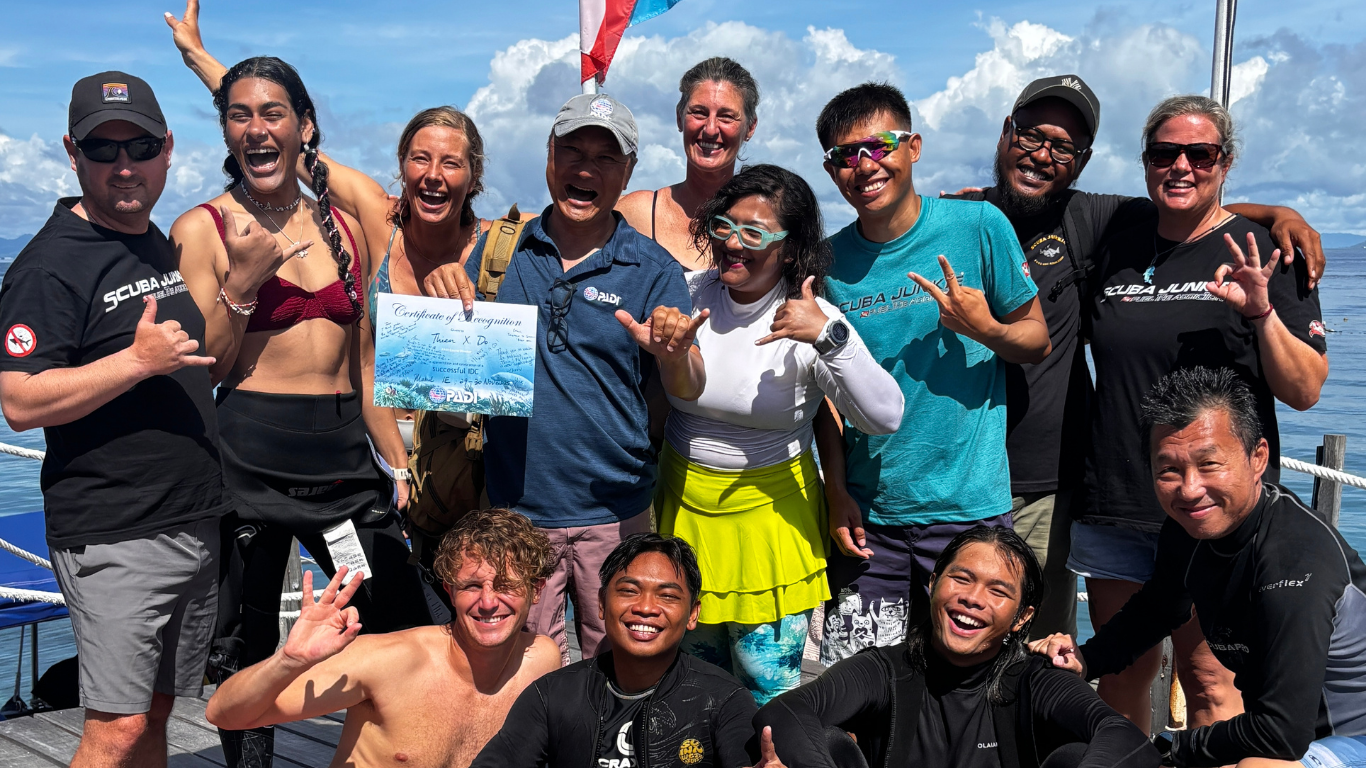
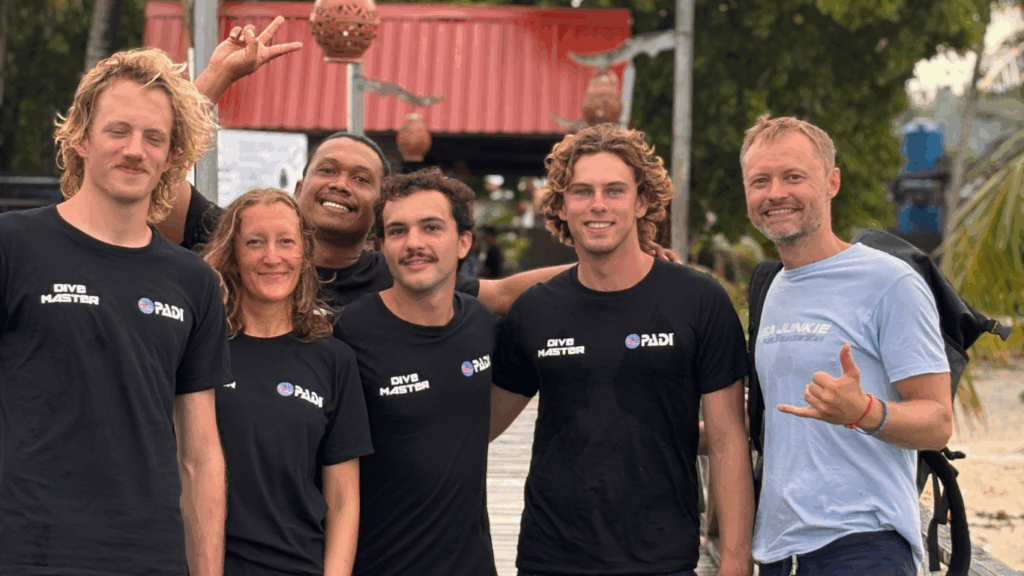
Divemaster training builds community. You struggle together, improve together, and celebrate small wins together.
That’s something you don’t always get in short recreational courses.
Here are a few honest details people don’t always talk about:
Not at all. Many people do it to become better, safer, more confident divers — even if they never work professionally.
Yes, but in a realistic way. You don’t need to be an athlete — you need endurance, comfort in the water, and a good mindset.
No. They are carefully controlled, supervised, and designed for learning.
No divers were harmed — only egos sometimes 😉
No. Confidence is one of the outcomes of the course, not a requirement.
At times, yes — but in a positive, growth-focused way. Stress is used as a tool to teach calm decision-making.
Learning how to stay calm, aware, and supportive — underwater and above water.
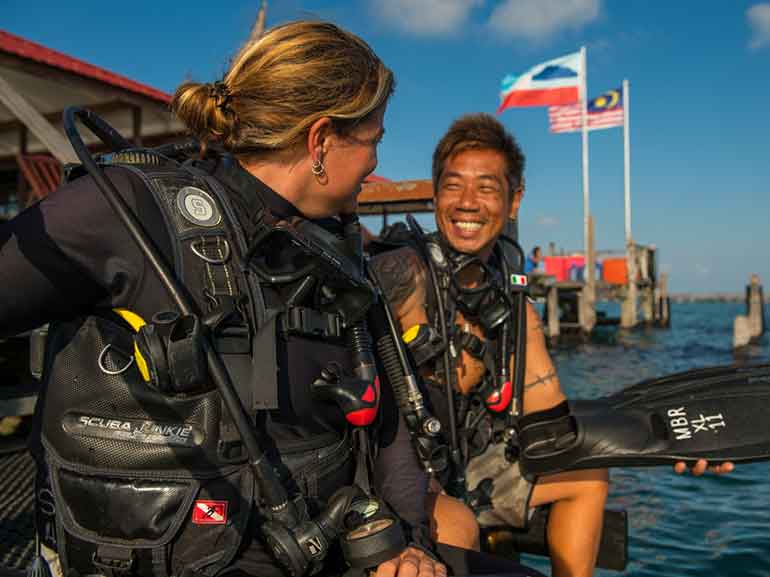
Divemaster training is where you stop being “just another diver” and start becoming someone others rely on.
It’s challenging.
It’s fun.
It’s sometimes chaotic.
And it’s incredibly rewarding.
Whether you continue on to instructor training or simply want to grow as a diver, the Divemaster course is a turning point — and one you’ll never forget 🌊🤿