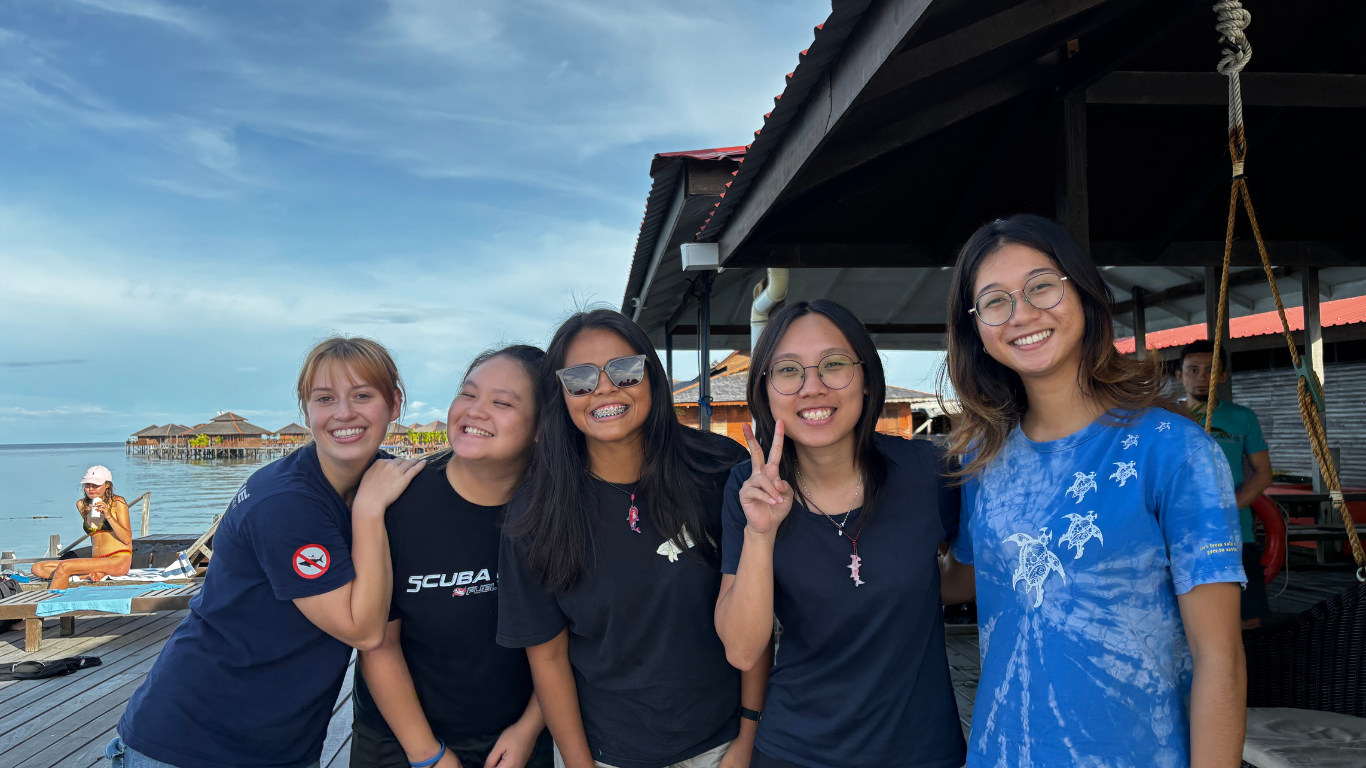
We provide daily dive trips and dive courses around Mabul, Sipadan and Semporna area.
Looking for tips and tricks about diving, marine life or what to do in Borneo? Follow us on our blog for weekly updates from the team!



For many divers, going pro does not start with a big decision.
It starts quietly.
You plan trips around diving.
You stay longer than expected.
You feel more comfortable on a dive boat than almost anywhere else.
And then, one day, a simple thought appears.
What if this was more than just a holiday thing?
What if I could keep doing what I love, learn more, and share it with others?
That is often how going pro as a scuba diver begins. Not as an escape, but as a natural extension of a lifestyle that already feels right.
Every professional diver has a different story.
Some people fall in love with diving immediately. They finish their Open Water course and know they want more. They continue straight through Advanced, Rescue, Divemaster, and eventually Instructor, because each step feels exciting and rewarding.
Others take more time. They dive, travel, return to everyday routines, and slowly realise that what they miss most is being underwater. The ocean keeps calling them back, until one day they decide to listen.
Both journeys are common. Both are valid.
What matters is not how fast you move, but that diving continues to play a central role in how you live and travel.
Going pro does not mean diving all day like you are on vacation forever.
But it also does not mean the fun disappears.
As a PADI professional, your focus shifts. You start paying attention to people, not just dive profiles. You notice who feels nervous, who needs support, and who is about to have one of the best days of their life underwater.
Responsibility grows, but so does satisfaction.
Helping someone relax, learn, and enjoy diving often becomes just as rewarding as your own best dive. The scuba diving world is built on this exchange of knowledge, passion, and shared stories, both underwater and back on the boat.
Divemaster is the first professional level in the PADI system.
This is where you move from being a recreational diver to becoming part of the dive operation.
During Divemaster training, you learn:
It is hands-on, social, and immersive. You are no longer just diving for yourself. You are learning how to take care of others underwater.
At Scuba Junkie Mabul, Divemaster training means working with multiple PADI instructors, not just one.
Each instructor has a different teaching style, way of briefing, and approach to problem-solving. Observing these differences allows you to learn broadly, reflect, and eventually develop your own style as a professional.
This variety is essential. It prepares you for real-world diving, where flexibility and adaptability matter more than memorising one way of doing things.
Divemaster courses start at the beginning of every month, but the learning continues every day through real experience.
It is important to clarify that professional training dives are not conducted at Sipadan.
All Divemaster and Instructor training dives take place around Mabul Island and Kapalai. These locations provide ideal conditions for skill development, teaching practice, and controlled progression.
Sipadan Island is reserved exclusively for certified divers. Training focuses on building strong foundations before divers progress to more demanding dive environments.
Once you go pro, travel slows down again.
You stop moving quickly from place to place. You stay longer, learn the reefs properly, and understand how conditions and marine life change over time.
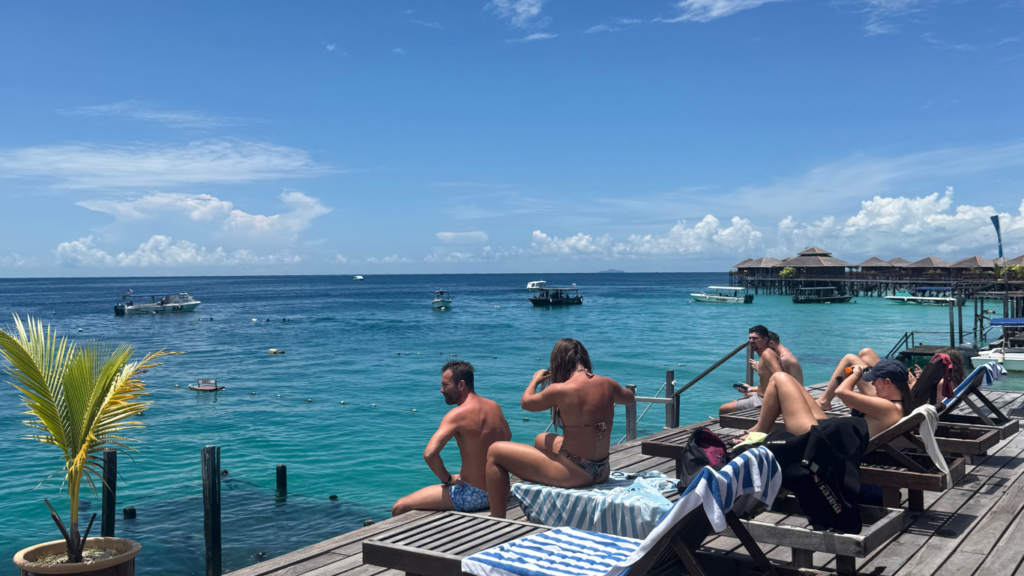
Living and training in places like Mabul means your daily routine looks like someone else’s dream holiday. You are no longer visiting dive destinations. You are living in them.
This shift is one of the biggest changes professional diving brings.
For many professionals, the next step after Divemaster is becoming a PADI Open Water Scuba Instructor.
This is where guiding turns into teaching.
Instructor training focuses on:
Teaching new divers, especially during their first experiences underwater, is challenging, rewarding, and often a lot of fun. Watching someone grow over a few days of training never really gets old.
After becoming an instructor, some professionals choose to continue their development through the Staff Instructor course.
This level focuses on leadership and mentorship rather than entry-level teaching. Staff Instructors assist with Instructor Development Courses, support instructor candidates, and help evaluate teaching presentations and skills.
It is an ideal step for those who enjoy coaching, sharing experience, and playing a deeper role in professional-level training.
After completing Divemaster training or the Instructor course, we offer internships for newly certified PADI professionals.
These internships are designed to help graduates gain confidence and real-world experience by:
It is a supportive transition from training to working as a dive professional.
Becoming a PADI professional does not always feel natural at first.
Confidence builds with practice. Teaching improves with repetition. Decision-making becomes clearer over time. This learning curve is normal and expected.
Professional diving is a skill set you develop, not something you need to master on day one.
No. You need solid fundamentals and commitment. Experience builds quickly during training.
Yes. Most professionals live and work in destinations others only visit on holiday.
No. It is social, active, and deeply rewarding.
Yes. It is the first professional level in the PADI system.
Yes. PADI certifications are globally recognised.
For many divers, yes, especially if you enjoy teaching and sharing knowledge.
Going pro as a scuba diver is rarely about escaping life.
It is about leaning into something that already shapes how you travel, where you feel at home, and what excites you. Staying longer. Learning more. Sharing experiences. Living closer to the ocean.
You do not need all the answers right away.
Sometimes, staying curious is enough to change everything.