

Sipadan diving may be the reason you first look towards this corner of Sabah. The sharks, turtles, schooling fish and dramatic walls have made the island famous around the world. But staying on Mabul reveals something many divers do not expect: Sipadan is only one part of a much bigger underwater story.
From one island base, a trip can move between four very different kinds of diving. Sipadan brings the scale and pelagic energy. Mabul rewards patient searching and a love of strange small creatures. Kapalai combines macro life with reefs and artificial structures full of activity. Si Amil brings a wilder mixture of rare critters, coral scenery and possible encounters with rays in the blue.
This variety is what makes a Sipadan diving trip feel complete. You do not need to choose between big encounters and tiny discoveries. You can experience both, often on consecutive days.
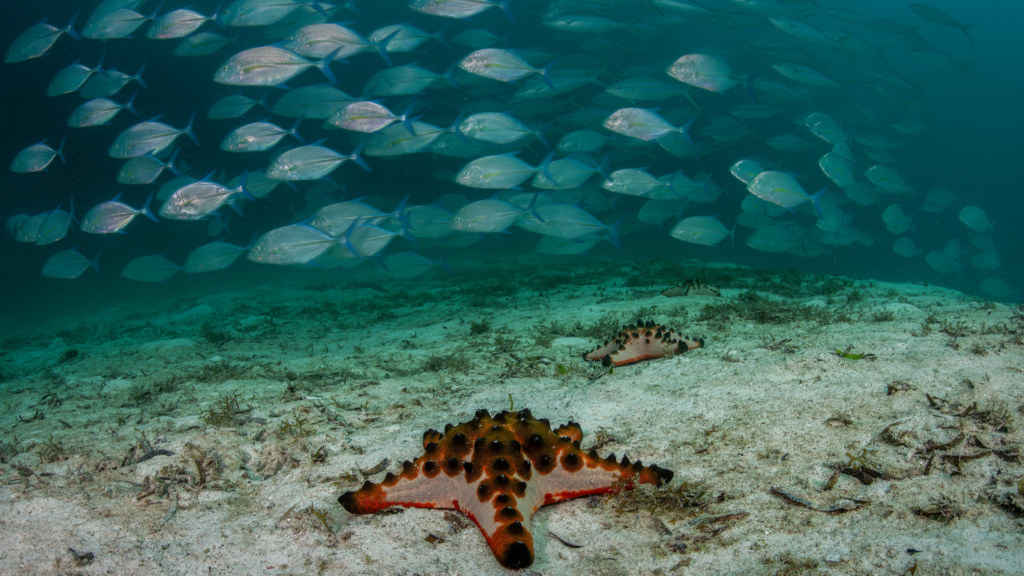
Sipadan rises from deep water, and that geography shapes the experience from the moment you descend. Coral walls drop hundreds of metres, turtles move along the reef and sharks cruise through the blue. Schools of barracuda and jackfish can turn an ordinary-looking patch of water into one of the most memorable scenes of a diver’s life.
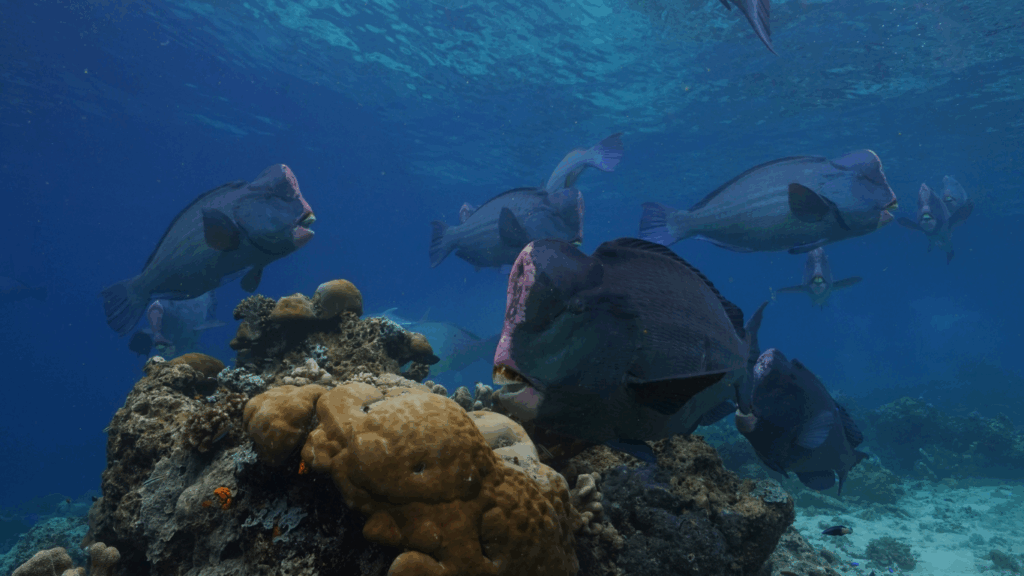
The island deserves its reputation, but good Sipadan diving is not about racing from one famous animal to the next. The scale of the reef, the density of life and the feeling of being beside an oceanic island are just as important as any individual sighting.
Because Sipadan is protected, access is managed through a permit system. Divers staying with Scuba Junkie travel from Mabul by boat, register on arrival and complete their planned dives under the guidance of the dive team. The exact sites and conditions change, which means no two days feel identical.
Sipadan is extraordinary. It is also only one of the underwater environments within reach of Mabul.
After a day of looking into the blue, Mabul changes the pace completely.
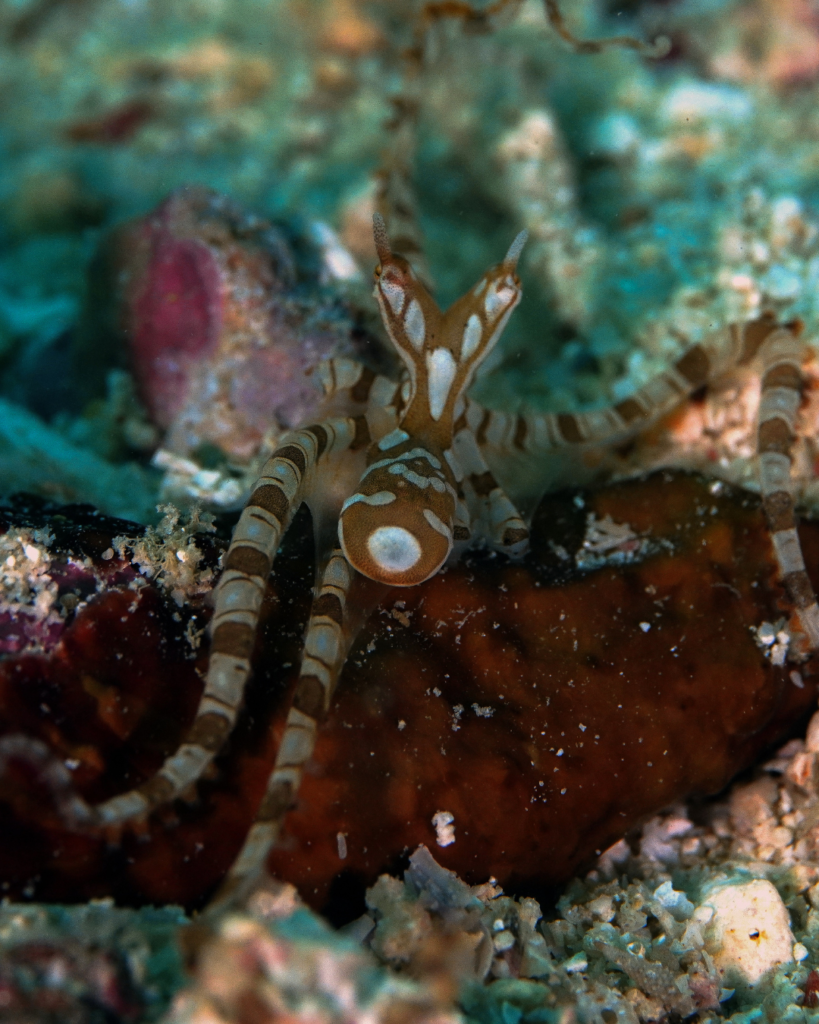
The island has walls, coral slopes, artificial reefs, sandy areas and muck-diving sites, many only a few minutes from Mabul Beach Resort. Turtles and schooling fish are common, but Mabul is especially famous for its macro life.
This is where a dive can become a treasure hunt. Frogfish disappear against sponges. Ghost pipefish hide among crinoids. Nudibranchs bring impossible colours to small pieces of reef, while octopus, bobtail squid and flamboyant cuttlefish reward divers who are willing to slow down.
At first, new macro divers often swim past everything. Then a guide points out one perfectly camouflaged animal and the reef begins to look different. A patch of sand is no longer empty. A piece of algae may move. A sponge may have eyes.
Mabul adds something important to a Sipadan diving holiday: contrast. The sense of wonder does not depend on the size of the animal. Sometimes the most discussed sighting at dinner is a creature that could sit comfortably on a fingernail.
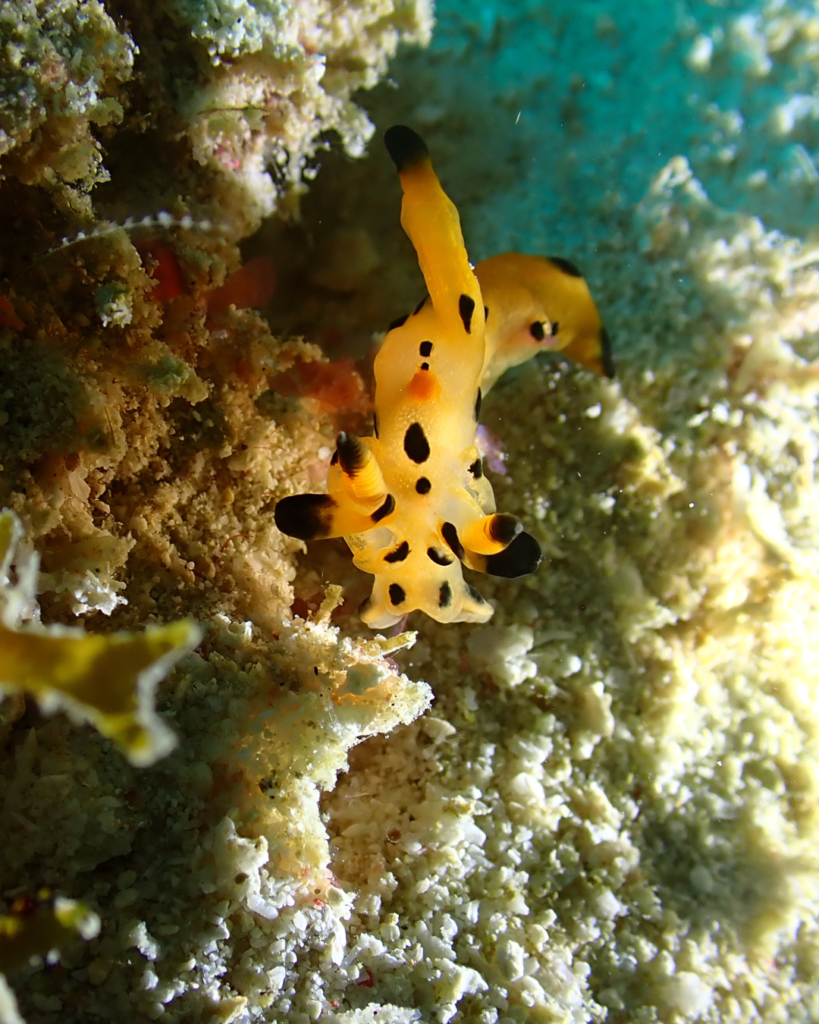
Kapalai is often called an island, but it is actually a sandbar with a resort built above the water. Beneath it, natural reef and artificial structures have created habitat for a remarkable range of marine life.
Blue-ringed octopus, mimic octopus, ghost pipefish, frogfish, flamboyant cuttlefish, pygmy seahorses and colourful nudibranchs are among the animals divers hope to find. Larger groupers, stingrays, schooling jackfish and barracuda can also appear around the structures and reef.
The topography makes the diving varied. Some sites move between sloping reef, sand and artificial structures. Others bring coral gardens, channels or deeper drop-offs into the plan. Even while searching for macro life, it is worth looking up occasionally. Eagle rays and other unexpected visitors do not always wait for the photographer to change lenses.
Kapalai complements Mabul without simply repeating it. Both are known for small creatures, but the setting, structures and dive-site character give each area its own personality.
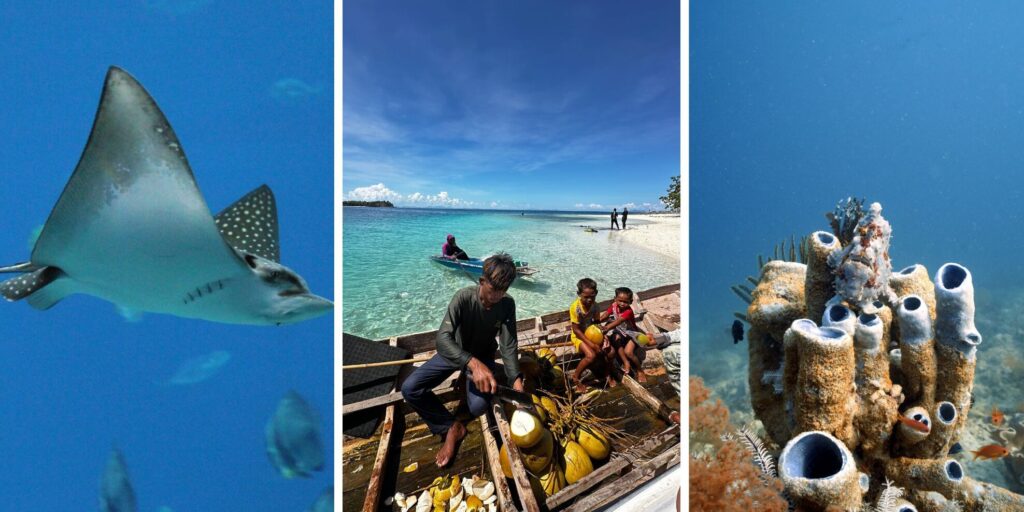
Around 45 minutes from Mabul, Si Amil refuses to fit neatly into a single category.
Its dive sites include coral slopes, walls, sandy areas and muck-diving terrain. Rare macro encounters can include Rhinopias, Ambon scorpionfish, blue-ringed octopus, seamoths, ghost pipefish and unusual frogfish. On a different part of the same day, divers may look into the blue for eagle rays or schooling devil rays visiting cleaning areas.
Nothing underwater is guaranteed, and Si Amil keeps that sense of possibility very alive. One dive may be spent inspecting rubble for a wonderfully strange critter. The next may involve leaving the reef for a moment to see what is moving offshore.
That combination makes Si Amil especially valuable in November, when Sipadan National Park closes for its annual month without recreational visitors. Scuba Junkie continues to offer diving around Si Amil, Mabul, Kapalai and the Sipadan Barrier Reef during the closure.
November does not become a month without diving. It becomes a chance to give another part of the region the attention it deserves.
A destination can be spectacular and still feel repetitive if every dive asks you to do the same thing. This region avoids that problem.
Sipadan diving encourages awareness of the blue, the group and the larger movement of marine life. Mabul and Kapalai invite slower observation and precise buoyancy around delicate habitat. Si Amil may ask for both approaches in one day.
That range is good for photographers, who can move between wide-angle and macro subjects. It is also good for divers who are still discovering what they enjoy most. Someone may arrive convinced they only care about sharks and leave obsessed with frogfish. Another diver may spend several days photographing tiny creatures, then look up to find an eagle ray passing overhead.
The different environments also make longer stays more rewarding. Conditions change, animals move and the dive team can choose from many sites rather than repeating one fixed route.
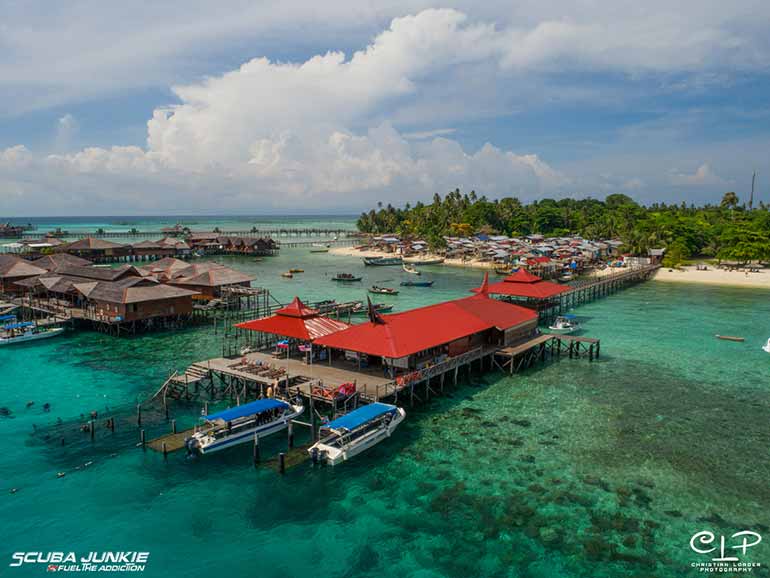
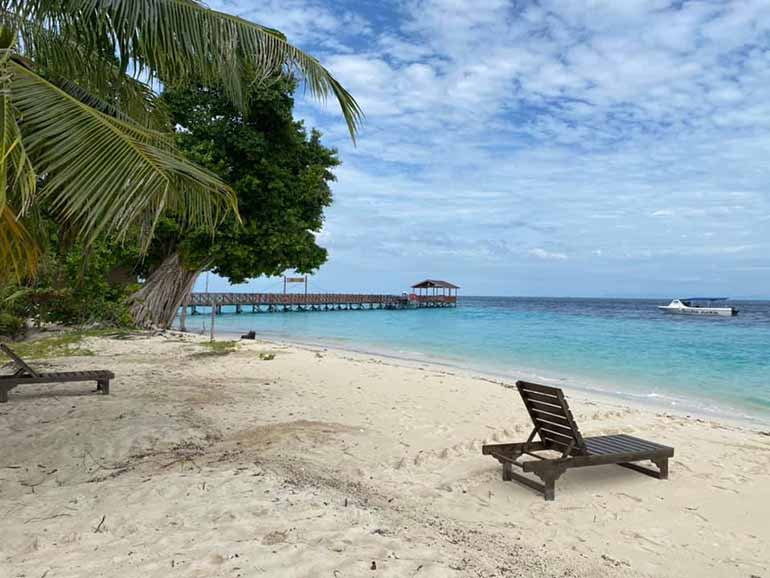
Staying on Mabul keeps the experience connected. The resort, restaurant, dive centre, jetty and house reef sit together beside the water. Many local dive sites are only minutes away, which leaves more time for diving and less time commuting.
Between dive days, guests begin to recognise the rhythm of the island. Breakfast leads to the jetty. Surface intervals become time for comparing sightings. Equipment dries while the sun goes down, and dinner conversations return to the creature nobody could identify underwater.
This matters because a strong dive holiday is not only a list of sites. It is also the feeling of settling into a place, getting to know the team and sharing the experience with people who become familiar after a few days.
Sipadan may be the headline. Mabul is where the full trip finds its home.
The best package depends on your travel dates, certification, experience and what you most want from the trip.
If Sipadan diving is your priority, ask how the permit system and package inclusions work for your chosen dates. If you love macro photography, allow enough days for Mabul and Kapalai rather than treating them as a quick extra. If you are visiting in November, look at the Si Amil and non-Sipadan packages designed specifically for the annual closure period.
It is also worth telling the booking team what makes you happiest underwater. “I want sharks” is useful. So is “I could spend an hour photographing one nudibranch.” A little information helps the team recommend a trip that matches you instead of a generic idea of what every diver should want.
No. Depending on the package and operational plan, guests may dive around Sipadan, Mabul, Kapalai, Si Amil and other nearby areas. The variety is an important part of the destination.
Scuba Junkie guests stay at Mabul Beach Resort. Visitors do not stay overnight on Sipadan. Mabul acts as the resort base for the diving programme.
Mabul is widely known for macro diving and unusual small marine life, including frogfish, ghost pipefish, nudibranchs, octopus and cuttlefish. It also has turtles, schooling fish, walls, artificial reefs and a house reef.
Yes. Kapalai is known for macro subjects such as frogfish, octopus, ghost pipefish, pygmy seahorses and nudibranchs. Its reefs and artificial structures also attract larger animals and schooling fish.
Yes. During the November closure, Scuba Junkie offers packages with diving around Si Amil, Mabul, Kapalai and the Sipadan Barrier Reef. Sipadan Barrier Reef is not the same as Sipadan National Park.
Si Amil combines coral reefs, walls and macro sites. Possible sightings include frogfish, ghost pipefish, unusual scorpionfish, octopus, turtles, eagle rays and schooling devil rays. Wildlife encounters are never guaranteed.
Sipadan deserves a place on the dream list. But the most rewarding version of the trip leaves room for the places around it too.
Come for the walls, sharks and schooling fish. Stay curious for the frogfish, octopus, coral gardens, rays and island rhythm you did not know would become part of the story.
To plan your Sipadan diving trip, contact sipadan@scubajunkie.com or WhatsApp +60 19-640 0116.
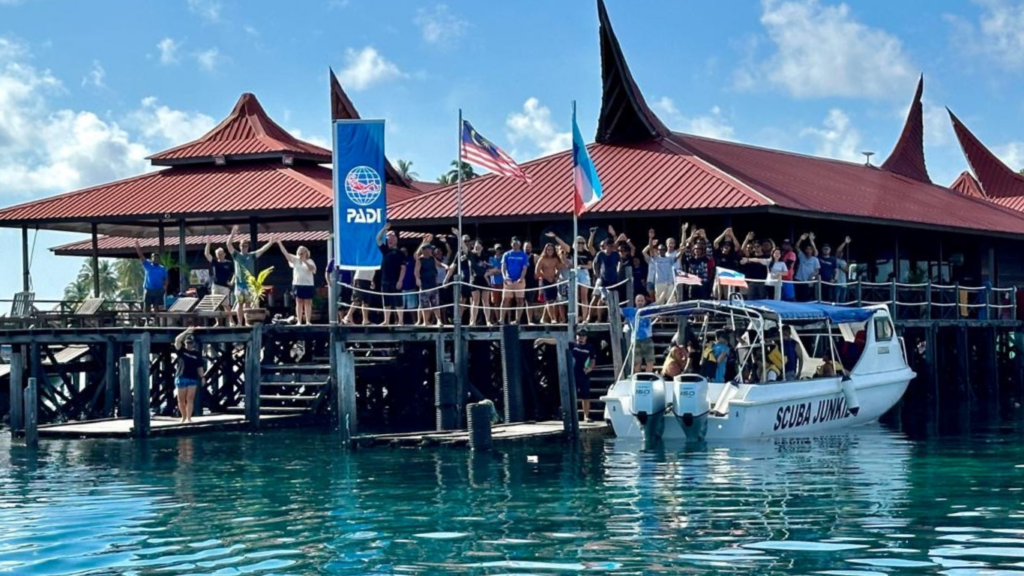
Every dive company has a beginning. Ours started in Semporna in 2004 with one small dive centre, a love for the ocean and a simple idea: great diving should feel welcoming.
There were no multiple locations or beachfront resort at the beginning. There was a team that wanted to share the underwater world of Sabah without losing the relaxed, personal atmosphere that brings divers together. People arrived as guests, spent their days diving, and often left feeling like part of something larger.
More than two decades later, a great deal has changed. Scuba Junkie has grown across Borneo and Indonesia, thousands of divers have joined us underwater, and conservation has become part of daily life at our locations. Yet the feeling behind the company remains remarkably familiar.
This is the story of how a small dive centre in Semporna found a home on Mabul and grew into the Scuba Junkie family we know today.
Semporna has long been the gateway to some of Sabah’s most extraordinary diving. From here, boats travel towards islands and reefs that divers dream about long before they finally see them for themselves.
Scuba Junkie began here in 2004. In those early days, the focus was straightforward: provide safe, high-quality diving with experienced people who genuinely enjoyed sharing it.
That combination mattered. Dive travel can be intimidating, especially when someone is visiting a new country, joining a boat alone or taking their first course. The team wanted the experience to feel organised without becoming impersonal. Serious attention could be given to safety and training while the atmosphere remained friendly, relaxed and fun.
That balance became part of Scuba Junkie’s identity. The diving was the reason people came, but the people were often the reason they returned.
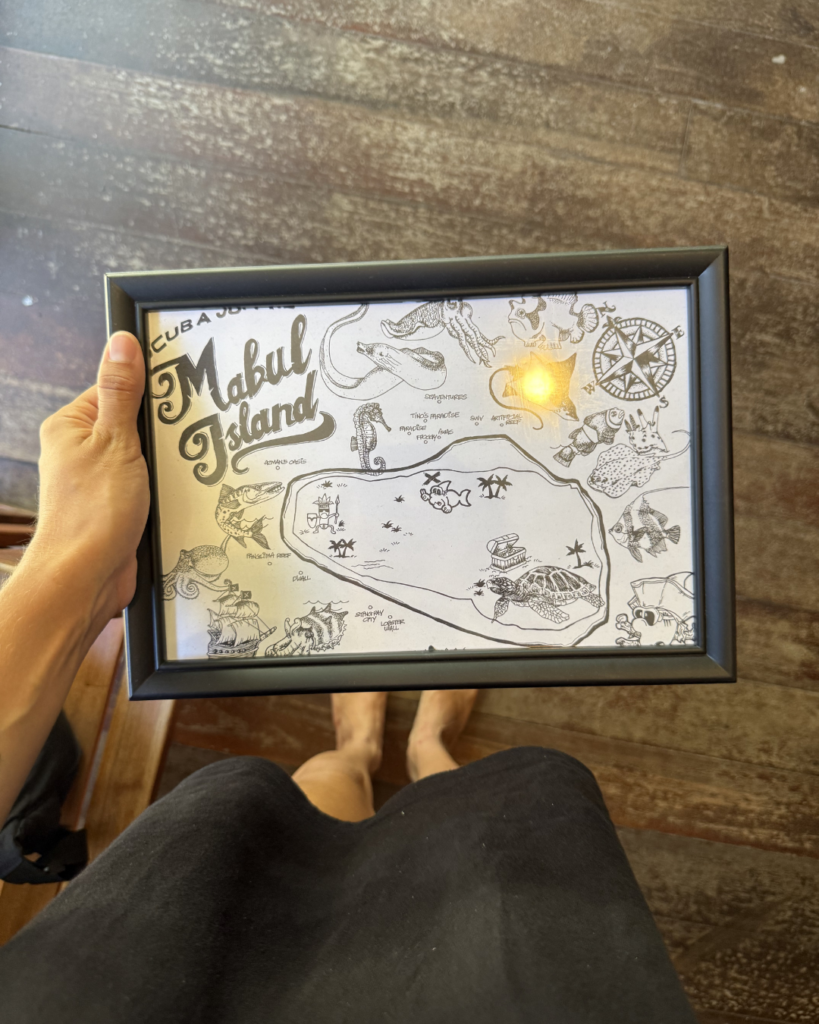
As Scuba Junkie grew, Mabul became the natural next chapter.
The island sits close to Sipadan, but it is far more than a convenient base for reaching a famous dive destination. Mabul has its own rhythm, community and underwater character. Turtles move across the reefs, schooling fish gather around artificial structures, and some of the ocean’s strangest small creatures hide across sandy slopes and coral gardens.
Building a home here allowed the Scuba Junkie experience to become more complete. Today, Mabul Beach Resort brings the accommodation, restaurant, dive centre, jetty, training areas and house reef together in one beachfront setting. Guests can wake beside the water, walk to breakfast and begin their dive day without a morning commute.
It also created a place where people could stay long enough to become part of island life. Dive buddies became friends. Guests got to know the boat, restaurant, resort and dive teams. Instructors watched nervous beginners become confident divers, then sometimes welcomed them back years later for professional training.
Mabul was no longer simply somewhere the boats visited. It became home.
Part of what makes this home so special is the variety surrounding it.
Sipadan offers the kind of diving that can make a diver forget to check anything except the blue. Reef sharks cruise past the walls, turtles appear with wonderful regularity, and schools of fish can seem to take over the entire view. The walls themselves drop hundreds of metres into deep water, giving every dive a sense of scale.
Around Mabul, the pace changes. Divers slow down and search carefully for frogfish, ghost pipefish, nudibranchs, octopus and other small animals that have perfected the art of not being seen. Kapalai brings more of the macro life that underwater photographers and curious divers love, often hidden around sandy areas and structures covered in marine growth.
Then there is Si Amil, which refuses to fit neatly into one category. Rare macro life can be found on the reef, while eagle rays or schooling devil rays may pass through the blue.
Together, Sipadan, Mabul, Kapalai and Si Amil give divers something that is increasingly difficult to find in one trip: genuine variety. Big encounters and tiny discoveries. Dramatic walls and patient searches. Famous sites and unexpected favourites.
Over the years, the Scuba Junkie name travelled beyond Semporna and Mabul. New destinations followed across Sabah and Indonesia, including Kota Kinabalu, Nusa Penida, Komodo, Sangalaki and liveaboard adventures through some of the region’s most remarkable seas.
Each place has its own marine life, landscape and personality. A day diving from Kota Kinabalu feels very different from a week in Komodo or a trip built around Sangalaki’s manta rays. What connects them is not an attempt to make every location identical. It is a shared way of welcoming people.
The phrase “Scuba Junkie family” is not only about the size of the company. It describes the relationships that form around the dive centre, on the boats and during the quiet moments between dives. It includes the guides who remember what you hoped to see, the crew who make a difficult entry feel easy, the instructors who help you through the skill that worried you, and the guests who arrive alone but rarely feel alone for long.
Once a Scuba Junkie, always a Scuba Junkie. It sounds playful, but after seeing guests return in a new country, at a new certification level or with friends they met on an earlier trip, it also feels true.
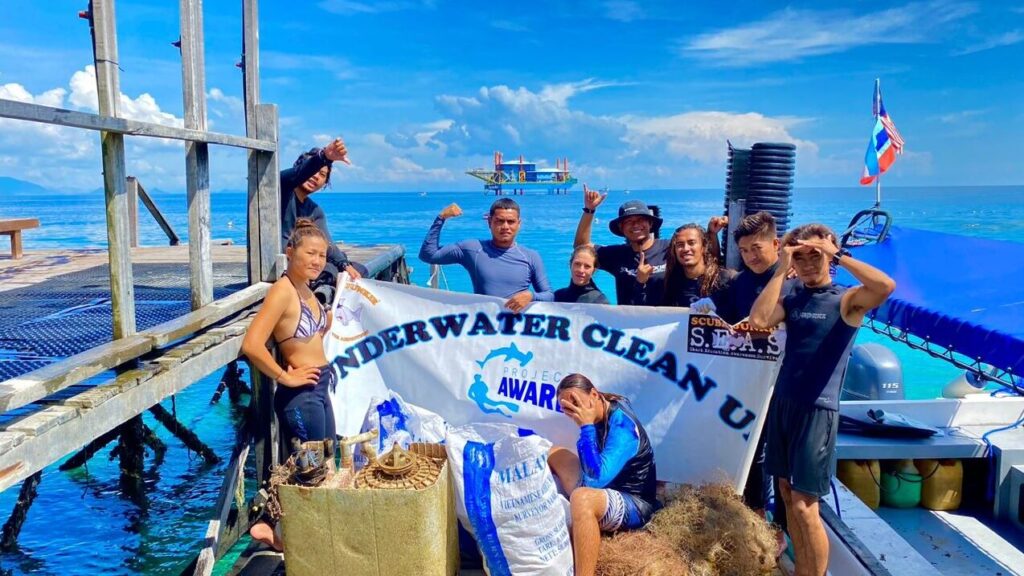
Sharing the ocean creates a responsibility to protect it.
On Mabul, that responsibility is put into action through Scuba Junkie SEAS. The conservation team works across turtle protection and rehabilitation, coral restoration, marine-debris removal, shark research and environmental education. Guests may see parts of this work during their stay, but much of it continues quietly throughout the year.
Turtle nests are monitored and protected. Injured turtles may be cared for through rehabilitation work. Coral nurseries and artificial reefs support restoration and research. Clean-ups remove rubbish from beaches and the sea, while outreach programmes involve local young people, schools, guests and the wider community.
The resort also works to reduce its own impact through measures including solar power, recycling, rainwater repurposing and a seafood-free restaurant. None of these actions means the work is finished. Conservation is not a badge a dive company earns once. It is a continuing process of learning, improving and showing up for the place that makes the entire experience possible.
For Scuba Junkie, the ocean is not only where we work. It is the reason the work exists.
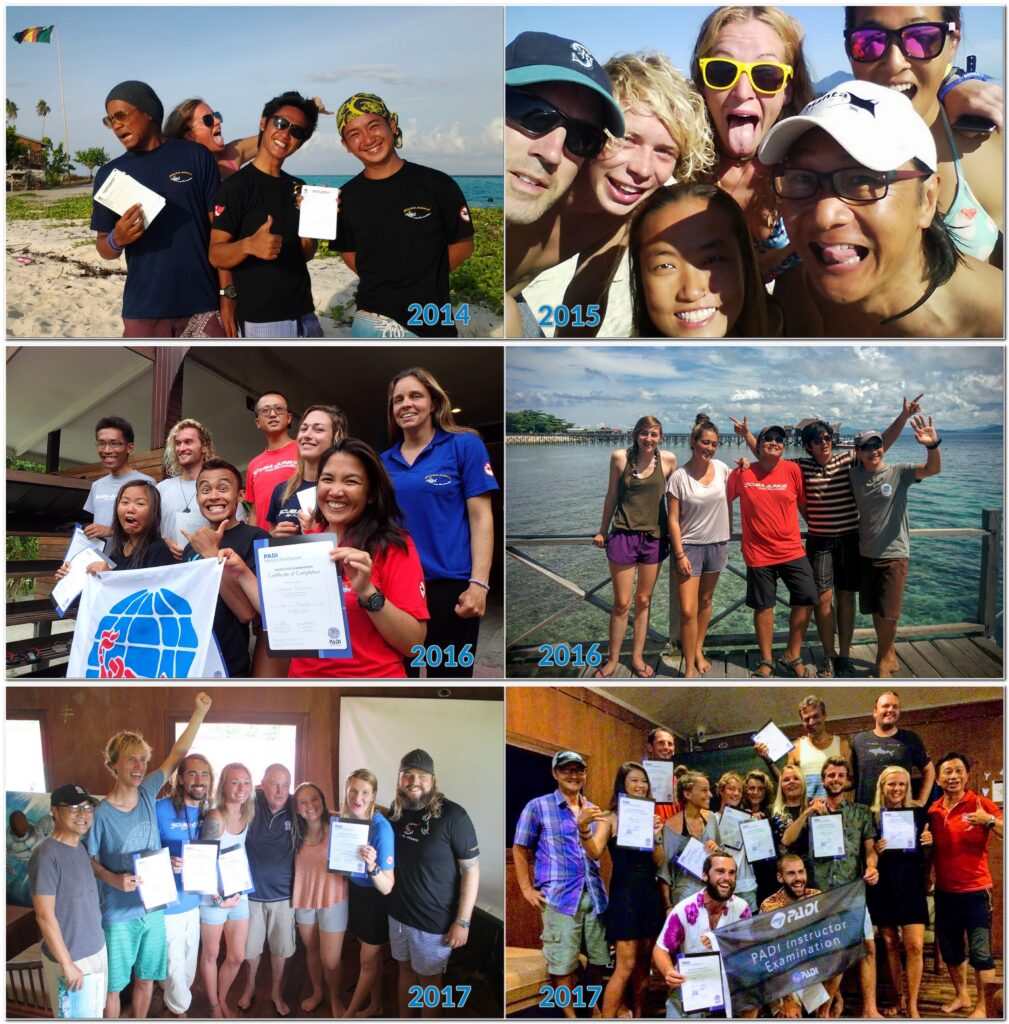
The Scuba Junkie story is also written through thousands of individual diving stories.
For one person, it begins with the strange sound of their first breath underwater. For another, it is the moment they complete their Open Water course or finally feel comfortable after time away from diving. Some arrive hoping to see a shark. Others are happiest spending an hour searching for a creature smaller than their thumb.
And for some divers, a holiday becomes the beginning of a new direction.
As a PADI 5 Star IDC Centre, Scuba Junkie Mabul offers training from beginner experiences through Divemaster and Instructor-level education. Professional candidates do more than collect another certification. They learn how to look after other divers, communicate clearly, demonstrate skills, solve problems and become someone a future student can trust.
That progression captures something important about the company. A person can arrive having never worn a mask and regulator, then return years later ready to guide, teach or build a life around the ocean. The team gets to be part of the journey at every stage.
It would be easy to tell the Scuba Junkie story through dates, locations and numbers. Those details show how much the company has grown, but they do not fully explain why people feel connected to it.
The real story lives in smaller moments.
It is an early morning briefing on the jetty. A turtle appearing beside a new diver. A guide pointing repeatedly at a perfectly camouflaged frogfish while the whole group sees absolutely nothing. A candidate practising the same skill until it finally feels natural. A conservation team releasing hatchlings towards the sea. A table of strangers laughing together over dinner after a day underwater.
Scuba Junkie began with a love of diving and a belief that people should feel welcome while experiencing it. From Semporna to Mabul and far beyond, that remains the heart of the story.
The locations may keep growing. The next chapters may take us to new reefs, new communities and new conservation challenges. But the purpose stays the same: share the ocean, take care of it, and make people feel at home along the way.
Scuba Junkie began in Semporna, Sabah, in 2004. It started as a small dive centre offering access to the world-class diving around the Semporna region.
Scuba Junkie Sipadan is based at Mabul Beach Resort on Mabul Island. Guests stay and dive from Mabul, with packages offering access to destinations that can include Sipadan, Mabul, Kapalai and Si Amil. There is no accommodation for visitors on Sipadan itself.
Yes. Scuba Junkie Mabul is a PADI 5 Star IDC Centre offering beginner experiences, recreational certifications, continuing education and professional courses. The team can help guests choose an option that matches their certification and experience.
Scuba Junkie SEAS is the conservation organisation based on Mabul. Its work includes sea-turtle conservation, coral restoration, marine-debris removal, shark research and environmental education involving guests and local communities.
Yes. Professional training includes the PADI Divemaster course and Instructor Development Course. These programmes combine knowledge development, practical skills and real experience in a working dive environment.
Contact the booking team with your travel dates, certification level, number of logged dives and the kind of diving you hope to experience. They can explain suitable packages, transfers and course options.
Maybe your chapter starts with a first dive. Maybe it begins with Sipadan, a tiny frogfish on Mabul or the decision to become a dive professional.
Wherever you are in your diving journey, there is space for you in the story.
Contact sipadan@scubajunkie.com or WhatsApp +60 19-640 0116 to start planning your time on Mabul.
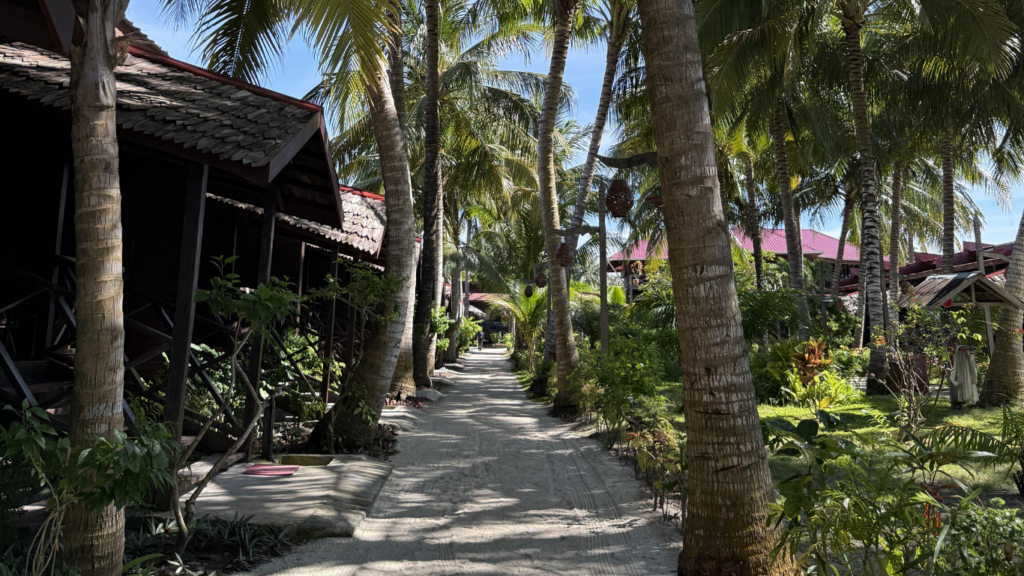
We know that when you go on holiday, all you really want is to relax.
But before that… there is always a bit of planning.
The good news is that getting to Scuba Junkie Sipadan is much simpler than it sounds. Our booking team takes care of almost everything. In reality, you just book your flights, and we help you with the rest.
Still, we know it helps to understand the journey. So here is a clear step-by-step guide you can come back to when you are ready to book.
The first step in getting to Scuba Junkie Sipadan is simply reaching out to us.
You can contact our booking team through:
Once you get in touch, we will send you all the information you need to choose the best package.
To help us guide you properly, include:
From there, we take care of the details with you.
Once your dates are confirmed, the next step in getting to Scuba Junkie Sipadan is booking your flight.
You will need to fly into Tawau Airport (Sabah, Malaysia).
From Tawau:
We can arrange your transfer, so your driver will be waiting for you at the airport with your name on a sign.
Important note:
After the airport transfer, you will arrive in Semporna, where our office is located.
At this stage of getting to Scuba Junkie Sipadan, you can choose to:
From Semporna, you will take a boat to Mabul Island.
Boat schedule:
The boat ride takes about one hour.
Planning this part properly makes getting to Scuba Junkie Sipadan smooth and stress-free.
This is important to keep you within safe diving limits.
If you need to stay overnight, there are several hotels within walking distance of our office:
This makes your travel day easy and stress-free.
On the day of your transfer, we will tag your luggage at check-in.
A few things to know:
This is all part of the experience of getting to Scuba Junkie Sipadan.
When you arrive at Mabul, our team will be there to welcome you and give you a full briefing about the resort and diving.
Once you arrive, everything slows down.
After arrival, you settle into your room, receive your welcome briefing, and start enjoying island life.
You will also receive a reusable water bottle to refill during your stay.
From here on, it is all about diving, relaxing, and enjoying the experience.
Contact the booking team, confirm your dates, and book your flight to Tawau.
Yes, airport transfers can be arranged but are paid directly to the driver.
Yes, if you plan to take the 8:00 AM boat.
Around one hour from Semporna to Mabul.
Only if you take the 8:00 AM transfer.
No. Once you understand the steps, it is very straightforward.
When you break it down, getting to Scuba Junkie Sipadan is simple.
Flight. Transfer. Boat. Arrival.
And once you are here, everything is taken care of.
If you have any questions, feel free to reach out or drop them in the comments. We are always happy to help.

Turtle conservation in Mabul is more than protecting nests on a beach. It’s a powerful example of how science, culture, and community can work together to protect endangered sea turtles in Sabah.
Today, visitors to Mabul Island often see turtles gliding through shallow reefs, sometimes just meters from the jetty. But this thriving turtle presence did not happen by chance. It is the result of long-term sea turtle protection in Sabah led by marine biologists and supported by the local community.
To truly understand turtle conservation in Mabul, we must look at both the history and the solution.
Before tourism and marine conservation projects developed in Mabul, access to protein sources was limited. Chicken eggs were not always available, and turtle eggs were traditionally consumed as food. There was also a common belief that turtle eggs had health benefits.
For local families, collecting turtle eggs was not seen as harmful — it was practical and culturally accepted. However, as demand increased and black market trade expanded, turtle populations began to decline.
Effective turtle conservation in Mabul required acknowledging this reality instead of ignoring it.
In many parts of the world, conservation strategies focus on punishment. Fines, bans, and strict enforcement are common approaches. But when conservation efforts fail to consider local livelihoods and traditions, they often create conflict rather than cooperation.
Scuba Junkie SEAS recognized early on that sustainable turtle conservation in Mabul would only succeed if the community became part of the solution.
This shift in thinking changed everything.
Instead of criminalizing egg collection, Scuba Junkie SEAS introduced a collaborative reward system.
Today, when a local community member discovers a turtle nest, they can contact the SEAS team. In return:
This approach supports turtle conservation in Mabul in multiple ways:
The result is a model of sea turtle protection in Sabah that works with the community instead of against it.
Once eggs are relocated, they are placed in carefully monitored hatchery conditions. Temperature and environmental data are recorded because they influence hatchling development and sex ratios.
Throughout incubation, marine biologists monitor:
When hatchlings emerge, data is collected before they are safely released into the sea. Every step contributes to long-term turtle conservation in Mabul.
Turtle conservation in Mabul goes beyond protecting eggs. Scuba Junkie SEAS also operates a turtle rehabilitation centre in collaboration with local authorities.
Injured or sick turtles are treated and monitored until they are strong enough to be released. Additionally, ongoing turtle photo identification surveys help track individual turtles over time, building a long-term monitoring database.
This combination of nest protection, rehabilitation, and monitoring forms a comprehensive marine conservation community program in Malaysia.
The success of turtle conservation in Mabul shows that lasting environmental protection requires cooperation. When communities feel respected and included, conservation becomes shared responsibility.
Instead of seeing turtles as a resource to extract, local residents now play a role in safeguarding them. The RM 200 reward system demonstrates that practical incentives, education, and collaboration can produce measurable conservation outcomes.
This model offers valuable lessons for sea turtle protection in Sabah and beyond.
Protecting turtles requires consistent funding, research, and community engagement. There are two main ways to get involved:
Even small actions contribute to turtle conservation in Mabul when they support structured, science-based initiatives.
Sea turtles face global threats from habitat loss, plastic pollution, climate change, and illegal trade. But the story unfolding in Mabul Island proves that hope is not abstract — it is practical.
Through collaboration, scientific monitoring, and community partnerships, turtle conservation in Mabul continues to evolve and strengthen each year.
Protecting turtles is not about one dramatic rescue moment. It is about steady work, careful data collection, and relationships built on trust.
And that is what makes it sustainable.
Did you know that community reward systems can play such a powerful role in conservation?
Share your thoughts in the comments — or tell us what surprised you most about turtle conservation in Mabul.
Picture yourself hovering weightlessly in the crystal-clear waters of Sipadan Island, when suddenly, an incredible sight emerges from the blue – a school of massive bumphead parrotfish, their powerful bodies gracefully gliding through the water. Here at Sipadan, these magnificent creatures aren’t just rare visitors; they’re part of our everyday underwater family, making our corner of Borneo one of the best places in the world to witness bumphead parrotfish conservation in action.
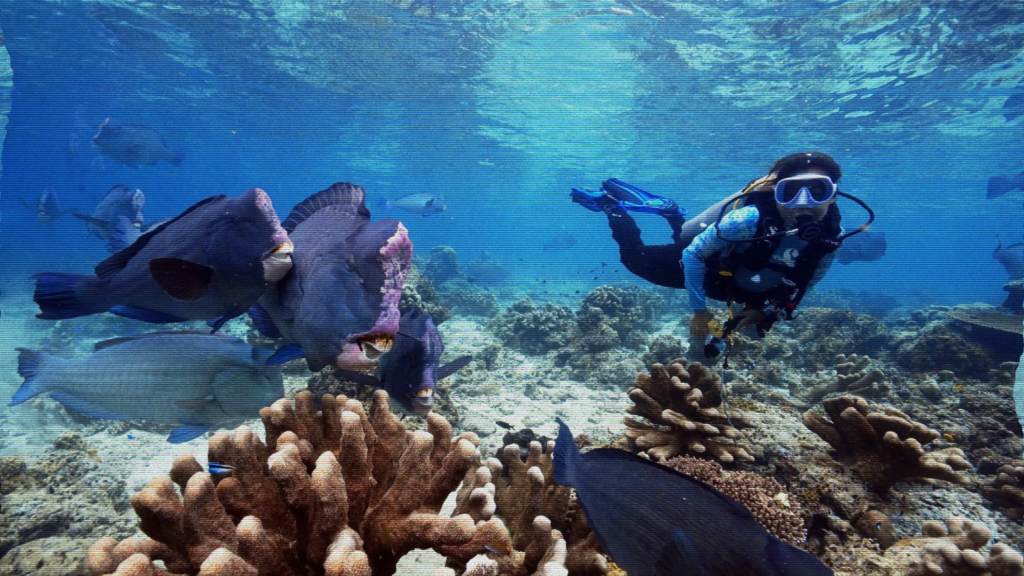
“It was like watching a herd of underwater buffalo!” That’s how Sarah, one of our recent divers, described her first encounter with a school of bumphead parrotfish at Sipadan’s famous Drop-Off. These gentle giants, some as big as a grown person, are regular residents at our dive sites, often gathering in schools of 20 to 50 individuals. They’re so common here that our diving guides have even given names to some of the regular visitors!
Dawn at Sipadan brings a special show that few places on Earth can match. As the first rays of sunlight pierce the water, our resident bumphead parrotfish begin their daily routine. Their distinctive bump-shaped foreheads emerge from their sleeping spots in the reef, and they set off on their important mission – keeping our coral reefs healthy.
These charismatic fish transform from peaceful sleepers to busy workers as they:
According to Marine Protected Areas research, Sipadan’s protected status has created a safe haven for these incredible creatures. Our location in the Coral Triangle, combined with strict conservation measures, has helped maintain one of the healthiest populations of bumphead parrotfish in the world.
Our daily diving operations at Scuba Junkie Sipadan have given us a front-row seat to one of nature’s most successful conservation stories. Where many regions have seen declining numbers, our bumphead parrotfish population continues to thrive, making every dive an opportunity to witness these magnificent creatures in their natural habitat.
Want to meet these gentle giants yourself? At Scuba Junkie Sipadan, we offer daily dive trips to Sipadan Island, where encounters with bumphead parrotfish are more common than uncommon! Our experienced guides know exactly where to find these magnificent creatures and can help you:
Book your dive adventure with us and experience:
We’d love to hear about your experiences with these magnificent creatures! Have you ever encountered a bumphead parrotfish? What impressed you most about them? Share your stories in the comments below or tag us in your Sipadan diving photos on social media using #ScubaJunkieSipadan #BumpheadParrotfish.
Ready to meet our resident bumphead parrotfish? Contact us to plan your Sipadan diving adventure, or check out our special packages for the upcoming season.
Want to learn more about marine conservation at Sipadan? Visit our Conservation Projects page or follow us on Instagram and Facebook for daily updates from our underwater world.
[Editor’s Note: This article was last updated on October 28, 2024, with the latest information about our Sipadan bumphead parrotfish population.]
Have you encountered these magnificent creatures during your dives? We’d love to hear your story! Drop a comment below and share your most memorable bumphead parrotfish moment with our diving community.
Recently during a surface interval at Sipadan Island, as we filled out logbooks, one of the divers asked me, casually, “What’s your favorite fish?”
Any normal person would have answered the lighthearted question as it was asked. “Juvenile yellow boxfish are adorable!” “Mandarin fish are stunningly beautiful!” “I have a soft spot for goofy-looking porcupinefish.”
Nope. Not me. My brain started whirring. I wanted the precise terms of this question. The category “fish” immediately rules out some of my favorite marine animals.
Cephalopods of all types are amazing! We often see huge broadclub cuttlefish and it’s not unusual to see schools of 60+ bigfin reef squid around AWAS, one of our house reef sites. Their pearly iridescence and lightning fast color changes are incredible.
On one of my first night dives here I saw flamboyant cuttlefish eggs neatly tucked into coconut shells. A few days later there were beautiful tiny flambos everywhere you looked. Not to mention AWAS night dives aren’t really complete without white v and coconut octopuses. Oh and the mimic octopus, how can you not fall madly in love with those gorgeous, charismatic creatures?
Several of these incredible fish sightings were firsts for me. I’m lucky enough to have thousands of dives under my belt, across many different parts of the world, but one of the things I love most about diving is there’s always something new to discover. Seeing a rare or elusive critter, especially for the first time, is such a buzz!
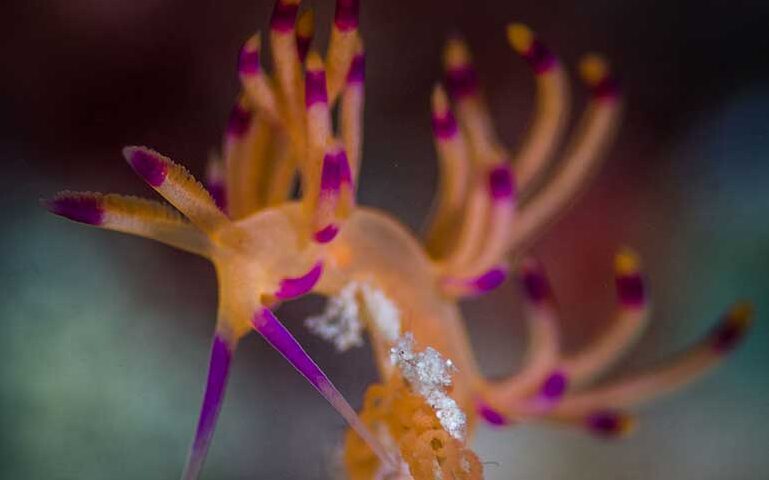
Talking only about favorite fish also ignores one of my all-time favorite categories, nudibranchs. Over 10 years ago when I did my divemaster training, one of my fellow candidates labeled me a “nudi nerd,” and I have worn the title proudly ever since. Slugs might not be the reason most people get into diving in the first place, but many experienced divers develop a love for these diverse and colorful critters, even having a bucket list of species they’d like to see. Who could resist a nudibranch named Pikachu?
And shrimps? From the almost impossible to spot tiny hairy shrimp and the half-invisible skeleton shrimp, to the gorgeous harlequin shrimp and the more common but no less impressive peacock mantis shrimp, are we just going to forget about them?
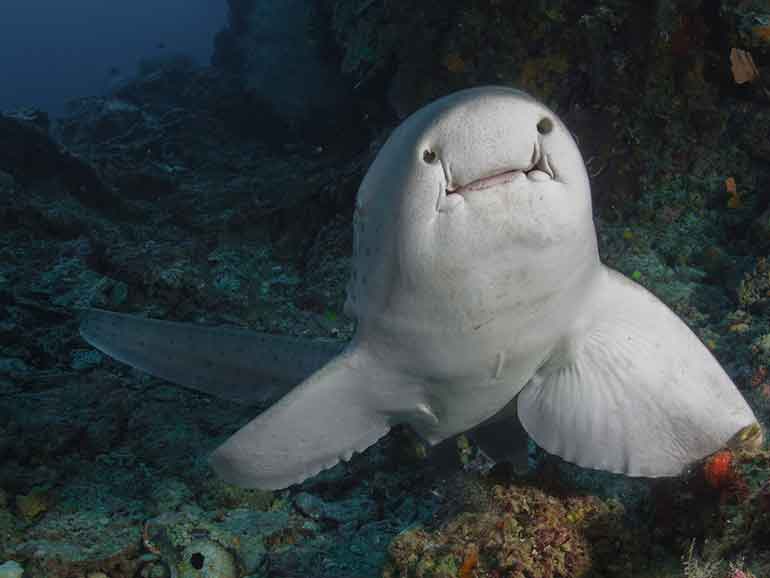
“We’re not counting sharks or rays, right? Surely they deserve their own category.” I had to clarify. But that sent me down another rabbit hole. A favorite shark? How could you choose between the sleek, elegant leopard shark and the sheer size and grace of a whale shark? Hammerheads certainly must get a mention but then there’s also the intimidating power of an oceanic blacktip curiously, hungrily circling our group. Ok, I might be making up the hungry part but there is something humbling about being eyed by an apex predator.
And are we talking about a single fish, or could a school count? Sipadan is famous for its ‘residents:’ schools of jackfish, bumphead parrotfish and chevron barracudas. I’m always mesmerized by schooling fish and how they all move together seamlessly with split-second timing.
A single jack might not be the most exciting fish, but when hundreds of individuals school around you, being herded by giant trevally, it’s quite a sight!
Many might argue that bumpheads aren’t the prettiest of fish, but they do have their charm. To quote divemaster Andy “How can you tell the difference between a Napoleon wrasse and a bumphead parrotfish? The bumpheads are the ugly ones!” His comment always elicits a loud protest from me in defense of the bumpheads, but yes, Napoleon wrasses really are handsome.
Sometimes I grumble about the barracudas because they’re not very well trained. They don’t always stay on Barracuda Point, even though they have one of the best dive sites named after them. What divas! But does that mean I should discount them as my favorite fish? When there’s no current they spiral around each other in a vortex that is spectacular; the wall they form when there’s a strong current is equally breathtaking

The more I thought about it, the more weird and wonderful fish popped into my head for consideration. I’ve always loved scorpion leaf fish and cockatoo waspfish and the way they ‘sway’ to make themselves look like leaves drifting in the water.
No matter how many frogfish I’ve seen I still get excited every time, even more so if they’re awkwardly hopping along or ‘yawning.’
In fact, the more that I dive the more interested I get in these behaviors, as well as in the fish themselves. Seeing turtles perched up on their flippers to allow a variety of reef fish to clean them, spotting the mouth breeding yellow barred jawfish with its mouth full of eggs and watching a juvenile eagle ray, annoyed by the remora trying to get a free ride, suddenly shoot to the surface and breach to dislodge it, these are some highlights of my dives here.
All these animals I’ve mentioned (and many more, of course!) are ones I’ve seen this past year, diving the islands of Mabul, Kapalai and Sipadan. From macro gems to the big pelagic, the diversity of marine life here is stunning.
The answer is no! There are so many more fish I could mention but I don’t think I’ll ever get closer to picking a favorite. In the end, why ask me to choose? And you, do you have a favorite fish? I’d love to read about your most memorable or beloved fish encounters, whether diving or snorkeling. Share your stories in the comments below!
Written by Instructor Rache Mordue
If you thought you’ve seen amazing things during your day dives, wait until the lights of the torches take you to the unreal experience of the Night Dives in Mabul.
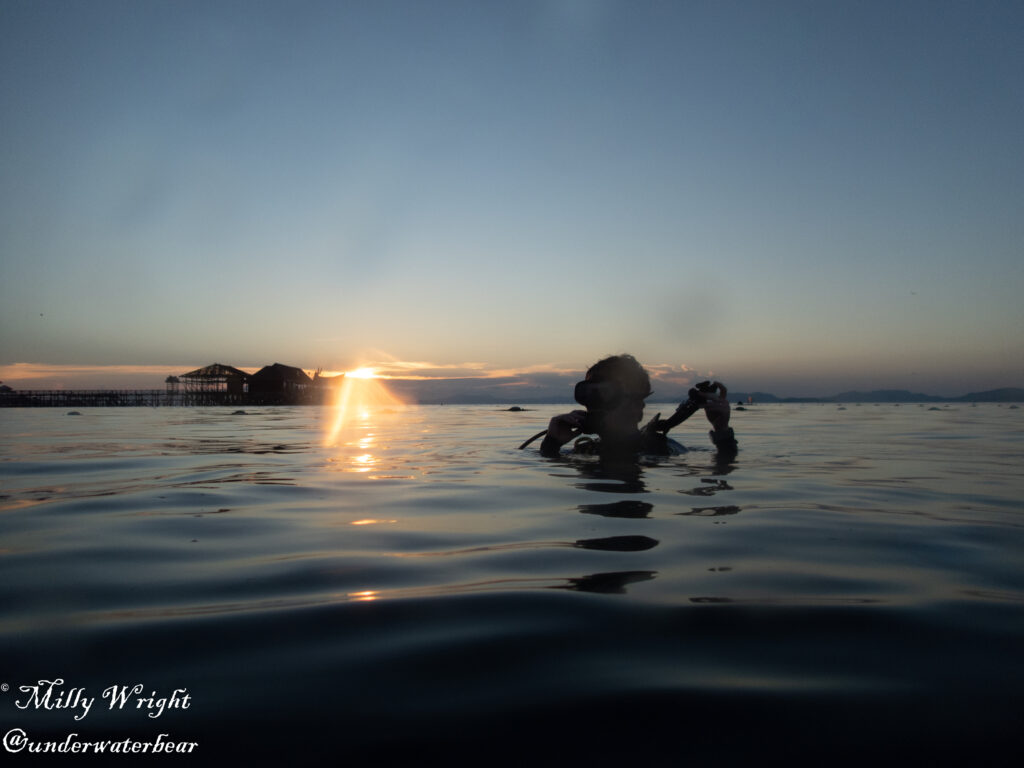
When the lights of the sun start fading. When the sounds and movements of the day slowly give way to the peace and silence of the dark. When the boats turn off their engines and rest until the new dawn. At this exact moment, something changes underwater. Sand and sea grass might not sound so appealing to you but it’s home to the most particular and unique critters (Muck diving).
And at Scuba Junkie, we have it right out of our jetty. Let your imagination run wild, while I tell you the story of, so far, my best Night Dive.
It was the end of a long week teaching courses, and as much as I like to teach it can also be exhausting. I’m not going to get into details, but mentally I had a lot happening, and fiscally I was tired.
I’m halfway through the day and it’s now lunchtime. On my way to the restaurant, I see the torches laying on the counter of the dive center and somehow I felt them calling me.
I tend to follow my feelings, in general, that’s where all my adventures begin. I knew I had to go for it, what I didn’t know was that this was going to be the most wonderful Night Dive I had so far.
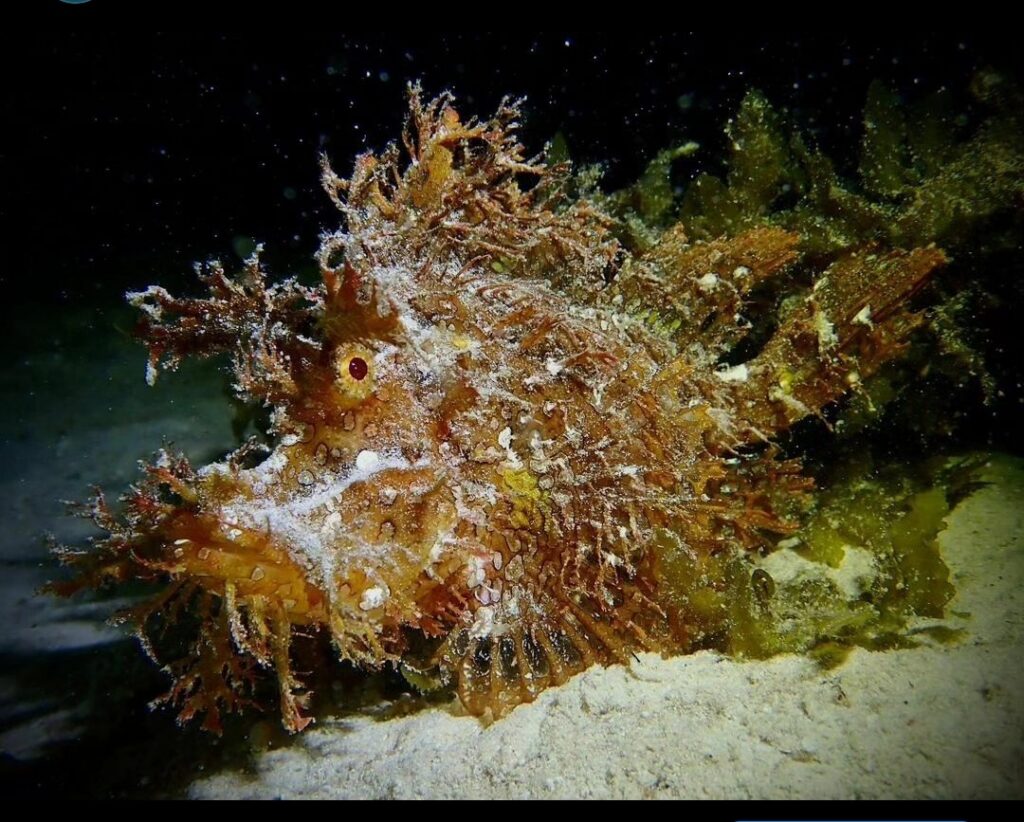
The sun is setting, my customers arrived, I welcome them and start the briefing. I explain the topography of our dive site Awas, and let them know my plan for the night dive; head all the way to “the nets” nonstop where a Rinhopias it’s living at the moment, and then slowly make our way back. We all agreed and at the end, like usual I ask what are they expecting to see, which I regrated a few seconds later.
Their expectations were high, they wanted to see the most difficult creatures to find, some of which I’d only heard about it. I started laughing, I could not help it, and told them I was going to do my best but could not promise anything, except for the Rhinopias.
In between jokes, the sun starts hiding behind the resort, we gear up, get in the water, turn our torches on, and begin our dive. As usual in a shore dive, we started the dive against the current, which that night was a bit stronger than I expected. I follow my plan, and reached the destination.
There she was, the beautiful Rhinopias, mission accomplished. My day was already better, everything after that was a blessing.
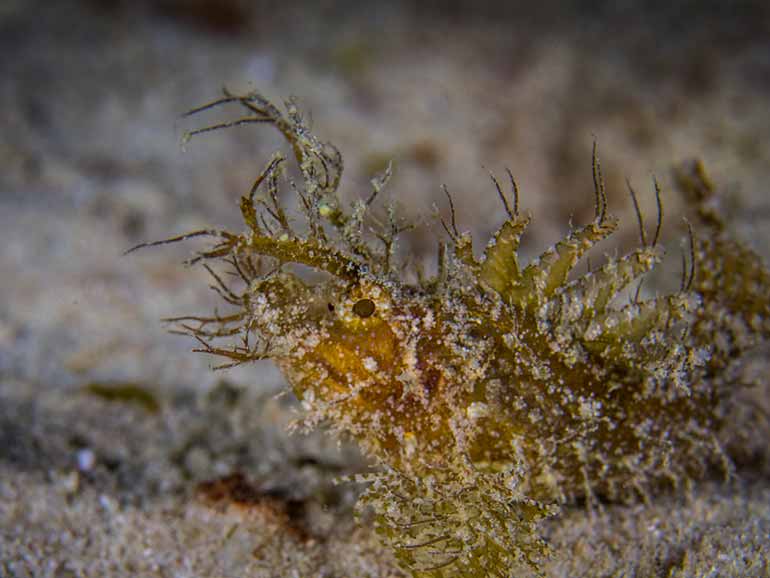
I turn the dive and ask everyone their air pressure, all good, they’re coping well with the current. Started making our way back and we found not one but two Ambons scorpionfish, that were having a bit more trouble with the strength of the water that day.
I was getting super excited! Turn around to keep going and the light flashes into a Coconut octopus, who was hanging out with his friend Mr. Wonderpus. It’s this even real? Just when I thought it could not get any better, Bobtail squid, one of the cutest creatures in my opinion. And this doesn’t stop here, getting closer to the jetty a painted Frogfish. Everything request was delivered, and even more. I could not believe my eyes, my luck, my night dive!
The stress, tiredness, problems, everything accumulated in one week was gone in a 60 minutes dive. Never underestimate the power of a peaceful Night Dive. Watching the beauty of the nocturnal creatures under the spotlight of the torch connects you to the moment. There’s nothing else, You, your torch, the bubbles, nature, and of course your buddies. We all got out of the water with the biggest smiles, shiny eyes, with memories that will stay with us for the rest of our lives.
Open Water or Advanced, beginner or experienced diver, we will take you on this adventure with the passion that all staff in Scuba Junkie has for diving. As well as me, my colleagues also enjoy every moment underwater and the best part it’s that we love to share it with our customers. We want you to leave Mabul Island not only with nice holiday memories but also with a once in the life type of experience. Give you a taste of what we’re so lucky to experience almost every day.
The moment we have been waiting for for more than 2 years is finally here! Since the first of April Malaysia has opened it’s international borders and is once again welcoming travellers from all over the world! The travel will be quarantine free, and you do not need to take any pre-departure or on-arrival tests, meaning you can head straight back to your favourite dive sites (Sipadan of course…?) without delay!
In this blog post we will cover all the entry requirements you’ll need to know to travel to Malaysia! The border opening just so happens to coincide with the best time of year to dive in Sipadan, so keep on reading – it is time to plan your next dive holiday!
Fully vaccinated and children aged 12 and below are exempted from pre-departure and on-arrival tests.
Partially or not vaccinated travellers must take an RT-PCR test 2 days before departure and a supervised RTK-Ag test within 24 hours of arrival. They will also have to quarantine for 5 days.
Covid-19 insurance is no longer required for all travellers entering Malaysia.

The official contact tracing app in Malaysia is called “MySejahtera”. The app is used to check in at public facilities such as hotels and restaurants via a QR code, and it contains your vaccination status. You must download and activate the MySejahtera contact tracing app and fill up a pre-departure form in the app (1-5 days before departure) via the following steps:

Face masks are mandatory indoors, including public transports and taxis.
Masks are optional when outdoors but encouraged in crowded places. High risk individuals are also encouraged to wear a mask.
Physical distancing is no longer required but encouraged when not wearing a mask.
By default, Covid-19 positive cases are required to quarantine for 7 days. However, under “Test and Release”, they will have an option to undergo a supervised RTK-Ag test on the 4th day. If tested negative, they may be released from quarantine.
Want to read more about our procedures on site? Check them out here.
To celebrate Malaysia opening up to the world again, we are offering all our guest some very special “welcome back discounts”!
You’ll need to confirm your booking before the 30th June to secure the discount, and come and dive with us before 31 Dec 2022. Find more info about the special package prices here. It’s time to get your Sipadan fix! We can’t wait to welcome you back to dive with us again soon!