

If you thought you’ve seen amazing things during your day dives, wait until the lights of the torches take you to the unreal experience of the Night Dives in Mabul.
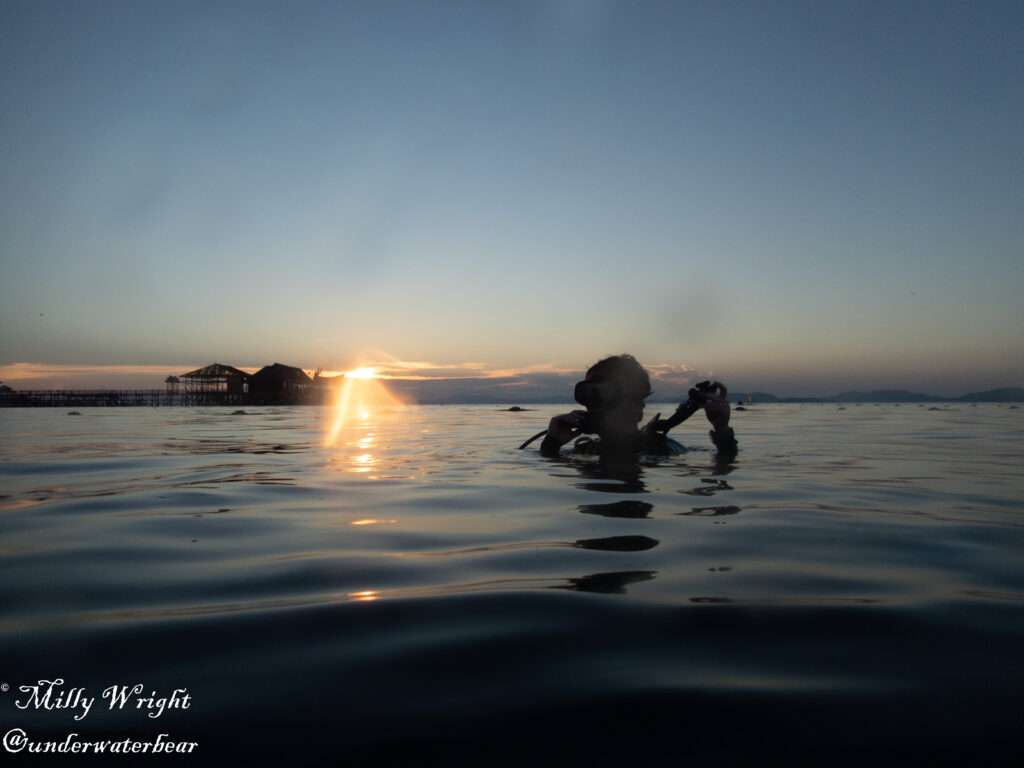
When the lights of the sun start fading. When the sounds and movements of the day slowly give way to the peace and silence of the dark. When the boats turn off their engines and rest until the new dawn. At this exact moment, something changes underwater. Sand and sea grass might not sound so appealing to you but it’s home to the most particular and unique critters (Muck diving).
And at Scuba Junkie, we have it right out of our jetty. Let your imagination run wild, while I tell you the story of, so far, my best Night Dive.
It was the end of a long week teaching courses, and as much as I like to teach it can also be exhausting. I’m not going to get into details, but mentally I had a lot happening, and fiscally I was tired.
I’m halfway through the day and it’s now lunchtime. On my way to the restaurant, I see the torches laying on the counter of the dive center and somehow I felt them calling me.
I tend to follow my feelings, in general, that’s where all my adventures begin. I knew I had to go for it, what I didn’t know was that this was going to be the most wonderful Night Dive I had so far.
The sun is setting, my customers arrived, I welcome them and start the briefing. I explain the topography of our dive site Awas, and let them know my plan for the night dive; head all the way to “the nets” nonstop where a Rinhopias it’s living at the moment, and then slowly make our way back. We all agreed and at the end, like usual I ask what are they expecting to see, which I regrated a few seconds later.
Their expectations were high, they wanted to see the most difficult creatures to find, some of which I’d only heard about it. I started laughing, I could not help it, and told them I was going to do my best but could not promise anything, except for the Rhinopias.
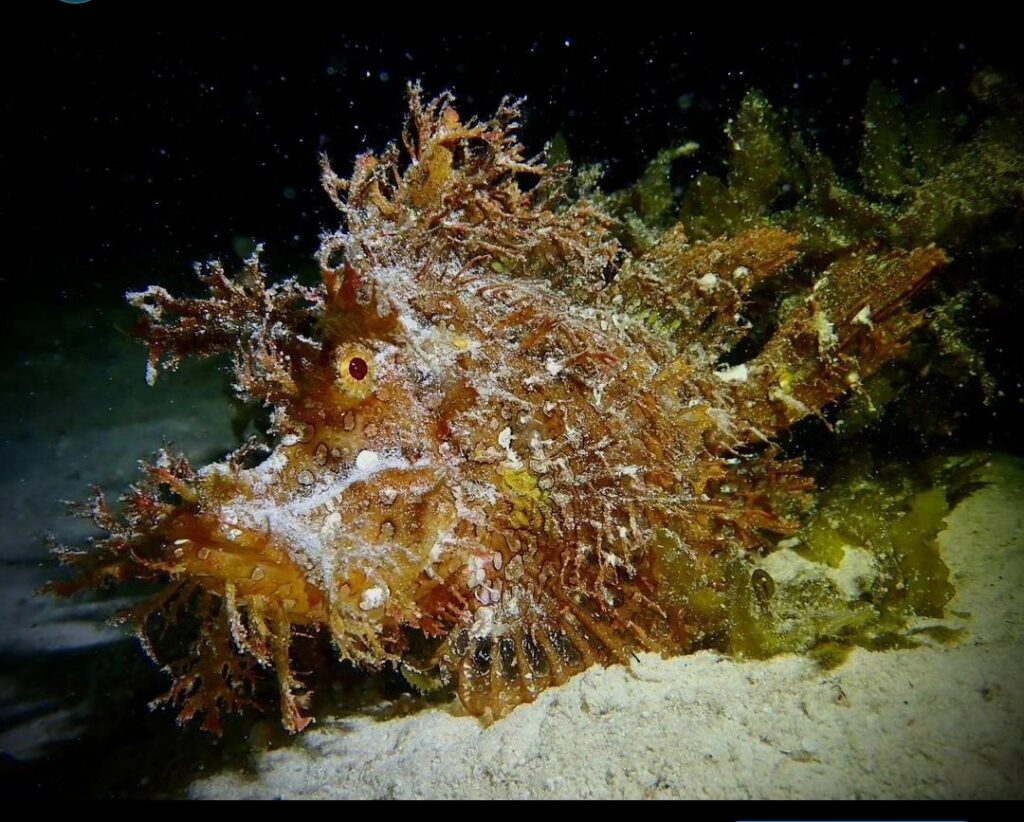
In between jokes, the sun starts hiding behind the resort, we gear up, get in the water, turn our torches on, and begin our dive. As usual in a shore dive, we started the dive against the current, which that night was a bit stronger than I expected. I follow my plan, and reached the destination.
There she was, the beautiful Rhinopias, mission accomplished. My day was already better, everything after that was a blessing.
I turn the dive and ask everyone their air pressure, all good, they’re coping well with the current. Started making our way back and we found not one but two Ambons scorpionfish, that were having a bit more trouble with the strength of the water that day.
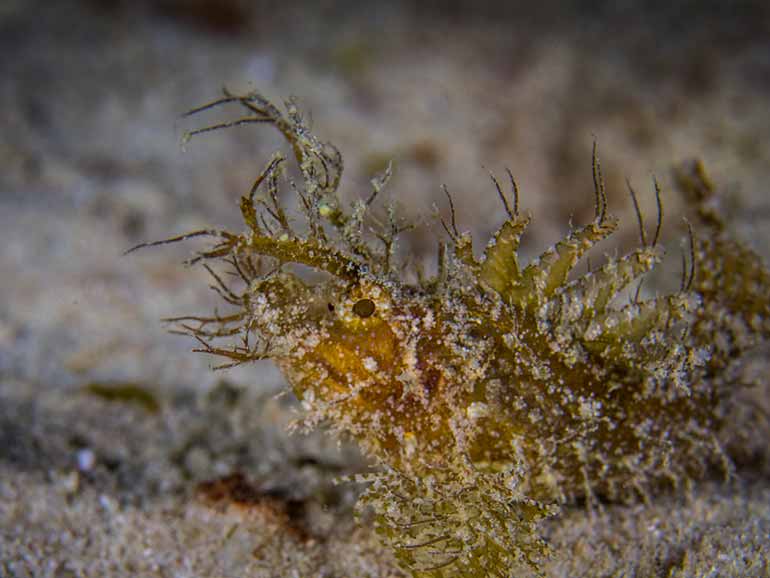
I was getting super excited! Turn around to keep going and the light flashes into a Coconut octopus, who was hanging out with his friend Mr. Wonderpus. It’s this even real? Just when I thought it could not get any better, Bobtail squid, one of the cutest creatures in my opinion. And this doesn’t stop here, getting closer to the jetty a painted Frogfish. Everything request was delivered, and even more. I could not believe my eyes, my luck, my night dive!
The stress, tiredness, problems, everything accumulated in one week was gone in a 60 minutes dive. Never underestimate the power of a peaceful Night Dive. Watching the beauty of the nocturnal creatures under the spotlight of the torch connects you to the moment. There’s nothing else, You, your torch, the bubbles, nature, and of course your buddies. We all got out of the water with the biggest smiles, shiny eyes, with memories that will stay with us for the rest of our lives.
Open Water or Advanced, beginner or experienced diver, we will take you on this adventure with the passion that all staff in Scuba Junkie has for diving. As well as me, my colleagues also enjoy every moment underwater and the best part it’s that we love to share it with our customers. We want you to leave Mabul Island not only with nice holiday memories but also with a once in the life type of experience. Give you a taste of what we’re so lucky to experience almost every day.
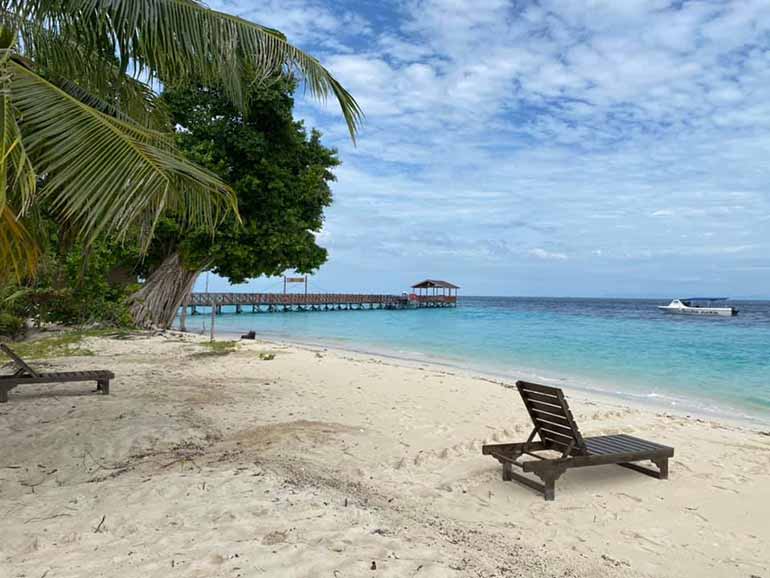
By Borneo from Below presenter, Bertie
Let’s not sugar coat it: Semporna isn’t the most beautiful of towns. Rough around the edges, maybe. Hot, definitely. Congested, certainly. But Paris it ain’t. Which makes it all the more surprising when you consider this region is home to some of the top dive spots on the planet.
I was lucky enough to spend 2015 filming the web series Borneo from Below in conjunction with our good friends at Scuba Junkie. During this period we went in search of the area’s most colourful coral reefs, mesmerising macro, pleasing pelagic life and sumptuous schools of fish.
From the shrimpiest of shrimp to a non-stop turtle highway, paradise islands to mucky sandbanks, this region has a little something for everyone. Here’s a countdown to my 5 favourite dive sites around Semporna.
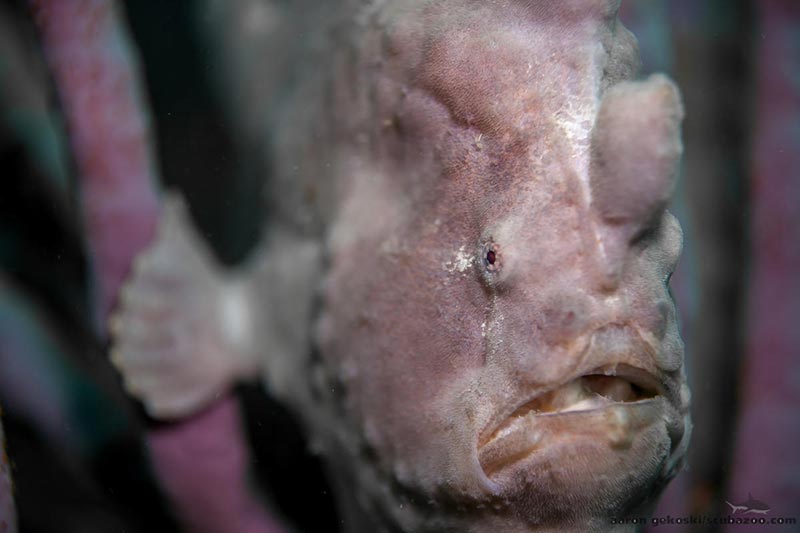
What do you get if you cross your classic paradise island, with a small community of sea gypsies and a heap of frogfish? You get Sibuan, a tiny dollop of loveliness just a short hop, skip and a dive away from Scuba Junkie’s base in Semporna.
Known locally as ‘Battleship Island’ due to its distinct shape, above the waves Sibuan is all palm trees and white sandy beaches, along with a small scattering of huts built by the Bajau Laut. These ‘sea gypsies’ are known for their incredible freediving skills and their children are often found frolicking in the shallows, offering great photo opportunities.
Underwater, Sibuan offers both muck diving and great reefs – most notably at dive site Hawksbill Highway; a blanket of cabbage coral that provides the perfect ampitheatre for turtles and cuttlefish. Plenty of frogfish can be found wallowing in the muck, as well as the usual suspects: snake eels, seahorses, spiny devilfish and more.

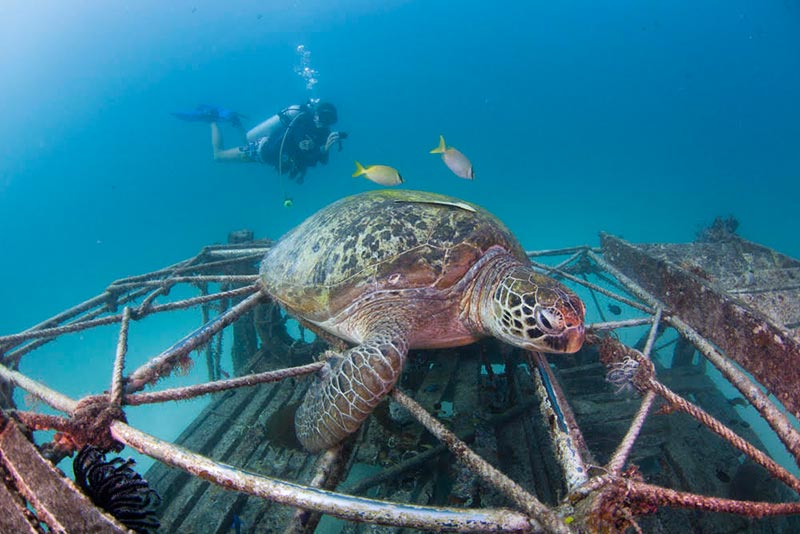
Whilst Sipadan grabs most of the diving headlines around here, the diving right off Scuba Junkie’s jetty in Mabul is surprisingly fishy. Dive site Awas plays host to dozens of green turtles – some the largest I’ve ever encountered. On artificial reef structures they endure divers with good grace, whilst wrasse pluck parasites off them.
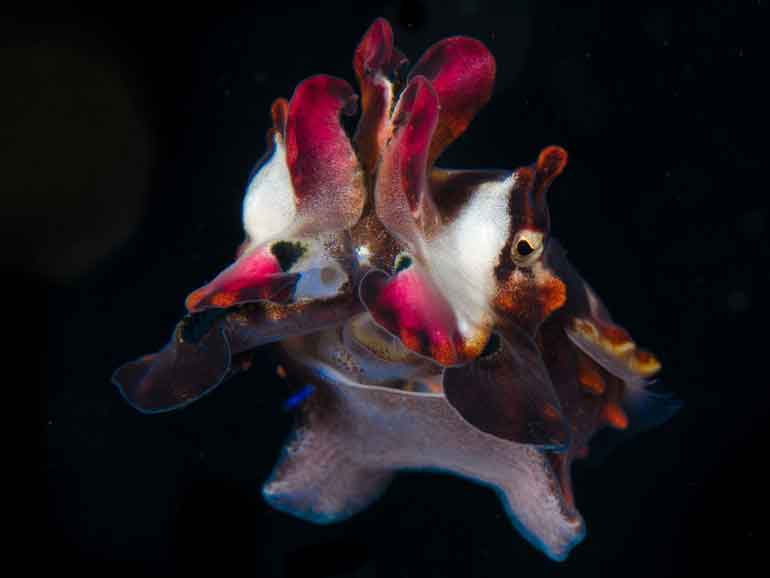
On and around these structures are broadclub cuttlefish the size of rugby balls, frogfish, schools of snapper, ghost pipefish, mantis shrimp and flamboyant cuttlefish. Easy diving, fabulously fishy – and all located no more than a couple of minutes swim from the jetty: Not. Too. Shabby.
You can see Awas in the following Borneo from Below episode.
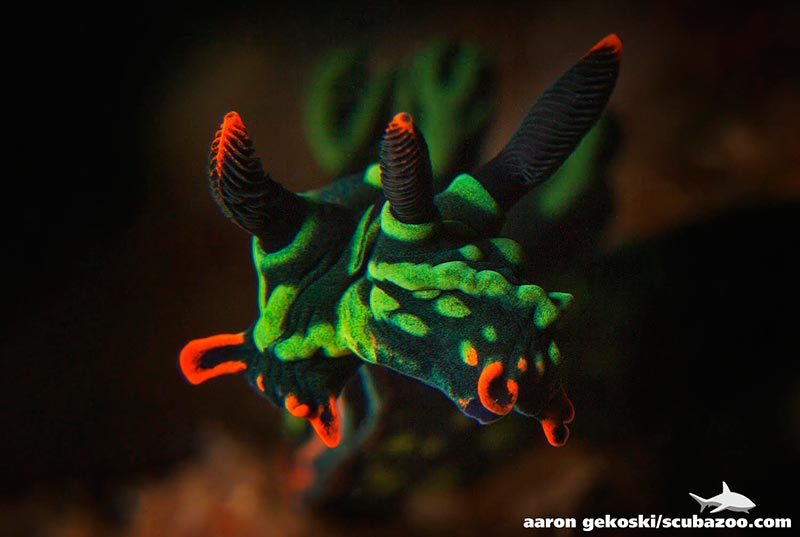
Kapalai, which lies a short 15-minute boat ride from Mabul, is a sandbar with a luxury hotel plonked on top. Kapalai is all about the macro. At around 20m are a series of artificial structures covered in coral and some of the coolest nudibranchs you will ever lay eyes on. One of Scuba Junkie’s DM’s, Nas, even found one with two heads – a world first!
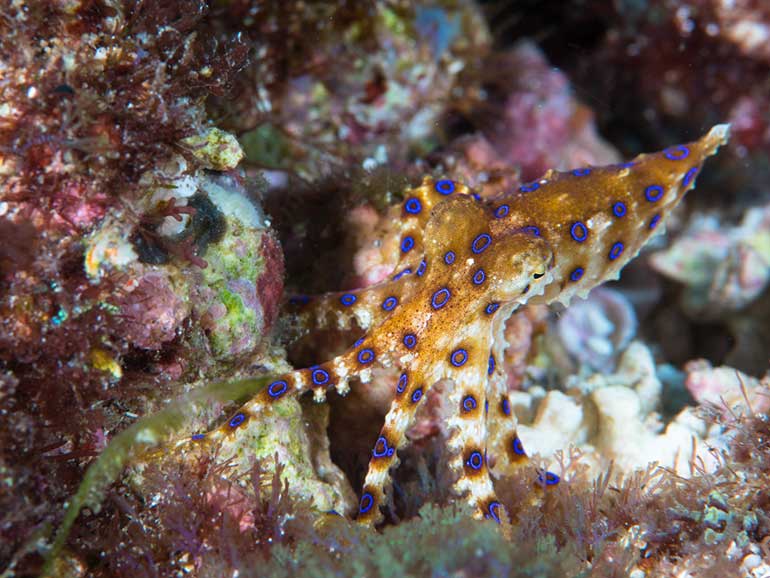
The sloping reef is also one of the best places to spot blue-ringed octopus in the entire region. If you’re lucky you may even catch a glimpse of the resident giant moray eel, Elvis. Elvis’ head is as big as yours.
Elsewhere keep an eye out for waspfish, frogfish, Indian walkmen, leaffish, stonefish and more funky critters. As the sun sets over this delightful sandbar, divers can even see manadarinfish performing their famous ‘love dance’: a mating ritual and one of the most mesmerising experiences a diver will ever have, anywhere.
View the two-headed nudibranch here.
If you enjoy small, jaw-droppingly stunning, seldom-visited sites with water the colour of Frank Sinatra’s eyes, then Mantabuan is the place to dive. Along with its impossibly pretty exterior, this volcanically-formed island is renowned for its black coral: a rare species that’s worth more than gold on the black market. Found at around 25m, these swaying bushes are actually white in colour – the term ‘black’ comes from their skeleton.
Whilst it might not have the variety of fish life that Sibuan does, Joseph has thrown his technioloured dreamcoat over these reefs. Within the coral folds, flaps and fingers lurk plenty of unusual nudibraches. Don’t forget to keep an eye on the blue – in visibility often in excess of 20m – for schools of barracuda and snapper.

Formed as a result of living corals growing on top of an extinct volcano cone, Sipadan was famously referred to as “an untouched piece of art” by Jacques Cousteau. Whilst our oceans are plundered at an alarming rate, rendering once-famous dive destinations fishless and broken, Sipadan has changed little in the 30 years since Cousteau made these remarks.
This, in part, is due to protection offered by the Malaysian authorities who have banned fishing around the island and only hand out 120 dive permits a day. Because of this, divers must book their trip here well in advance.
A shoe-in on lists dedicated to the world’s top dive spots, divers travel from all over to spend time Sipadan’s resident schools of barracuda, bumphead parrotfish, jackfish and sharks, along with giant turtle populations. In diving terms, it doesn’t get much better.
What’s it like to spend a day diving at Sipadan? See here!

To keep up with SZtv’s Borneo from Below, please like: https://www.facebook.com/Scubazoo/
And subscribe to their YouTube channel: https://www.youtube.com/user/ScubazooVideo
Many divers and snorkelers who’ve spent time diving in South East Asia will have a story or two to tell about the infamous titan triggerfish… In mating season, triggerfish get extremely territorial and will viciously defend their nesting site against intruders – including oblivious divers and snorkelers!
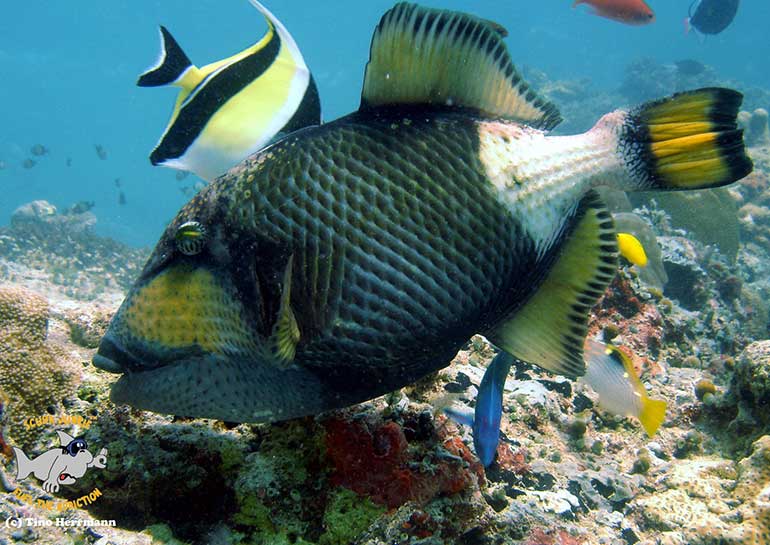
Although they are an interesting and beautiful looking fish – the titan triggerfish has a notorious reputation amongst divers. They are fairly docile for the most part of the year, but they can get very feisty in nesting season! Whilst unable to cause any serious or life-threatening injury to humans, they do have large, sharp teeth designed to crunch corals, and they pack a powerful bite best avoided.
So, how come they are so aggressive? It is widely known that titan triggerfish are extremely territorial by nature, especially if you happen to encounter them in nesting season. And whilst most of them are merely looking to protect their nest – some seem to just enjoy snapping at divers fins just for the fun of it.. Luckily, there are some clear signs indicating that trouble is coming your way!
Their first dorsal fin has three spines, which can be locked into an “erect” position. The first spine is locked in place by erection of the second spine and can only be unlocked by depressing the second “trigger spine”. When threatened, they will use this to wedge themselves into coral crevasses, making them virtually immovable.
The spine is usually only visible if this triggerfish is feeling threatened or anxious and this serves as a clear warning for divers to start swimming the other way…

It’s said that the eyes are the window to the soul, and when you start getting the old evil eye from a titans’ independently rotating eyeballs – it’s best to keep your distance! Especially if they’re moving jerkily or if you spot them rolling onto their side whilst giving you the stare.

If you’ve unknowingly happened to bump into a titan triggerfish, intent on eating various pieces of your dive equipment, don’t panic! We promise there is a way out!
First of all, turn your fins towards the offender and use it as a barrier between you and the fish! Oftentimes the triggerfish will not actually bite you, but is simply trying to escort you out of their zone. However, if they are going to take a nibble, much better it’s through your fins than through your body.
Their territory is shaped as an upside down cone from where the eggs are hiding, so swimming upwards will not help you escape the nesting zone – we’ve seen triggerfish following divers all the way up to the surface. Horizontal is the way to go! Keep your eyes on them the whole time, whilst you make your swift horizontal escape.
Once you’ve made it out of the zone, they’ll stop chasing you. They’ll head back to their nest and you’ll head home with some adrenalin-filled stories to share with your friends and family!

Whilst the triggers’ nasty reputation is somewhat well-deserved, it’s important to remember that they are (usually…) just looking to defend their young ones from what they think are intruders to their territory.
Divers who have experienced a nesting triggerfish before may get anxious seeing them underwater and instinctually shy away. This is understandable in nesting season, but for most part of the year, not necessary!
Usually your dive guide will inform you in advance if you’re heading to a dive site which may have nesting triggerfish present. They will know where potential nesting grounds are and do their best to avoid those areas. Follow their lead and you should be fine! And just in case you encounter a feisty looking triggerfish, you now know the signs of a triggerfish in distress, and how to make a safe escape!
If you thought diving was all about crystal clear visibility, stunning coral reefs, schooling fish, sharks, rays, and turtles – you’d be right! But only partly. Today we’ll introduce you into a different type of diving, called “muck diving”.
Whilst the name doesn’t sound very enticing, muck diving can be one of the most rewarding forms of diving. It refers to diving in muddy conditions on sandy or silty bottom dive sites, in the search for small, bizarre-looking creatures. In comparison to colourful coral reef dives, a muck diving site may look dull or empty at first sight, but we can ensure you that this is NOT the case! There is such a diversity of marine life to be found on these dive sites, and they are anything but boring!
Many of the critters you’ll see have developed some impressive skills and features to help them live in the muck. You’ll get to see both extraordinary camouflage and mimicry skills, as well as flashes of vivid colours used to threaten potential predators. Muck diving may be a completely different diving experience than what you are used to, and you’ll be challenged to really slow down and zoom in!
You can expect to see some incredibly weird and wonderful creatures hiding in the muck, many of which are super rare and very well camouflaged. Your dives will turn in to treasure hunts, and the treasures to be found around Mabul are well worth the effort!
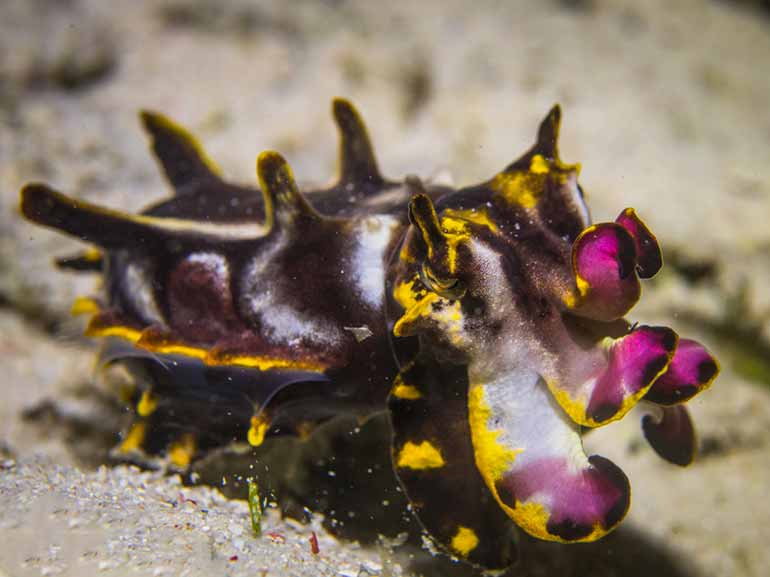
Mabul Island is one of the richest dive spots in the world for rare small critters, with diversity rivalling muck diving meccas such as Indonesia’s Lembeh and Philippine’s’ Anilao.
Flamboyant cuttlefish, blue-ringed octopus, stargazers, seahorses, all types of frogfish and ghost pipefishes are just a few of the crazy critters to be found around Mabul! The dive sites around Mabul range from sloping coral reefs, to sandy slopes, seagrass beds, jetty dives, artificial reefs and everything in between.
Together with its proximity to world-famous Sipadan Island, Mabul certainly offers one of the best well-rounded dive holidays you can find in Asia, if not the world!
Cephalopods are some of our favourite critters to search for, and lucky for us, there’s no shortage of them around Mabul! The flashing colours of the elusive flamboyant cuttlefish and blue-ringed octopus will leave you in awe, scrambling for your camera. With a bit of luck you may spot the elusive mimic octopus, a true master of disguise known for its ability to mimic other types of marine life. If you decide to brave the dark and embark on a night dive you’ll be in for a treat with regular appearances of bobtail squid, Papuan cuttlefish, coconut octopus and two-tone pygmy squid amongst others!
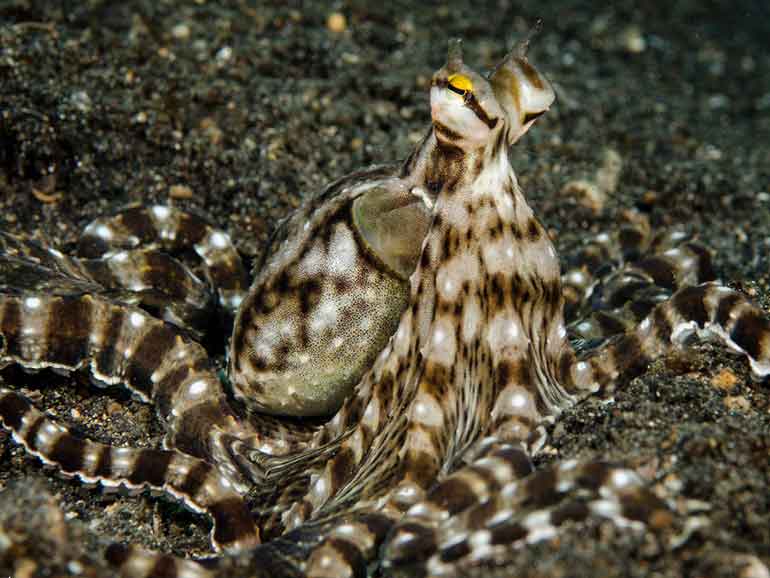
There are approximately 50 species of frogfish out there, many which can be found in this area. They may not win any awards for their good looks, but oh how much we love them still! Frogfish are masters of camouflage and many can change their colour to match their surroundings. They spend most of their time moving as little as possible, blending in with the environment, but make no mistake – when they do move, they are FAST! Frogfish have one of the fastest attacks in the animal kingdom, it can be as quick as just a few milliseconds! Blink and you’ll miss it!
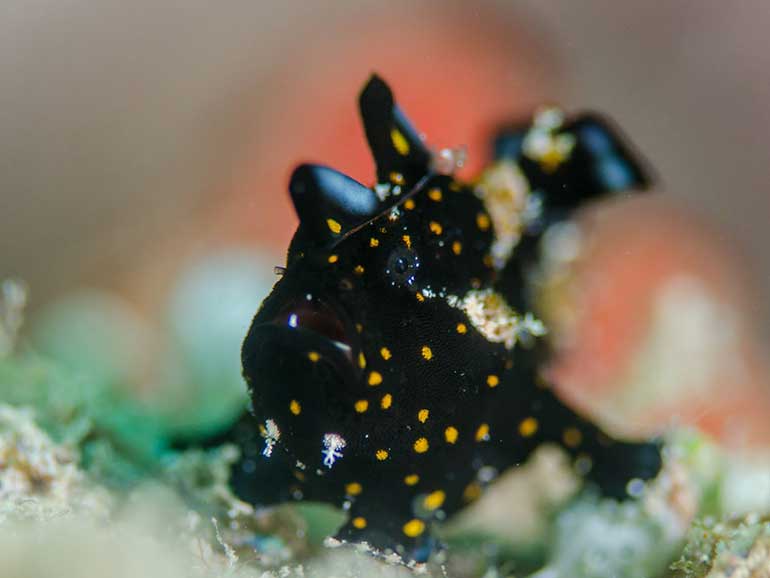
The list of Mabul’s crustaceans is loooong and it would be near impossible to list them all out, but some of our favourites include the harlequin shrimp, orangutan crab, peacock mantis shrimp, tiger shrimp, candy crab, hairy squat lobster, zebra crab, hairy shrimp, spider crab, coleman shrimp, bumblebee shrimp and skeleton shrimp. Phew! We could go on and on, the list is endless!
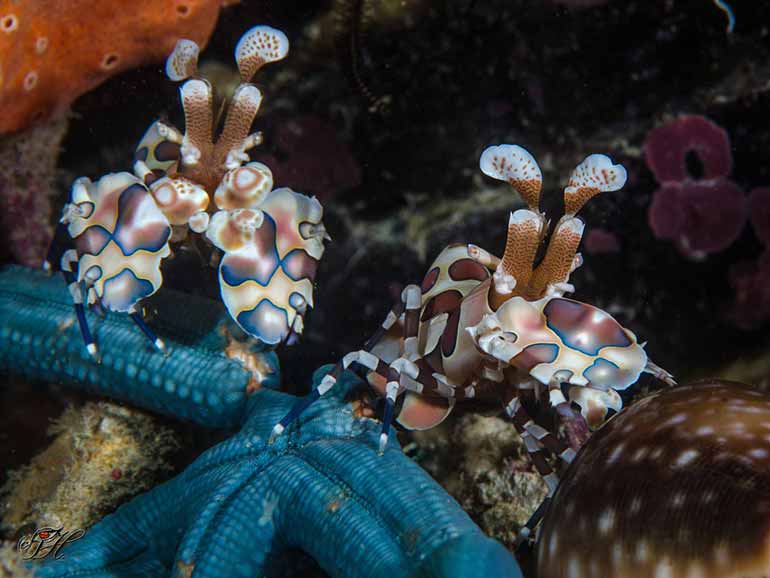
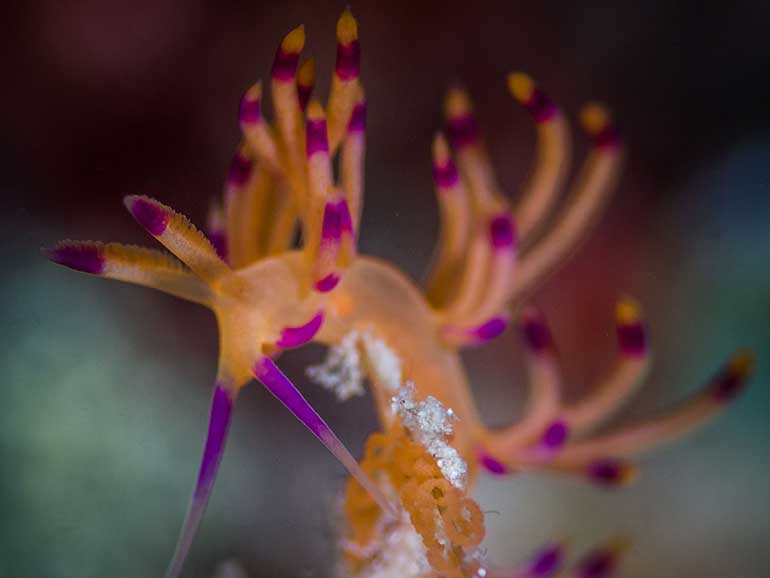
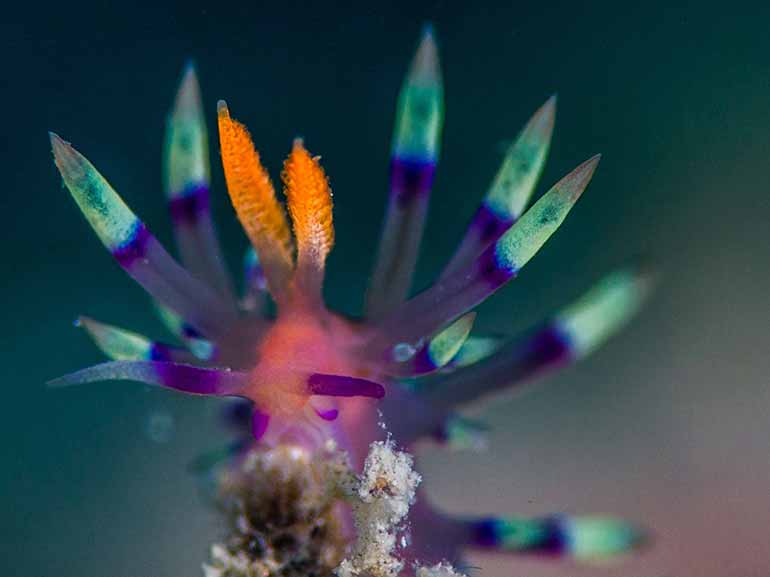
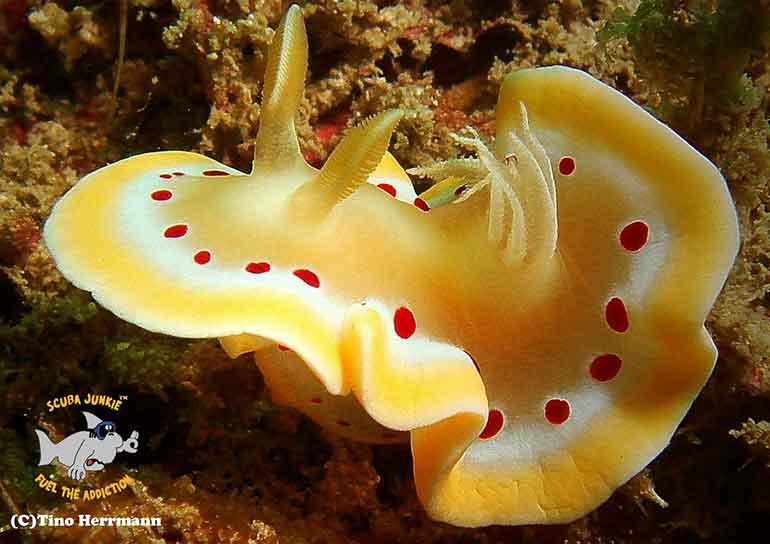
Hunting for nudibranchs is highly addictive… It could be a sport of its own, and Mabul would definitely one of the best places in the world to do it! It’s not uncommon to see over 20 different species in just one dive, all different in shape, size and colour. Nudibranchs get their bright colours from the food that they eat, and these may be used either for camouflage or to warn predators that they are poisonous! Nudis make for fantastic photograph subjects as they are generally slow moving, with stunning colours on display.
If there was ever a competition for the worlds pretties fish, the mandarin fish would definitely rank pretty high, with its’ ornate patters and stunning colours! At sunset they put on a show to be remembered for anyone lucky enough to see it. They perform one of nature’s most incredible mating rituals, or “mating dance”. To the non-initiated it may seem like strange behavior to travel across the world just to watch two tiny fish doing X-rated performances, but we promise it is a sensational experience and perfectly normal diving behavior… 😉

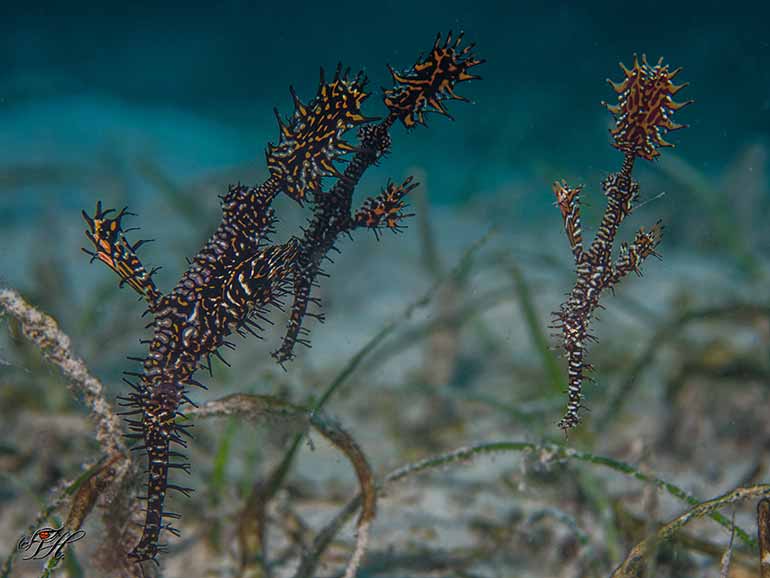
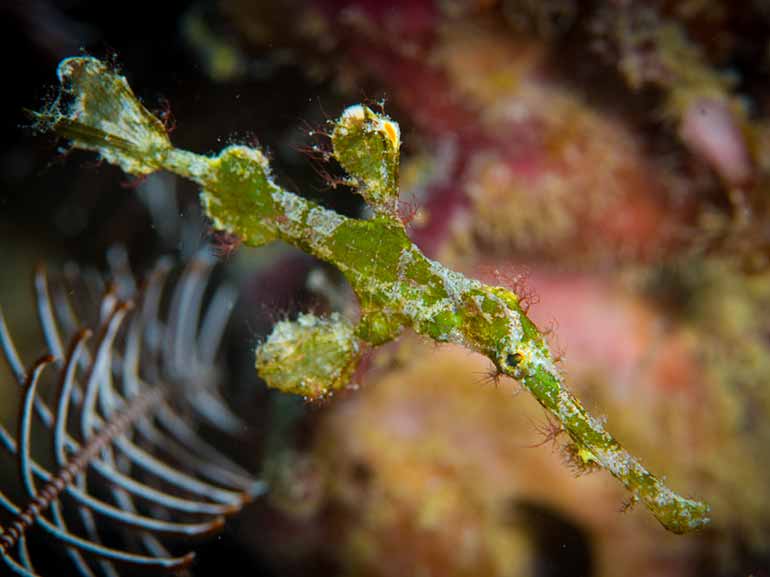
From pygmy seahorses, pipefish, ghost pipefish and pipe horses there’s no lack of these guys around Mabul! Look in and around feather stars for the ornate ghost pipefish, or on the sandy seagrass bed for robust and slender ghost pipefish. Pygmy seahorses hide amongst the polyps of same coloured gorgonian fans. There’s an abundance of stick pipefish, banded pipefish, reeftop pipefish and winged pipefish – and with a bit of luck you may find a velvet ghost pipefish or a halimeda ghost pipefish too!
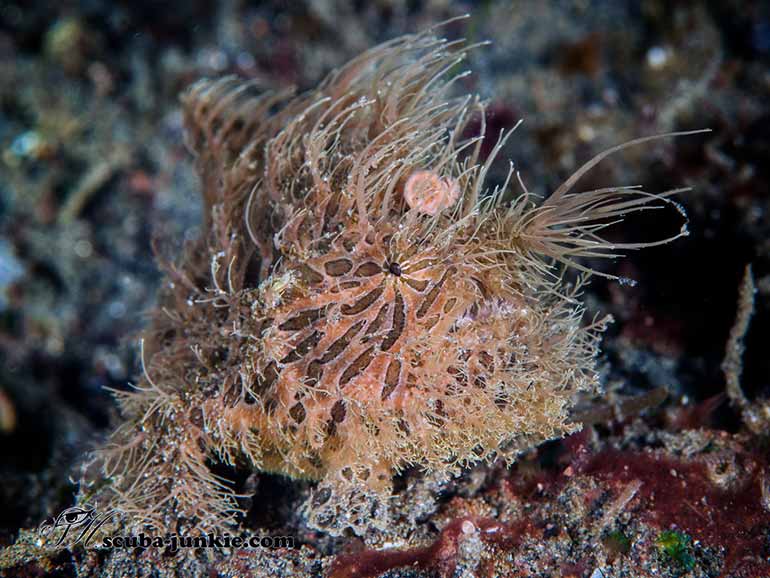
In diving terms, if it’s hairy it’s AWESOME! Yep that’s right, and the more hair the better! Hairy octopus, hairy frogfish, hairy shrimp, hairy squat lobsters. All of the above are rare and highly sought after creatures amongst divers and many would travel great distances to get a glimpse of a hairy octopus, or to get that perfect shot of a hairy frogfish.
Located right in front of the Scuba Junkie jetty, our house reef is one of THE best dive sites around Mabul. If you ask our staff members about their favourite dive sites, many place AWAS very high on their list! An excellent sandy slope dive site known especially for its regular encounters with the elusive flamboyant cuttlefish. Other gems to look out for are different types of ghost pipefish, frogfish, fingered dragonets, flying gurnards, snake eels, nudibranchs and mandarin fish! 60 minutes just doesn’t seem like enough time to explore everything AWAS has to offer, and in fact many divers want to repeat it more than once!

Including both a sandy slope with a few sunken boats, as well as a shallow sloping reef this is a great dive site for those who wish to have a bit of a mix of everything. You’ll see plenty of the typical muck diving critters along the sandy bottom, as well as a healthy amount of fish life attracted by the wrecks. You can then finish off the dive and perform your safety stop gently drifting along the coral reef. A healthy mix of all good things! This is a great dive site in particular to spot the ornate ghost pipefish, and different types of frogfish!
Just around the corner from our Mabul Beach Resort is the dive site Artificial Reef, a large sandy area with lots of man-made structures. It’s an awesome place to really slow down and zoom in. You’ll find an abundance of different crustaceans, cephalopods and pipefish. Chances are high you’ll see a frogfish or two, and there are colourful nudibranchs dotted along each and every structure.
Whilst the rig may be a bit of an eye sore on the horizon, the marine life you’ll find underneath is spectacular. It’s a playground of reef and sandy patches, artificial structures and some stretches of rubble. It might not be the prettiest dive site, but we can ensure that you could fill more than just the one page of your log book after this dive. Look out for pygmy seahorses, blue-ringed octopus and frogfish smaller than your fingernail!
In general, the slower you go – the better! A muck dive is not the time and place to rush, and when you take it slow you’ll see so much more marine life. Be patient and you will be rewarded! Many of the critters you are searching for are either quite small OR very camouflaged – if you speed across the dive site you will definitely miss a lot of cool stuff!
Diving over a sandy or silty bottom requires good buoyancy control! Keeping your hands, fins, and equipment off the bottom is essential to avoid stirring up silt from the bottom – reducing the visibility. You’ll also want to avoid disturbing the environment and the animals hiding in it.
An experienced dive guide can make or break your dive! A good dive guide will know the local environment, the best places to find certain critters, and sometimes it seems they can conjure amazing critters out of seemingly nowhere!
This is a good tip for diving in general, but especially so for muck diving! Many of the sought after critters live in very specific environments and habitats. A certain animal may prefer a special habitat, and some you can only find on just ONE type of coral! Knowing where to look is imperative!
Again this can be applied to all types of diving. Respect the marine life and you’ll find you have longer lasting and better underwater encounters. When you find a critter, try your best to keep a respectful distance as to not spook or disturb them. Never touch or move critters for the sake of a better photograph!
At first glance, you may wonder what all the fuss is about when you descend on a seemingly “empty” dive site, with little to no coral around – but give it a chance and you’ll be pleasantly surprised! You’ll likely spend most of the dive with your nose just inches from the ground, combing through the dive site, and you’ll be surprised by how just how many critters you can cross off your wish list!

Hopefully we’ve given you a bit of an insight to this different style of diving and why muck diving is so incredible. Diving doesn’t have to be all about coral reefs and big species! Give it a go on your next dive holiday, and before you know it you might find yourself becoming a muck-diving addict!
What better place to discover it than Mabul Island, a world renowned muck diving Mecca? Check out our dive packages here, the best way to explore Sipadan, Mabul and the surrounding islands!
The Semporna region has some of the best dive sites in the world so it is hardly surprising that many divers arrive with GoPro, point and shoot or full camera set up in hand! What exactly are these photography aficionados hoping to spot?
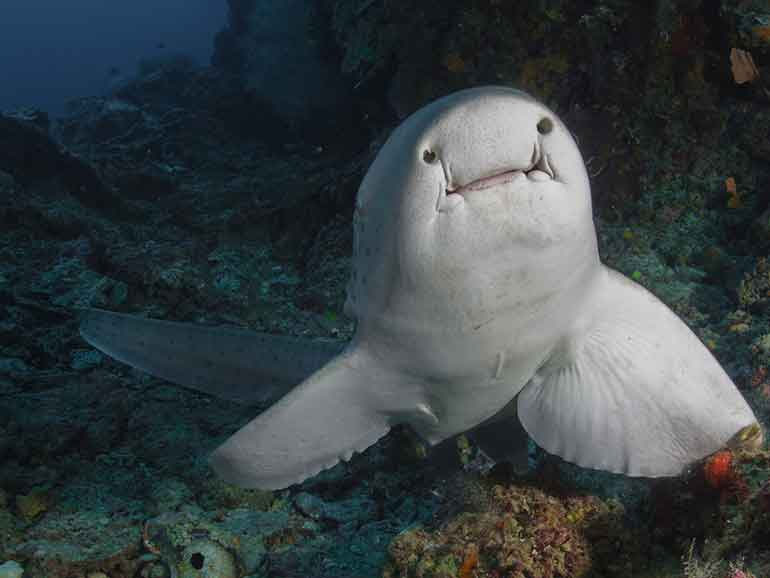
For many divers, the main goal of their dives will be the “big stuff”, they will come seeking sharks, turtles, rays and schooling barracudas and will not be disappointed! The turtles around Mabul are plentiful and not shy! They will usually be happy to pose whilst you snap away and you may even be rewarded with a smile! Sharks can be trickier due to their lack of interest in staying still! White tip sharks and leopard sharks are amongst the easier sharks to photograph as they are able to rest immobile on the bottom for periods of time and with some patience you will be rewarded with some great shots! Glimpses of hammerheads can often be fleeting and by the time you realise what you’re lucky enough to be seeing they are gone, every so often someone will get that elusive schooling hammerhead shot though!
Most experienced photographers come seeking the smaller more cryptic inhabitants of the reefs around Mabul & Kapalai as well as the Tun Sakaran Marine Park. A patient search and the eagle eyes of one of dive guides will usually help to show up all kinds of reef dwellers such as nudibranchs, shrimps, crabs, pipefish, frogfish, stonefish and much much more. Slow moving marine life has a huge attraction for photographers, allowing for plenty of time to perfect that shot! The more photography a diver does, the more they find themselves getting into the smaller inhabitants of the reef, often to the extent that they will move 50m or less in one dive! Nudibranchs hold a special appeal due to the large number of different species, colours, patterns and their inability to go anywhere in a hurry!
Divers will often find themselves staring at a frogfish, camera at the ready waiting for the elusive “frogfish yawning” shot!
Once you feel as though you have mastered both wide angle & macro shots you may start to wonder what else there is and that is where a whole new world opens up – the night dive! Venture onto the reef after hours and you will find an array of critters waiting for their turn to be the star of your show as well as challenging you with new shooting conditions. Night dives are a great time for a slow paced dive, exploring the reef one circle of torchlight at a time producing as many if not more macro sightings than day dives! Parrotfish sleeping in bubbles in the reef, spanish dancers and all sorts of cuttlefish, squid, eels and seahorses make for fantastic subjects and will keep you occupied for hours (or until you get cold or low on air!!).
Whatever your level of experience and camera set-up, the Semporna region will have something for you to photograph – ask your guide for tips & tricks, chances are they’re an avid photographer themselves!!