


Marine life in Sipadan is something else.
There are dive destinations… and then there’s Sipadan.
Rising from the depths of the Celebes Sea, this volcanic island is Malaysia’s only oceanic island—and a sanctuary for some of the most spectacular marine life on the planet. Protected by law, with limited daily permits and no resorts on the island itself, diving here feels like entering another world.
Whether it’s your very first visit or your fifth, one thing is certain: the marine life in Sipadan never disappoints. But if you’re wondering what to keep an eye out for—here are our top 3 favorites.
You can’t dive Sipadan without seeing turtles—lots of them. These gentle giants are so common around the reefs that guests often lose count.
Sipadan is home to both green sea turtles and hawksbill turtles, which thrive in the healthy coral and shallow plateaus of sites like Barracuda Point, Coral Garden, and Midreef.
You’ll see them:
Sometimes they pass so close you could count their freckles (but don’t touch, of course!).
It’s peaceful, magical, and always a favorite among divers and snorkelers alike.
These turtles aren’t just beautiful to watch—they’re also living reminders of why marine conservation matters. At Scuba Junkie, we support the work of Scuba Junkie SEAS and other organizations who help protect nesting sites and educate local communities about sea turtle conservation in Borneo.
We cannot talk about Marine life in Sipadan without mentioning them. White-tip reef sharks patrol the walls and sandy bottoms. You’ll often spot them snoozing under ledges or gracefully cruising past during your dive.
More elusive are the grey reef sharks, often seen deeper or around cleaning stations. And every now and then, a hammerhead makes a guest appearance—rare, but thrilling.
You’ll find sharks in:
Sharks are a sign of a healthy ecosystem, and Sipadan’s strict protections ensure they thrive.
Seeing a shark for the first time can be an unforgettable—and surprisingly calming—experience. These graceful predators tend to mind their own business, gliding effortlessly past divers without concern. Over time, many divers come to treasure their shark sightings more than anything else.
Yes, it’s real.
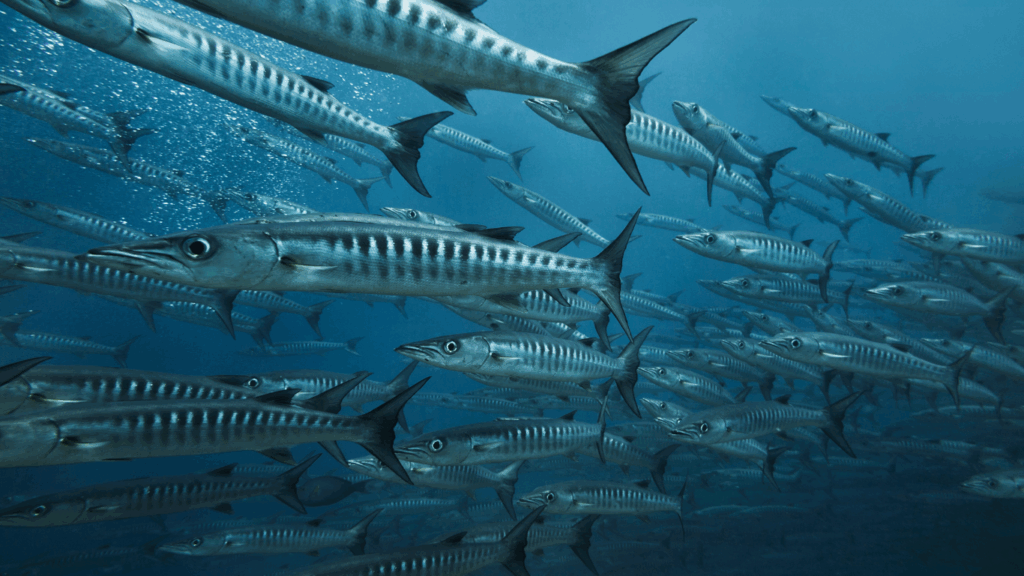
Thousands of Chevron barracuda swim in tight, swirling formations known as the Barracuda Tornado—one of Sipadan’s most iconic and surreal sights.
At Barracuda Point, if the current is right, you’ll find yourself completely surrounded by a shimmering vortex of silver. The school moves as one, pulsing and shifting as if by magic.
It’s not just a photo opportunity—it’s a once-in-a-lifetime experience.
Sometimes it feels like the reef itself is alive—so much movement, so many eyes on you. It’s an exhilarating moment of connection between human and ocean that sticks with you long after you surface.
At Scuba Junkie, we plan your Sipadan dive day to maximize your chances of seeing all three marine stars:
Our experienced dive guides know the island’s conditions inside out and will plan your dives around currents, visibility, and recent sightings to give you the best possible chance of catching these encounters.
And if you’re staying with us at Mabul, our house reef and boat dives often feature fantastic warm-ups: colorful nudibranchs, macro life, and even schooling fish around Kapalai’s artificial reef. It’s the perfect lead-in to the epic scale of Sipadan’s big blue.
Every diver has that one underwater moment they’ll never forget. In Sipadan, you’re almost guaranteed to collect several.
From the slow-motion ballet of sea turtles to the rush of sharks and the hypnotic swirl of barracuda—marine life in Sipadan is simply next-level.
Which one would you be most excited to see? Let us know in the comments!
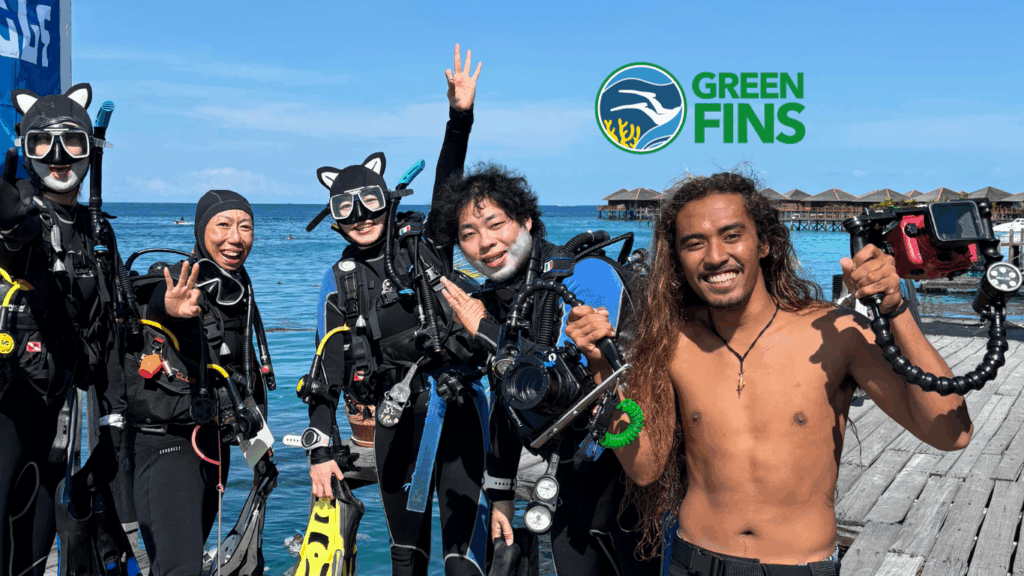
Welcome to macro diving in Si Amil, Mabul and Kapalai.
You’ve chased mantas, swum through tornadoes of barracuda, and logged dives in the world’s top big-fish sites. But now you’re craving something quieter, more precise. You’re ready to zoom in to this macro diving experience?
If you’re an experienced diver and underwater photographer, or want to be, there’s a pair of islands in the heart of Borneo that might just steal your heart.
Si Amil, Mabul and Kapalai— often-overlooked gems bursting with rare marine life, perfect for macro diving. Think flamboyant cuttlefish, blue-ringed octopus, ghost pipefish, frogfish, seamoths, wonderpus, and mandarin fish. All set against calm waters, shallow depths, and sandy bottoms that make focus-stacking a breeze.
This is not a place to chase adrenaline. It’s a place to chase details.
If you’re into critters that look like they belong in an alien zoo, macro diving in Si Amil, Mabul and Kapalai delivers.
After sunset, Mabul becomes a treasure chest. The octopuses are super active, bobtail squid flash their bioluminescence, and nudibranchs and shrimp scurry across the reef. This is where our Dive Master Khai, or as we call him “Legend,” truly shines. He’ll point out so many creatures your memory card will fill before you realize time’s up—or past it. While dives are usually capped at 60 minutes, let’s just say Khai has a habit of stretching the limit when the critters show up.
An artificial reef playground. Here you’ll find mandarin fish performing courtship dances, blue-ringed octopus shimmering electric blue, plus a cast of nudibranchs, ghost pipefish, scorpionfish, and frogfish of all kinds.
A rising star on the macro map. Expect pygmy seahorses, Shaun the Sheep nudis, Pikachu nudis, and elusive frogfish tucked in soft coral.
And yes, our Dive Master team lives for this stuff. They’re secretly (or not so secretly) competitive—tell them what you want to see, and they’ll treat it like a personal challenge.
Both Mabul and Kapalai offer macro divers a dream setup:
Whether you’re fine-tuning your snoot or framing a frogfish in the perfect light, you’ll have the time and stillness to get that shot.
The reefs around Mabul and Kapalai have evolved into perfect macro playgrounds. With artificial structures like sunken boats and platforms, coral rubble gardens, and gorgonians teeming with life, there’s a new surprise around every corner.
The Kapalai house reef especially is a must for photographers. Even after 60 minutes, you’ll want “just five more minutes” as you surface reluctantly.
At Scuba Junkie, we match you with other divers who understand the slow, intentional pace of macro photography. Our dive guides aren’t just spotters—they’re macro fanatics themselves.
Let them know what you’re after, and they’ll scan the sand with laser focus. Some staff, like Afat or Joshua, are passionate macro photographers who use their free time to practice and share tips with guests.
Back at Scuba Junkie Mabul, we’ve created an environment that supports macro shooters:
Want to learn a new skill while diving? Our instructors in Mabul offer the PADI Photography Specialty Course—and they love it. Whether it’s your first macro lesson or you’re refining your strobe game, you’ll be in good hands.
As a certified Green Fins dive center, Scuba Junkie prioritizes low-impact diving. We train our staff and guests to photograph wildlife with care and respect.
That’s how we preserve this beautiful world for the next wave of divers—and keep these islands a macro haven for years to come.
Getting to Mabul is simple: fly into Tawau, and we’ll take care of the rest.
But here’s the real secret: November is the best-kept secret for macro photographers. Sipadan is closed, so the crowds vanish, and we get to focus 100% on the tiny, weird, and wonderful world of macro diving.
Our dive trips to Si Amil are the highlight of the month, with fewer divers, calm seas, and an explosion of pygmy seahorses, Shaun the Sheep nudibranchs, and Pikachu nudis.
If you’re skipping November, you’re skipping the best macro season in Borneo.
Whether it’s your tenth dive or your thousandth, there’s something magical about looking closer. Macro diving in Mabul and Kapalai is more than a specialty—it’s a mindset.
It’s about slowing down, learning the reef’s secrets, and capturing moments most divers swim past. It’s about that quiet joy of finding a Shaun the Sheep nudi, of seeing color and texture like never before.
📷 Got a favorite macro subject? Dreaming of the perfect frogfish portrait? Tell us in the comments — we’d love to know what’s on your shot list.
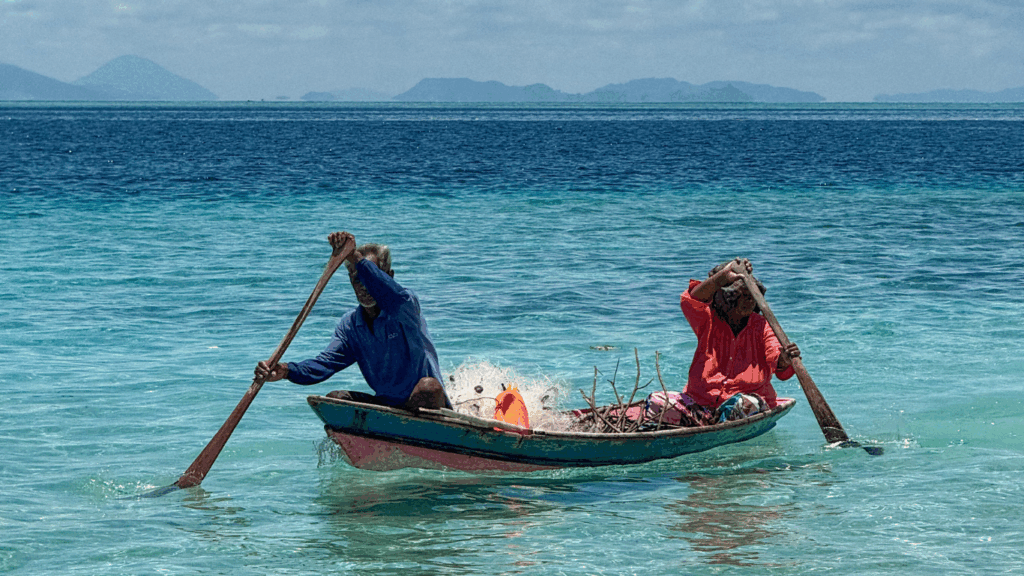
Tucked away just a 45-minute boat ride from Mabul Island, Si Amil feels like a secret only the ocean knows. If you’ve been diving around Mabul or dreaming of Sipadan, here’s a golden detour that feels like a holiday within a holiday—calm turquoise waters, white sandy beaches, and an island you might just have all to yourself. Exploring Si Amil isn’t just about the diving—it’s about the experience, the feeling of discovery, and reconnecting with nature in a way few places allow.
It begins early—breakfast at the resort as the sun rises over the Celebes Sea, then it’s time to hop on the boat and head off. The ride is peaceful, usually under an hour, but it feels like you’re heading somewhere truly special. Most days, there’s no one else around. No crowds. No noise. Just you, the crew, and the vast blue ahead. This is exploring Si Amil.
Once you arrive, you’ll gear up and jump into dive number one—but not before the all-important dive briefing, of course.
Our first dive of the day usually heads into the blue—literally. With few corals around, it’s what we call a “blue dive.” But don’t let that fool you. We’re heading for a cleaning station, an underwater spa where devil rays gather to be cleaned by smaller reef fish.
It’s the anticipation that gets you—hovering over the deep, watching and waiting. Sometimes they glide in by the dozens, and you’ll feel your heart race as these elegant creatures circle with impossible grace. And when they do show up, it’s nothing short of magical.
The second dive brings you closer to the island, to a vibrant reef that’s shallow, colorful, and absolutely bursting with life. You don’t even need to go deep—just drift along the top and let the reef amaze you. The coral here is healthy and untouched, and if you’re into macro life, this is where you’ll spot frogfish, ghost pipefish, nudibranchs, and maybe even a rhinopia if you’re lucky.
It’s like swimming through a garden. Time slows down. The only sound is your bubbles.
After the first dive, we head to shore for “second breakfast”—and this is where Si Amil really shows off. Imagine this: white sand under your feet, lush jungle behind you, and turquoise waters stretching endlessly into the horizon. Sometimes monkeys come to greet you, swinging lazily from tree to tree. You sip your coffee, toes in the sand, phone forgotten. This is pure disconnect.
And it’s all yours for the day.
Just a heads-up: there are no toilet facilities on the island, so it’s best to plan accordingly before departure. It’s part of the remote charm—but worth knowing in advance!
After dive two, we’re back on the island. A hearty lunch awaits, and the vibe is as chilled as it gets. Divers lounging under the trees, some taking photos, others catching a nap. It’s the perfect recharge before dive number three.

The third dive brings the day to a close. Another reef dive, perhaps “First Beach” or “Meditation Wall,” where everything from ribbon eels to electric clams might make an appearance. This dive often surprises us the most—nature has a way of saving the best for last.
Si Amil invites you to slow down and tune in—not by cutting off your signal, but by offering something better: a genuine connection with nature. Whether you’re watching monkeys play in the trees, lounging on the powdery beach between dives, or floating in crystal-clear shallows, your body relaxes and your mind clears. It’s not about going offline—it’s about going outside. Si Amil gives you the space to breathe, unwind, and remember what true peace feels like.
So, is exploring Si Amil worth it? We get this question all the time—and the answer is a definite yes, whenever time and budget allow. It’s more than just another dive day; it’s a full-on experience. A tropical escape, pristine reefs, the possibility of devil rays, and that magical surface interval on the beach—it all adds up to something unforgettable.
At Scuba Junkie, we offer Si Amil exclusively as part of our 4D3N dive package, which includes:
It’s the perfect way to combine world-class pelagics with beautiful reefs and incredible macro life—all while staying at our eco-friendly Mabul Beach Resort.
Are you dreaming of diving with majestic hammerhead sharks at Sipadan? While most divers flock to this Malaysian paradise during traditional peak seasons, the Sipadan hammerhead shark season has a well-kept secret – October and February offer the most spectacular opportunities for these rare encounters!
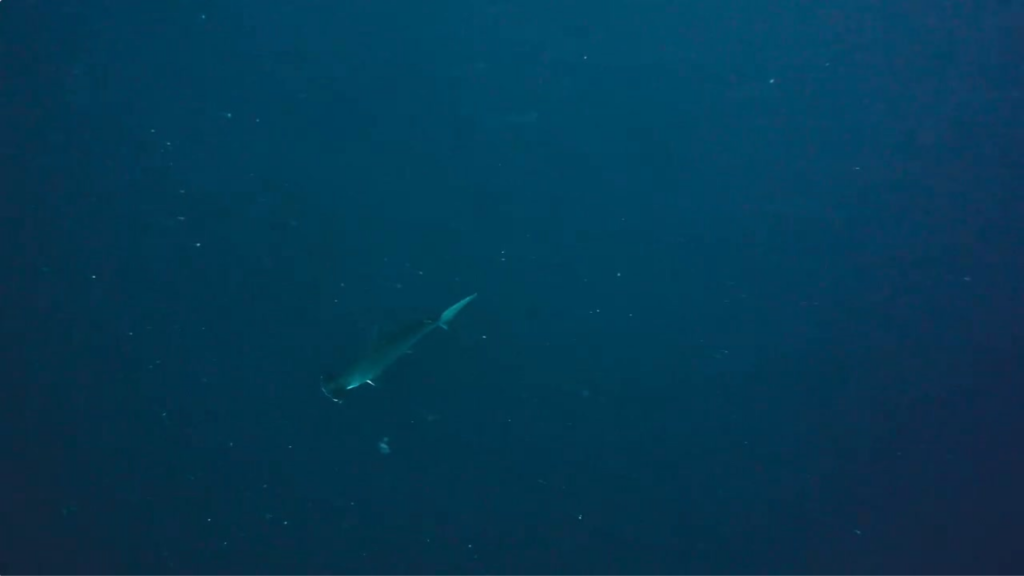
Our diving logs reveal a fascinating pattern: the Sipadan hammerhead shark season peaks dramatically outside the typical high season. The evidence is clear from our recent sightings data:
Each dive offers a unique opportunity to observe the behavior of hammerhead sharks in their natural habitat. By immersing yourself in their world, you gain an appreciation for their intricate social structures and hunting strategies. Documenting these interactions can be a thrilling aspect of your dive, allowing you to share your experiences with others and contribute to the conservation narrative surrounding these species.
Understanding hammerhead behavior not only enriches the diving experience but also highlights the importance of respecting their environment. Observing their reactions can teach divers about their needs and vulnerabilities, fostering a sense of responsibility and stewardship for marine conservation.
Hammerheads display fascinating behavioral differences depending on whether they’re traveling alone or in groups:
When divers encounter solitary hammerheads, it serves as a reminder of the delicate balance within marine ecosystems. These sharks play a pivotal role in maintaining the health of ocean habitats, and understanding their behavior can lead to greater conservation efforts.
Group encounters, on the other hand, present not only a spectacle for divers but also a fascinating glimpse into the social dynamics of hammerheads. This behavior can be studied further to understand their communication methods, social structures, and how they collaborate while hunting. Documenting these interactions can provide valuable insights for marine biologists and conservationists alike.
Individual hammerheads tend to be cautious and shy. These solitary hunters might approach briefly out of curiosity but quickly retreat when they identify divers as non-prey. Their fleeting appearances, while thrilling, often last just moments.
The true spectacle of the Sipadan hammerhead shark season comes when encountering schools. These groups demonstrate notably different behavior – more confident and willing to remain in diver presence for extended periods. According to research from the Shark Research Institute, this schooling behavior serves multiple purposes including protection, social interaction, and coordinated hunting.
Despite their distinctive appearance, hammerheads are among the ocean’s most misunderstood predators. The reality contradicts their fearsome reputation:
Sharing your experiences and insights gained during dives contributes to a collective understanding of shark behavior and conservation needs. Consider joining local or global conservation initiatives that focus on protecting hammerhead sharks and their habitats. Your voice can help advocate for better practices and policies that benefit both divers and marine life.
The allure of the ocean extends beyond just hammerhead sharks. Each dive presents the chance to encounter a diverse range of marine life, from vibrant coral reefs to curious sea turtles. Embracing the diversity of marine ecosystems enriches the diving experience and fosters a greater appreciation for the sea’s wonders.
As you journey through these waters, keep an eye out for other unique species that inhabit the area. From Bumphead parrotfish to Barracuda tornados, every dive provides an opportunity for discovery and connection with the underwater world. By documenting these encounters, you can contribute valuable insights to ongoing research and conservation efforts.
Booking your adventure now not only secures your spot, but it also allows you to take advantage of special offers for early bookings. As you finalize your plans, consider the broader impact your diving experience has on both local communities and global conservation efforts.
As responsible divers, we promote conservation through education. Our marine conservation programs actively support shark protection efforts and sustainable diving practices throughout Malaysia.
The waters around Malaysia continue to surprise even seasoned dive professionals! Recently, our team at Nusa Penida documented an extraordinary great white shark sighting – an extremely rare occurrence in tropical waters. This remarkable event highlights the dynamic and ever-changing nature of our ocean ecosystems.
This adventure is more than just a dive; it’s an opportunity to connect with nature and support initiatives that protect these magnificent creatures. As you plan, think about how you can share your experiences with others to inspire future generations of divers and conservationists.
Our early bird promotion offers the perfect opportunity to experience the prime Sipadan hammerhead shark season:
✅ Maximum hammerhead sighting potential during October and February
✅ Fewer divers means more intimate shark encounters
✅ Better availability at our dive resorts
✅ Special early bird rates for advance bookings
🔥 BOOK BY: April 30, 2025
🔥 TRAVEL PERIOD: October 10, 2025 – February 15, 2026
⚠️ SIPADAN EXCLUSION: December 20, 2025 – January 5, 2026
Don’t miss your chance to experience the extraordinary Sipadan hammerhead shark season! Contact our dive team today to secure your spot, or check our current packages and availability for immediate booking options.
Join us for an unforgettable underwater adventure with these magnificent ocean ambassadors!
Picture yourself hovering weightlessly in the crystal-clear waters of Sipadan Island, when suddenly, an incredible sight emerges from the blue – a school of massive bumphead parrotfish, their powerful bodies gracefully gliding through the water. Here at Sipadan, these magnificent creatures aren’t just rare visitors; they’re part of our everyday underwater family, making our corner of Borneo one of the best places in the world to witness bumphead parrotfish conservation in action.
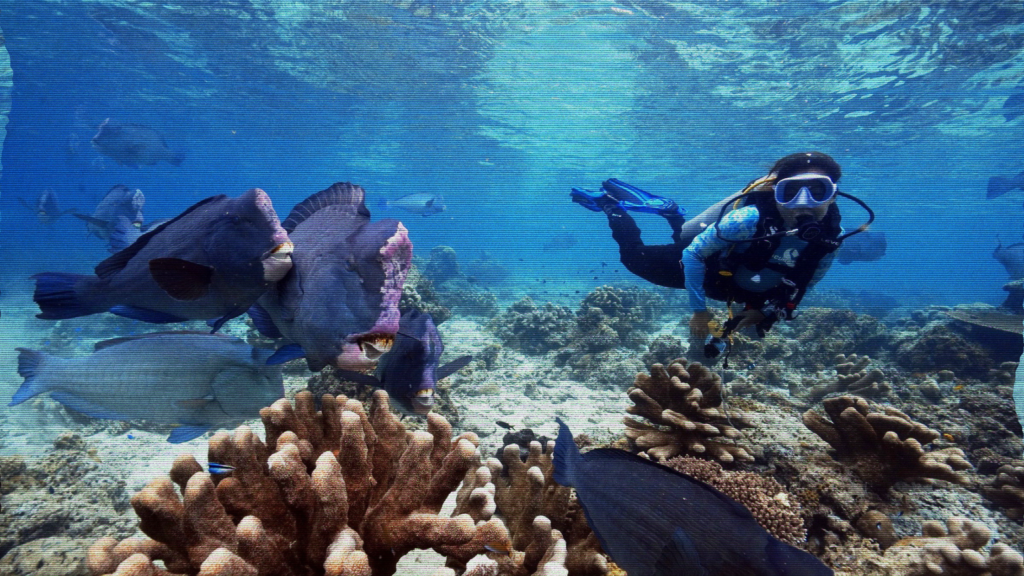
“It was like watching a herd of underwater buffalo!” That’s how Sarah, one of our recent divers, described her first encounter with a school of bumphead parrotfish at Sipadan’s famous Drop-Off. These gentle giants, some as big as a grown person, are regular residents at our dive sites, often gathering in schools of 20 to 50 individuals. They’re so common here that our diving guides have even given names to some of the regular visitors!
Dawn at Sipadan brings a special show that few places on Earth can match. As the first rays of sunlight pierce the water, our resident bumphead parrotfish begin their daily routine. Their distinctive bump-shaped foreheads emerge from their sleeping spots in the reef, and they set off on their important mission – keeping our coral reefs healthy.
These charismatic fish transform from peaceful sleepers to busy workers as they:
According to Marine Protected Areas research, Sipadan’s protected status has created a safe haven for these incredible creatures. Our location in the Coral Triangle, combined with strict conservation measures, has helped maintain one of the healthiest populations of bumphead parrotfish in the world.
Our daily diving operations at Scuba Junkie Sipadan have given us a front-row seat to one of nature’s most successful conservation stories. Where many regions have seen declining numbers, our bumphead parrotfish population continues to thrive, making every dive an opportunity to witness these magnificent creatures in their natural habitat.
Want to meet these gentle giants yourself? At Scuba Junkie Sipadan, we offer daily dive trips to Sipadan Island, where encounters with bumphead parrotfish are more common than uncommon! Our experienced guides know exactly where to find these magnificent creatures and can help you:
Book your dive adventure with us and experience:
We’d love to hear about your experiences with these magnificent creatures! Have you ever encountered a bumphead parrotfish? What impressed you most about them? Share your stories in the comments below or tag us in your Sipadan diving photos on social media using #ScubaJunkieSipadan #BumpheadParrotfish.
Ready to meet our resident bumphead parrotfish? Contact us to plan your Sipadan diving adventure, or check out our special packages for the upcoming season.
Want to learn more about marine conservation at Sipadan? Visit our Conservation Projects page or follow us on Instagram and Facebook for daily updates from our underwater world.
[Editor’s Note: This article was last updated on October 28, 2024, with the latest information about our Sipadan bumphead parrotfish population.]
Have you encountered these magnificent creatures during your dives? We’d love to hear your story! Drop a comment below and share your most memorable bumphead parrotfish moment with our diving community.
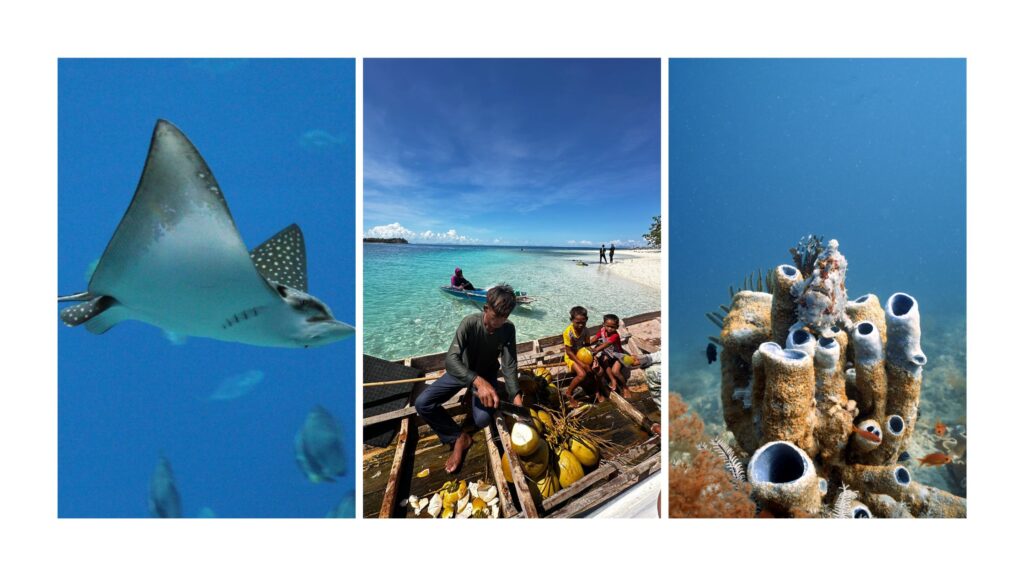
Nestled in the Celebes Sea off the east coast of Sabah, Malaysian Borneo, Sipadan Island stands as a testament to nature’s extraordinary beauty. This small oceanic island, barely 12 hectares in size, has captivated the hearts of divers and marine enthusiasts worldwide. Sipadan Island closure for a month each November has become an annual event, aimed at preserving its unique ecosystem. But before we delve into the reasons behind this closure, let’s explore what makes Sipadan so special.
The legendary Jacques Cousteau, a pioneer in marine exploration, stumbled upon Sipadan in 1988. Awestruck by its pristine beauty, he famously declared, “I have seen other places like Sipadan, 45 years ago, but now no more. Now we have found an untouched piece of art.” This endorsement from one of the most respected names in oceanography catapulted Sipadan into the spotlight, making it a must-visit destination for divers around the globe.
What sets Sipadan apart is its distinctive underwater landscape. The island is actually the tip of an extinct volcanic cone that rises dramatically from the ocean floor. This unique topography creates a mesmerizing underwater environment, with sheer drop-offs plunging to depths of over 600 meters. These walls are adorned with vibrant coral gardens, providing a perfect habitat for an incredible diversity of marine life.
Sipadan’s isolation and protection have allowed it to maintain an incredibly rich and diverse ecosystem. The island is renowned for its high concentration of sea turtles, with both green and hawksbill turtles frequently spotted. Large schools of barracuda and jackfish create swirling tornados of silver in the blue waters, while hammerhead and whale sharks make occasional appearances in the deeper waters.
The reef systems surrounding Sipadan are home to over 3,000 species of fish and hundreds of coral species. Divers can expect to encounter an array of exotic creatures, from the delicate mandarin fish to the peculiar ghost pipefish. The island’s waters also host a significant population of bumphead parrotfish, which play a crucial role in maintaining the health of the coral reefs.
As one of the world’s premier diving destinations, Sipadan is subject to strict regulations to ensure its preservation. These measures are crucial in maintaining the delicate balance of this underwater paradise.
Since 2009, Sipadan has been designated as a protected marine park, under the supervision of Sabah Parks. This status has been instrumental in safeguarding the island’s ecosystem from the potential negative impacts of over-tourism and unsustainable practices.
To prevent overcrowding and minimize environmental impact, Sabah Parks has implemented a permit system that allows only 200 divers per day to visit Sipadan. Each permit grants a diver access to the island for one day, with a maximum of two dives allowed during that visit. This limitation ensures that the marine environment is not overwhelmed by constant human presence.
For those lucky enough to secure a permit, there are additional requirements to be aware of:
These regulations might seem strict, but they play a crucial role in preserving Sipadan’s unique ecosystem for future generations to enjoy.
Every November, Sipadan Island closes its waters to divers and visitors. This annual closure is a critical conservation measure that has far-reaching benefits for the island’s marine ecosystem.
The primary goal of this Sipadan Island closure for month-long hiatus is to support the health and recovery of the island’s ecosystem and marine life. By reducing human disturbances, particularly those caused by scuba divers, the closure provides a much-needed respite for the underwater inhabitants of Sipadan.
During this period, the marine life can go about their daily activities without the presence of divers. This break allows for undisturbed breeding, feeding, and natural behaviors that are essential for maintaining a healthy ecosystem. Moreover, the absence of divers gives the coral reefs a chance to recover from any inadvertent damage caused by fins, hands, or equipment throughout the year.
The effectiveness of this Sipadan island closure was particularly evident in 2021 when Sabah Parks reported on the impacts of an extended 18-month closure due to the global pandemic. The results were astounding: significant coral growth was observed, and rarely found fish species were spotted in the area. This extended period of minimal human interference demonstrated the resilience of nature when given the chance to recover.
The annual November closure, while shorter, aims to provide similar benefits on a regular basis. It’s a testament to the commitment of local authorities and the diving community to preserve this underwater wonder for future generations.
One of the remarkable aspects of Sipadan is its consistency throughout the year. Unlike many dive destinations that have distinct seasons for marine life or weather conditions, Sipadan offers relatively stable conditions year-round.
The marine life in Sipadan is largely resident, meaning that the spectacular biodiversity divers come to see can be observed throughout the year. From the majestic sea turtles to the swirling schools of barracuda, these creatures call Sipadan home year-round.
While Sipadan is a year-round destination, some months offer slightly more favorable conditions. The best months to visit are typically from February to June and from September to December. During these periods, the sea conditions are generally calmer, offering better visibility and more comfortable diving experiences.
January, July, and August can be a bit more challenging due to increased wind, which can make the boat journey from Mabul to Sipadan more adventurous. However, it’s worth noting that even during these months, dive trips are rarely cancelled. The persistent winds might stir up the surface waters, but the underwater visibility often remains excellent, especially at depth.
While the Sipadan island closure in November might initially disappoint some divers, it presents an excellent opportunity to explore other nearby dive sites that are often overshadowed by Sipadan’s fame. One such gem is Si Amil Island.
In response to the Sipadan island closure, Scuba Junkie, have begun exploring Si Amil Island. This lesser-known destination has proven to be a fantastic alternative, offering its own unique underwater experiences.
Si Amil is known for its population of devil rays and eagle rays, providing exciting encounters for divers. Additionally, the island boasts an impressive array of macro life, making it a paradise for underwater photographers who enjoy capturing the smaller, often overlooked creatures of the sea.
Picture this: The sun peeks over the horizon as you board the boat at Mabul, the salty breeze tousling your hair. As you cruise towards Si Amil, anticipation builds, your mind racing with thoughts of the underwater wonders awaiting you.
Upon reaching Si Amil, you waste no time slipping into the crystal-clear waters. The first dive is a feast for the senses – vibrant corals, curious fish darting about, and if you’re lucky, the graceful glide of a passing ray. Surfacing with a grin, you swap stories with fellow divers over a hearty second breakfast, the taste of adventure still fresh on your lips.
Before you know it, you’re back in the water for round two. This time, you focus on the little things – a tiny nudibranch here, a camouflaged frogfish there. The underwater world seems to unveil new secrets with each passing minute.
Lunchtime brings a welcome respite on the island’s pristine beach. As you dig into your meal, keep an eye out for the local residents – not other divers, but the cheeky monkeys that call Si Amil home. Their playful antics provide the perfect surface interval entertainment.
As the day winds down, you gear up for one last plunge. The afternoon sun casts ethereal rays through the water, illuminating schools of fish and coral gardens. It’s a fitting finale to an unforgettable day of diving.
With three incredible dives under your belt and a head full of memories, you board the boat back to Mabul. As Si Amil fades into the distance, you can’t help but feel a sense of wonder at the hidden gem you’ve just explored.
What sets Si Amil apart is not just its underwater attractions but also its pristine beaches. Unlike the more developed Mabul, Si Amil offers a true tropical island experience with its turquoise waters and white sand beaches. The presence of playful monkeys adds an extra element of excitement to the surface intervals.
For those looking for even more variety, daily trips to Mabul and Kapalai continue to operate during Sipadan’s closure. These sites offer their own unique diving experiences, from vibrant artificial reefs to muck diving paradises teeming with bizarre and beautiful critters.
As we wrap up our dive into the annual Sipadan Island closure, let’s surface with some thought-provoking questions. Grab a virtual cup of coffee and let’s chat about the future of this underwater paradise.
First off, what’s your take on closing the island for a month each year? On one hand, it’s a bold move towards sustainable tourism, giving the marine life a much-needed breather from our bubble-blowing presence. But on the flip side, it’s not a simple decision. There’s a delicate balance between preserving nature and supporting the local economy that relies on dive tourism. Do you think this annual timeout strikes the right balance, or should we be exploring other approaches?
Speaking of approaches, let’s dream big for a moment. If you were in charge of Sabah Parks for a day, what would be on your conservation wishlist? Maybe you’d push for stricter enforcement of diving regulations? Or perhaps you’d love to see more extensive research programs to really understand what’s happening beneath the waves? How about ramping up education initiatives for both locals and tourists? The possibilities are as vast as the ocean itself. What ideas do you have that could take Sipadan’s protection to the next level?
Now, here’s a question that really makes you dive deep: Does this month-long closure actually make a splash in terms of conservation? We saw some pretty amazing results during the extended closure in 2021, with coral growth and rare fish sightings. But when it comes to the annual one-month break, the effects might be more subtle. How do you think we could measure the impact? Are there creative ways we could quantify the benefits to really understand if this approach is working?
These aren’t just rhetorical questions – we really want to hear your thoughts! As fellow ocean enthusiasts, your insights and ideas could spark the next great conservation initiative. So don’t be shy – dive into the comments and let’s keep this important conversation flowing. After all, it’s going to take all of us working together to ensure that future generations can experience the magic of Sipadan just as we do today.
Remember, every comment, every idea, and every action, no matter how small, can create ripples of change. So, what are your thoughts on preserving paradise?
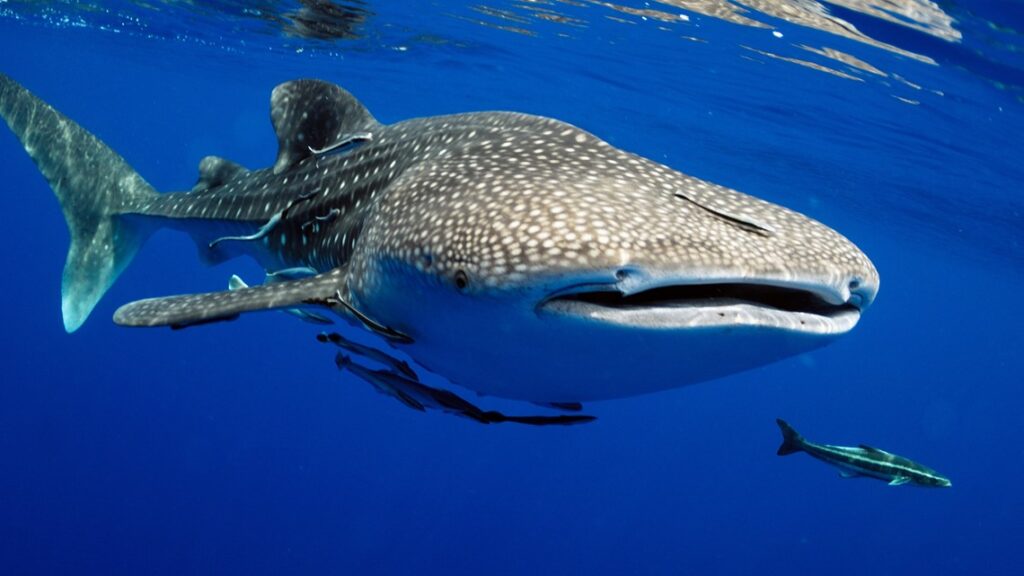
Whale sharks are majestic and gentle giants of the ocean. As the largest fish species in the world, reaching lengths over 40 feet, they are a major draw for marine tourism. However, the rise of irresponsible whale shark tourism practices is causing serious harm. Feeding, crowding, and disruption of migration patterns is negatively impacting whale sharks, which are listed as Endangered on the IUCN Red List.
I have always been amazed about the whale sharks, the gentle and graceful giants of our oceans. As many travelers I wanted to encounter a whale shark once in my life and I did. I was excited to see the animal for the first time in my life. It was in SE Asia while travelling where I was approached by a man offering whale shark sightings and swimming. My eyes became all big and sparky at that moment. In my “little perfect world” I imagined a small group going with a boat to an open ocean and looking for the whale sharks to spot them.
If we are lucky to see them we might go and snorkel with them as well. As the day came the reality hit and the experience became one of the most heartbreaking ones in my life.
A mass of people were gathering for a briefing on how to responsibly interact with whale sharks. We were told to only observe and stay at least 4 meters away from them. As we went to the shore around 15 small boats were waiting for us. Every boat could take 5 people only. I was confused how we going to be safe in those small boats in the open ocean far from the shore.
Well we didn’t go far, we were only 20 m away from the shore when the boat stopped. We were told to go in the water when some men started throwing shrimps into it. All 15 boats were very close together when 6 whale sharks came to feed on the shrimp. Once everybody was in the water (45 people at least) the chaos began. There was no space to observe them from a 4m distance as we and the whale sharks were crowded in a small area.
They gave us 20 minutes of time with them – after that a new group of the same amount of people will enter the water with them. This is going to be all day long, 7 days a week, 365 days per year. I felt horrible seeing people touching the animals all the time, even if you wanted to prevent physical contact it was not possible due to the small crowded area. I was one of the first ones climbing back on the boat because I didn’t want to participate in that horrible chaos and stressing the animals out.
I felt irresponsible to participate in the activity and not inform myself prior to it. Afterwards I did some research about the activities that I participate in as a traveler to avoid being a part of a negative impact to any of our beautiful animals on this planet. I had the chance to encounter whale sharks quite a few times under water while diving. They were there in their natural behavior and as it was an unexpected encounter it made the experience harmless to the animal, positive and unforgettable for me.
Unfortunately whale shark tourism is increasing every year because of the increased demand. Let me explain how these irresponsible interactions have a negative effect on whale sharks as they already are in decline.
Whale sharks normally follow nutrient-rich plankton blooms over long migrations. However, feeding by tour operators is changing their natural behavior. Whale sharks remain in feeding areas instead of migrating [1]. This affects breeding, as the sharks are prevented from reaching mating and pupping grounds [2].
The feeding teaches whale sharks to associate boats and humans with food. They actively approach boats, instead of avoiding them. This risky behavior could lead to boat strikes and injuries outside of protected areas, where fishing vessels may mistake them for prey [3].

Crowding dozens of people and boats into a small area with whale sharks causes chaos. There is unavoidable physical contact, despite guidelines to keep 4m distance [4]. The surrounding crowds increase stress levels and disrupt natural behavior [5].
Boat strikes and propeller injuries are common, as the sharks spend more time at surface approaching vessels. Human bacteria and pathogens transferred by contact also pose an infection risk to the sharks [6].
Whale sharks normally feed on dense plankton patches during migration. But artificial feeding provides limited nutrition from bait fish or krill [7]. This may lead to poor health over time.
The sharks also waste energy chasing feeding boats, instead of naturally foraging [8]. And remaining in one area affects ecosystem balance, as whale sharks are not performing their role in nutrient transport across oceans [9].
The solution is transitioning to responsible whale shark tourism. Practices should minimize environmental impact and disruption of natural behaviors [10]. Ethical guidelines include:
We all desire memorable wildlife encounters. But our actions should not come at the expense of the animals. As consumers, we can drive change by avoiding unethical tour operators worldwide. Choosing responsible, sustainable whale shark tours is the solution.
By Florencia Juarez (Instructor at Mabul beach resort)
Coleoid cephalopods like octopuses, squid, and cuttlefish are true masters of disguise and camouflage thanks to their sophisticated skin coloration systems. Their ability to change color, pattern, and even texture almost instantly gives them a huge survival advantage in the ocean.
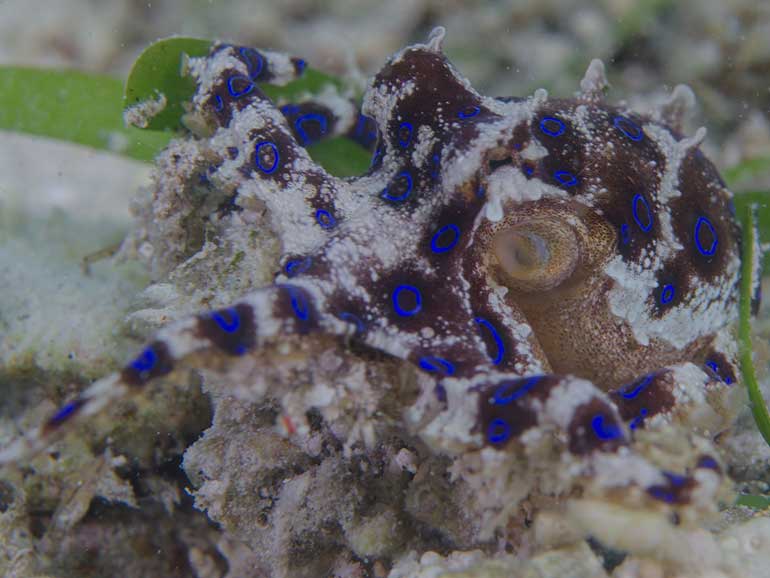
In this post, we’ll explore the amazing biomechanics behind coleoid skin color change and camouflage abilities. Read on to learn how these sea creatures manipulate specialized cells called chromatophores and muscles in their skin to pull off spectacular disappearing acts right before our eyes.
The key to the color-changing abilities of coleoids lies in specialized pigment-containing cells called chromatophores embedded throughout their skin. Each tiny chromatophore contains a sac of color pigment, usually red, brown, or yellow, surrounded by tiny muscles.
When the muscles contract, the chromatophores expand and become visible as splotches of color on the skin. When the muscles relax, the chromatophores contract into tiny dots, concealing the color.
By selectively contracting and relaxing different chromatophores, coleoids can rapidly change their skin’s colors, patterns, and textures to blend into their surroundings. While chameleons change color over seconds, coleoids can transform in just 50-200 milliseconds!
Some coleoids like cuttlefish and octopuses also have muscular hydrostats in their skin tissue. These specialized musculature systems allow them to deform their skin into bumps and ridges that precisely mimic the textures of surrounding rocks, coral, and more.
Males can even display mating signals to females on one side of their body while simultaneously showing aggression to rival males on the other. Their soft hydrostatic skin allows them to rapidly switch between cryptic and conspicuous displays.
With their sophisticated chromatophore and skin muscular systems, coleoids truly are masters of rapid camouflage and visual signaling unrivalled in the animal kingdom. Their neutral network-controlled skin provides a huge survival advantage, allowing these cephalopods to escape predators, ambush prey, and communicate right under our noses.
Next time you spot an octopus or cuttlefish, while diving in Mabul, take a moment to marvel at their incredible color-changing abilities!
Recently during a surface interval at Sipadan Island, as we filled out logbooks, one of the divers asked me, casually, “What’s your favorite fish?”
Any normal person would have answered the lighthearted question as it was asked. “Juvenile yellow boxfish are adorable!” “Mandarin fish are stunningly beautiful!” “I have a soft spot for goofy-looking porcupinefish.”
Nope. Not me. My brain started whirring. I wanted the precise terms of this question. The category “fish” immediately rules out some of my favorite marine animals.
Cephalopods of all types are amazing! We often see huge broadclub cuttlefish and it’s not unusual to see schools of 60+ bigfin reef squid around AWAS, one of our house reef sites. Their pearly iridescence and lightning fast color changes are incredible.
On one of my first night dives here I saw flamboyant cuttlefish eggs neatly tucked into coconut shells. A few days later there were beautiful tiny flambos everywhere you looked. Not to mention AWAS night dives aren’t really complete without white v and coconut octopuses. Oh and the mimic octopus, how can you not fall madly in love with those gorgeous, charismatic creatures?
Several of these incredible fish sightings were firsts for me. I’m lucky enough to have thousands of dives under my belt, across many different parts of the world, but one of the things I love most about diving is there’s always something new to discover. Seeing a rare or elusive critter, especially for the first time, is such a buzz!
Talking only about favorite fish also ignores one of my all-time favorite categories, nudibranchs. Over 10 years ago when I did my divemaster training, one of my fellow candidates labeled me a “nudi nerd,” and I have worn the title proudly ever since. Slugs might not be the reason most people get into diving in the first place, but many experienced divers develop a love for these diverse and colorful critters, even having a bucket list of species they’d like to see. Who could resist a nudibranch named Pikachu?
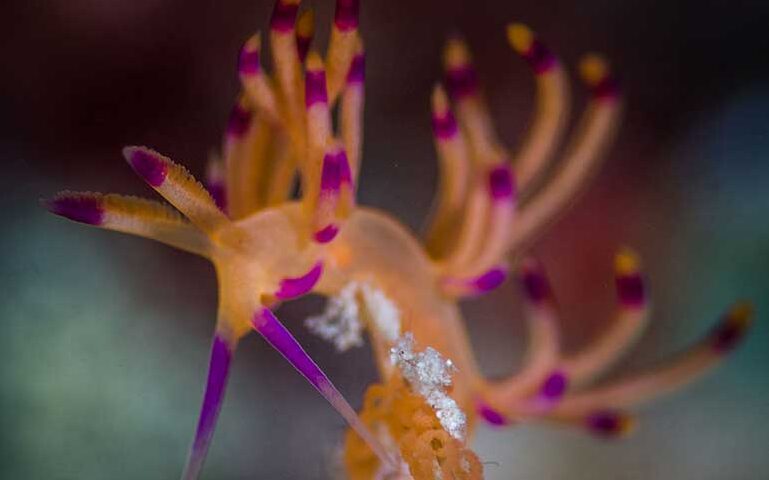
And shrimps? From the almost impossible to spot tiny hairy shrimp and the half-invisible skeleton shrimp, to the gorgeous harlequin shrimp and the more common but no less impressive peacock mantis shrimp, are we just going to forget about them?
“We’re not counting sharks or rays, right? Surely they deserve their own category.” I had to clarify. But that sent me down another rabbit hole. A favorite shark? How could you choose between the sleek, elegant leopard shark and the sheer size and grace of a whale shark? Hammerheads certainly must get a mention but then there’s also the intimidating power of an oceanic blacktip curiously, hungrily circling our group. Ok, I might be making up the hungry part but there is something humbling about being eyed by an apex predator.
And are we talking about a single fish, or could a school count? Sipadan is famous for its ‘residents:’ schools of jackfish, bumphead parrotfish and chevron barracudas. I’m always mesmerized by schooling fish and how they all move together seamlessly with split-second timing.
A single jack might not be the most exciting fish, but when hundreds of individuals school around you, being herded by giant trevally, it’s quite a sight!
Many might argue that bumpheads aren’t the prettiest of fish, but they do have their charm. To quote divemaster Andy “How can you tell the difference between a Napoleon wrasse and a bumphead parrotfish? The bumpheads are the ugly ones!” His comment always elicits a loud protest from me in defense of the bumpheads, but yes, Napoleon wrasses really are handsome.
Sometimes I grumble about the barracudas because they’re not very well trained. They don’t always stay on Barracuda Point, even though they have one of the best dive sites named after them. What divas! But does that mean I should discount them as my favorite fish? When there’s no current they spiral around each other in a vortex that is spectacular; the wall they form when there’s a strong current is equally breathtaking

The more I thought about it, the more weird and wonderful fish popped into my head for consideration. I’ve always loved scorpion leaf fish and cockatoo waspfish and the way they ‘sway’ to make themselves look like leaves drifting in the water.
No matter how many frogfish I’ve seen I still get excited every time, even more so if they’re awkwardly hopping along or ‘yawning.’
In fact, the more that I dive the more interested I get in these behaviors, as well as in the fish themselves. Seeing turtles perched up on their flippers to allow a variety of reef fish to clean them, spotting the mouth breeding yellow barred jawfish with its mouth full of eggs and watching a juvenile eagle ray, annoyed by the remora trying to get a free ride, suddenly shoot to the surface and breach to dislodge it, these are some highlights of my dives here.
All these animals I’ve mentioned (and many more, of course!) are ones I’ve seen this past year, diving the islands of Mabul, Kapalai and Sipadan. From macro gems to the big pelagic, the diversity of marine life here is stunning.
The answer is no! There are so many more fish I could mention but I don’t think I’ll ever get closer to picking a favorite. In the end, why ask me to choose? And you, do you have a favorite fish? I’d love to read about your most memorable or beloved fish encounters, whether diving or snorkeling. Share your stories in the comments below!
Written by Instructor Rache Mordue
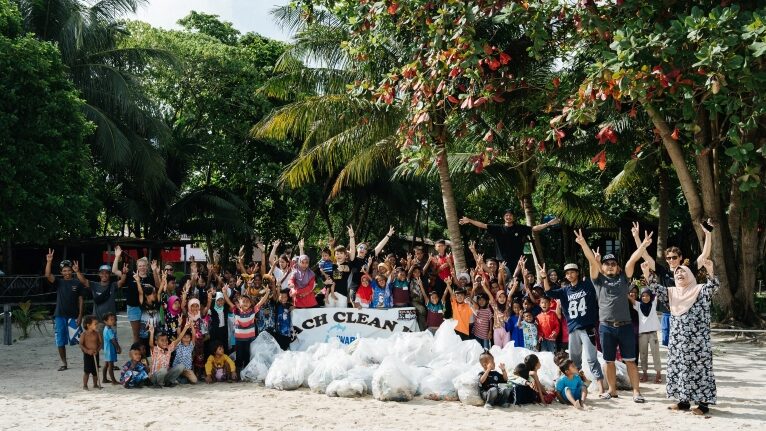
Each year, tons of trash and plastic waste wash up on shores around the world. This garbage pollutes the oceans, harms marine life, and turns pristine beaches into dumping grounds. Beach cleanups are a great way to combat this growing threat for the environment. But do they really make an impact?
In this blog post, we’ll explore what beach cleanups entail and the tangible and intangible benefits they provide. We’ll also highlight how cleanups raise public awareness, provide educational opportunities, and encourage community involvement. You’ll learn about the surprising items found via cleanups and how this “beachcombing” data helps scientists. We’ll also address some common criticisms and questions about beach cleanups and their efficacy.
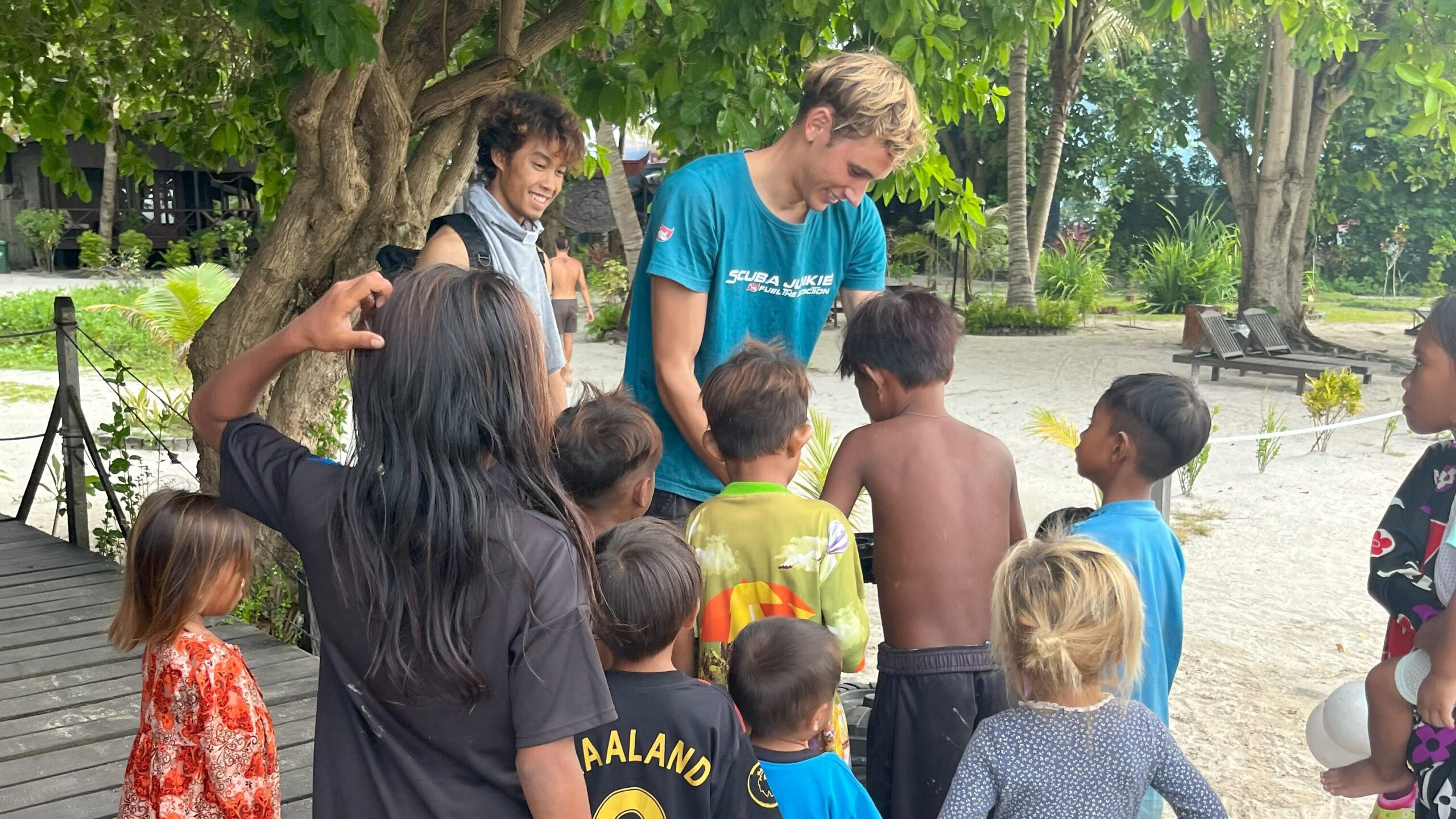
By the end, you’ll understand why beach cleanups are an easy, fun and rewarding way for people of all ages to have a real and measurable impact on this pressing environmental problem. You’ll learn why every piece of trash picked up matters. Let’s dive in to the important role we can all play through beach cleanups to keep our waves, sand and shores clean for generations to come.
A beach cleanup is exactly what it sounds like – an organized effort by volunteers to pick up and remove trash from beaches. Beach cleanups may be focused on a specific stretch of shoreline, or involve covering a broad area. Some cleanups are small efforts organized by local community groups, while others are large-scale events that convene hundreds or even thousands of volunteers. International organizations like Ocean Conservancy sponsor and promote major annual beach cleanups around the world.
Participants in a beach cleanup usually meet at a designated location and time. Organizers often provide supplies like garbage bags, gloves and pickup tools. Volunteers then fan out to scour the beach and collect debris. Some cleanup events are more meticulous, having volunteers comb systematically through set sections. Others take a more casual approach, allowing volunteers to wander and pick up trash as they go.
Debris collected ranges from small items like cigarette butts, bottle caps and food wrappers to larger objects like abandoned fishing gear, plastic bottles, bags, cans, tires and more. Unusual finds like household appliances and old cars even turn up! Collected trash is sorted, weighed, and disposed of or recycled properly. Data on the types and amounts of garbage is recorded to help understand pollution patterns.
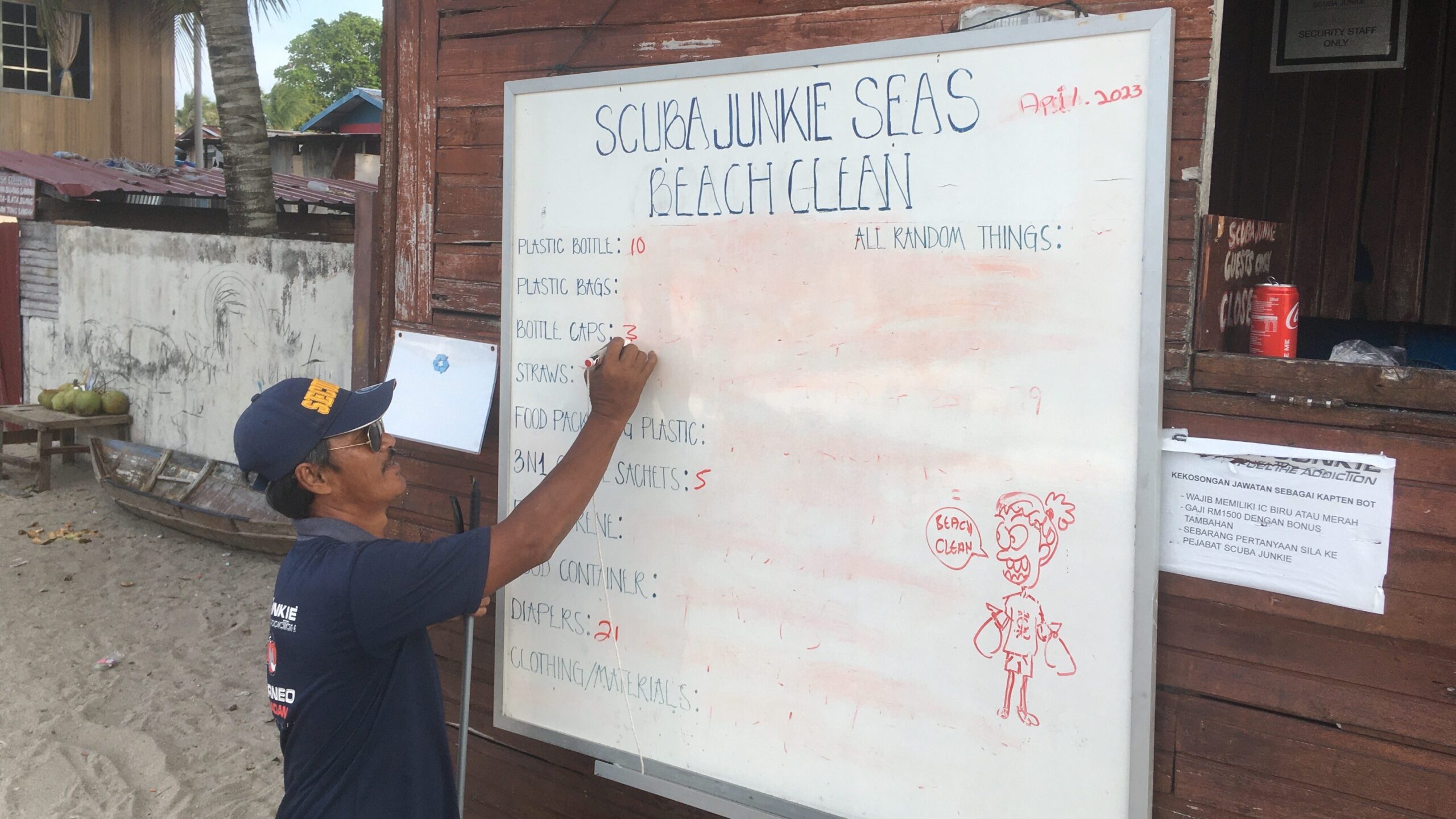
Beach cleanups help beautify beaches, preventing trash from washing out to sea or impacting wildlife. They also raise public awareness of the global marine pollution issue. Volunteers find beach cleanups rewarding, knowing their efforts contribute to environmental solutions.
With piles of trash removed from beaches each year by volunteers, it’s clear cleanups make a visible impact. But some may wonder whether these efforts really help since trash keeps washing ashore. However, research shows cleanups do actually make a significant difference.
According to the Ocean Conservancy, over 348 million pounds of trash has been collected over the past 35 years. That’s a staggering amount that would otherwise still be polluting beaches and oceans. Studies have quantified the volume of debris removed by cleanups at specific sites and extrapolated the larger impact. For example, a 2021 study by researchers at Norce Norwegian Research Centre estimated that between 4,000 and 12,000 tons of trash is removed globally by cleanups every year.
In addition to removing existing trash, cleanups help prevent debris from breaking down further and spreading back into the marine environment. Research has shown that environmental conditions can quickly degrade plastic bags, bottles and other rubbish discarded on beaches. So keeping shorelines free of litter stops this process. Cleanups also raise awareness of the scale of pollution, encouraging better consumer habits that reduce waste overall.
While a single cleanup may seem like a drop in the bucket, the cumulative effect of sustained efforts across countries and years is undeniable. The fact that trash keeps coming is precisely why cleanups must continue. Like tackling any big issue, real change happens through many small actions added together. Beach cleanups are a simple way we can all contribute to this vital effort.
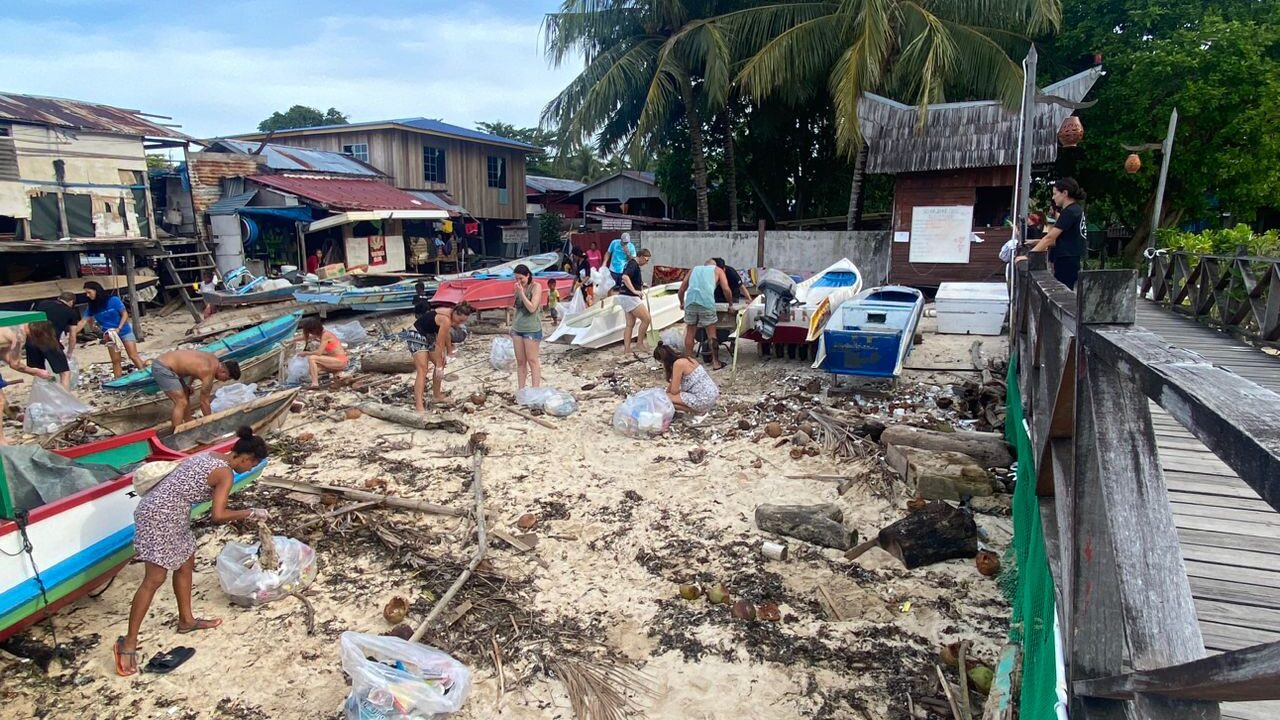
Care for the local environment is at the core of all our business operations at Scuba Junkie. We hold ourselves to high responsible tourism and eco-tourism standards, striving to reduce our own adverse impacts on the marine environment. We implement eco-friendly practices and technologies to contribute to a more sustainable future.
Scuba Junkie’s Mabul Beach Resort has featured on the Top Ten list since joining Green Fins in 2014, a feat made very difficult given the size of the dive operation.
We work together with S.E.A.S., holding weekly clean-ups to remove rubbish from the beaches, forests, and reefs surrounding our resort. We frequently collaborate on these cleanup efforts with local community members, grassroots organizations, NGOs, and other dive operators.

Together, we gather as many people as possible for clean-ups to make a bigger positive impact. By partnering with local stakeholders, we can raise awareness about environmental issues, take direct action through regular clean-ups, and promote sustainability in the region. Our shared commitment helps preserve the natural beauty and diversity that draws visitors to our resorts.
In addition to beach cleanups, Scuba Junkie takes action below the surface to protect the marine environment. Our dive team frequently conducts underwater reef cleanups to remove trash and debris that has sunk to the seafloor. On these dives, our instructors and divemasters comb through coral reefs collecting discarded fishing nets, anchors, bottles, plastic bags and other rubbish. These items can smother and break fragile corals, as well as entrap and endanger marine life.
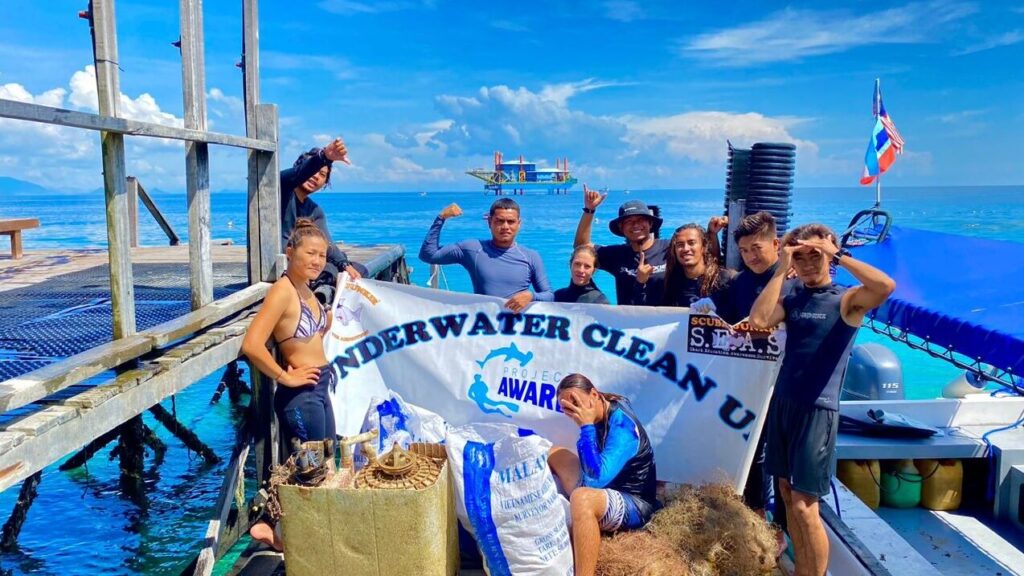
Visiting Mabul Beach Resort provides a rewarding opportunity to directly participate in conservation. When staying with us, you can join one of our weekly beach cleanups (every Saturday afternoon) to help remove and properly dispose of plastic litter and other trash along Mabul’s coastline. Witnessing first-hand the volume of waste collected will deepen your understanding of this environmental threat. You’ll gain satisfaction from actively contributing to the solution.
You can also minimize your own plastic waste. Making conscientious choices while traveling – refusing disposable plastics, recycling properly, and being mindful of your consumption – helps sustain the natural habitats and wildlife you came to experience. Your visit supports organizations working hard to protect this destination.
Back in your local community, many options exist to continue the effort. Joining local beach or river cleanups is an uplifting way to spend a few hours giving back. At home, pledging to cut back on single-use plastics makes a real difference multiplied by entire communities. Support campaigns to ban harmful materials or advocate for industry responsibility programs. Use your voice on social media to spread sustainability tips and spotlight environmental challenges.
What may seem like a small effort can have a huge impact when multiplied by people worldwide. Beach cleanups actively remove tonnes of harmful debris, prevent further environmental harm, raise public awareness, and provide data to inspire change. By participating in cleanups at home or on your next vacation, you can help stem the tide of plastic pollution threatening our oceans. The positive impact is real. Beach cleanups matter.