

For many divers, going pro does not start with a big decision.
It starts quietly.
You plan trips around diving.
You stay longer than expected.
You feel more comfortable on a dive boat than almost anywhere else.
And then, one day, a simple thought appears.
What if this was more than just a holiday thing?
What if I could keep doing what I love, learn more, and share it with others?
That is often how going pro as a scuba diver begins. Not as an escape, but as a natural extension of a lifestyle that already feels right.
Every professional diver has a different story.
Some people fall in love with diving immediately. They finish their Open Water course and know they want more. They continue straight through Advanced, Rescue, Divemaster, and eventually Instructor, because each step feels exciting and rewarding.
Others take more time. They dive, travel, return to everyday routines, and slowly realise that what they miss most is being underwater. The ocean keeps calling them back, until one day they decide to listen.
Both journeys are common. Both are valid.
What matters is not how fast you move, but that diving continues to play a central role in how you live and travel.
Going pro does not mean diving all day like you are on vacation forever.
But it also does not mean the fun disappears.
As a PADI professional, your focus shifts. You start paying attention to people, not just dive profiles. You notice who feels nervous, who needs support, and who is about to have one of the best days of their life underwater.
Responsibility grows, but so does satisfaction.
Helping someone relax, learn, and enjoy diving often becomes just as rewarding as your own best dive. The scuba diving world is built on this exchange of knowledge, passion, and shared stories, both underwater and back on the boat.
Divemaster is the first professional level in the PADI system.
This is where you move from being a recreational diver to becoming part of the dive operation.
During Divemaster training, you learn:
It is hands-on, social, and immersive. You are no longer just diving for yourself. You are learning how to take care of others underwater.
At Scuba Junkie Mabul, Divemaster training means working with multiple PADI instructors, not just one.
Each instructor has a different teaching style, way of briefing, and approach to problem-solving. Observing these differences allows you to learn broadly, reflect, and eventually develop your own style as a professional.
This variety is essential. It prepares you for real-world diving, where flexibility and adaptability matter more than memorising one way of doing things.
Divemaster courses start at the beginning of every month, but the learning continues every day through real experience.
It is important to clarify that professional training dives are not conducted at Sipadan.
All Divemaster and Instructor training dives take place around Mabul Island and Kapalai. These locations provide ideal conditions for skill development, teaching practice, and controlled progression.
Sipadan Island is reserved exclusively for certified divers. Training focuses on building strong foundations before divers progress to more demanding dive environments.
Once you go pro, travel slows down again.
You stop moving quickly from place to place. You stay longer, learn the reefs properly, and understand how conditions and marine life change over time.
Living and training in places like Mabul means your daily routine looks like someone else’s dream holiday. You are no longer visiting dive destinations. You are living in them.
This shift is one of the biggest changes professional diving brings.
For many professionals, the next step after Divemaster is becoming a PADI Open Water Scuba Instructor.
This is where guiding turns into teaching.
Instructor training focuses on:
Teaching new divers, especially during their first experiences underwater, is challenging, rewarding, and often a lot of fun. Watching someone grow over a few days of training never really gets old.
After becoming an instructor, some professionals choose to continue their development through the Staff Instructor course.
This level focuses on leadership and mentorship rather than entry-level teaching. Staff Instructors assist with Instructor Development Courses, support instructor candidates, and help evaluate teaching presentations and skills.
It is an ideal step for those who enjoy coaching, sharing experience, and playing a deeper role in professional-level training.
After completing Divemaster training or the Instructor course, we offer internships for newly certified PADI professionals.
These internships are designed to help graduates gain confidence and real-world experience by:
It is a supportive transition from training to working as a dive professional.
Becoming a PADI professional does not always feel natural at first.
Confidence builds with practice. Teaching improves with repetition. Decision-making becomes clearer over time. This learning curve is normal and expected.
Professional diving is a skill set you develop, not something you need to master on day one.
No. You need solid fundamentals and commitment. Experience builds quickly during training.
Yes. Most professionals live and work in destinations others only visit on holiday.
No. It is social, active, and deeply rewarding.
Yes. It is the first professional level in the PADI system.
Yes. PADI certifications are globally recognised.
For many divers, yes, especially if you enjoy teaching and sharing knowledge.
Going pro as a scuba diver is rarely about escaping life.
It is about leaning into something that already shapes how you travel, where you feel at home, and what excites you. Staying longer. Learning more. Sharing experiences. Living closer to the ocean.
You do not need all the answers right away.
Sometimes, staying curious is enough to change everything.
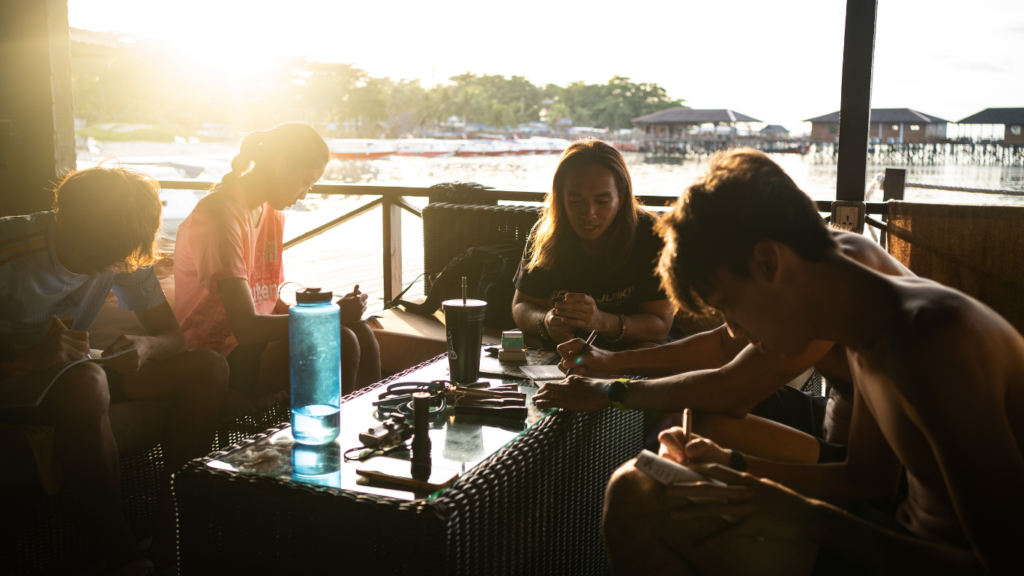
There is a moment every diver remembers.
You are planning a trip, scrolling through destinations, and suddenly you are not looking at cities, hotels, or landmarks anymore. You are thinking about turtles, wrecks, sharks, or that one dive site you have dreamed about for years.
That is where how diving changes the way you travel really begins.
Not loudly. Not dramatically. Just quietly rewriting how you choose where to go next.
Before diving, travel plans usually start with places.
After diving, they start with questions like:
As divers, many of us carry a mental bucket list. Some people collect cities. Divers collect experiences underwater.
That bucket list often decides the next destination long before flights or hotels enter the conversation.
Some divers chase whale sharks. Others want macro life, caves, walls, or historic shipwrecks. Some dream of strong currents and fish action. Others want long, quiet dives.
This is why diving changes the way you travel so completely.
You are no longer traveling to see places. You are traveling to meet life underwater.
Only after that do the practical questions come in. Conditions, seasons, and logistics follow the dream, not the other way around.
One big shift happens quietly but permanently.
Divers stop planning trips around regular summer holidays.
Instead, you start asking:
Sometimes that means traveling outside peak tourist months. Sometimes it means accepting wind, rain, or cooler water in exchange for unforgettable dives.
Travel becomes more intentional and far less generic.
Once the dream is set, reality steps in.
Now you care about:
But by this point, you are already committed. You understand that conditions change, marine life moves, and nothing is guaranteed.
This acceptance is part of what makes dive travel different. You stop chasing perfection and start appreciating timing, patience, and surprises.
Dive travel connects people fast.
You meet strangers on boats at sunrise and feel like friends by lunchtime. You share gear space, surface intervals, stories, and sometimes nerves.
Many divers return to the same places not just for the diving, but for the community. Destinations like Mabul Island become familiar, comfortable, and deeply personal over time.
Dive travel builds friendships that regular travel rarely does.
For some divers, travel changes in another important way. It becomes purposeful.
Instead of just visiting dive destinations, divers start traveling to give something back. Reef clean-ups, coral restoration projects, marine research support, and conservation volunteering become part of the journey.
These trips are not about luxury or ticking off dive sites. They are about time, commitment, and contribution. Diving stops being something you do on holiday and becomes a way to actively protect the places you love to visit.
Diving changes your pace.
Early mornings replace late nights. Surface intervals force breaks. No-fly times slow your movement between places.
Instead of rushing through destinations, you settle into them. You notice details. You listen more. You stay longer.
Travel becomes less about seeing everything and more about being present where you are.
At some point, many divers stop asking where they want to go next.
They start asking how long they can stay.
Trips stretch. Return visits become normal. Remote locations feel familiar. Comfort zones widen.
This is often when a quiet thought appears.
What if this was not just travel anymore?
Becoming a dive professional changes travel again.
You are no longer traveling just to tick items off your own list. You travel to guide, teach, and support others through their first underwater experiences.
Your connection to places like Sipadan Island deepens. You learn its rhythms, its moods, and its surprises.
Travel becomes less about personal achievement and more about responsibility, consistency, and sharing the ocean with others.
Most dive professionals did not plan it from day one.
It usually happens because:
Going pro is not about escaping reality. For many, it is about aligning life with what already feels right.
In the next article, we will explore what happens when diving stops being just a passion and becomes your work.
We will talk about:
We will also share details about upcoming professional courses for those who feel ready to take that step.
Divemaster courses start at the beginning of every month.
Because marine life, dive types, and underwater experiences come first.
Yes. Conditions and marine life matter more than holiday calendars.
Yes, and that slower pace is often what divers love most.
Because no two dives are ever the same, even at the same site.
Often when diving already shapes how they live and travel.
It is about both, and the two become deeply connected.
How diving changes the way you travel is not something you plan.
It happens naturally. You follow marine life instead of maps. You plan seasons instead of holidays. You slow down, connect more, and sometimes discover a whole new direction in life.
And for many divers, that is just the beginning.

Deep diving has a certain mystique.
For many divers, going deeper feels like progress — a milestone that signals confidence, experience, and adventure.
But an honest question deserves to be asked:
Is deep diving really worth it?
At Scuba Junkie Sipadan, we see divers at every stage of their journey. Some can’t wait to go deeper. Others aren’t sure why they should. And many feel pressure — subtle or direct — to believe that deeper is better.
The reality is more nuanced.
The desire to go deep usually comes from a mix of curiosity, ambition, and culture.
Some common reasons include:
None of these motivations are wrong. But they are often emotion-driven, not always experience-driven.
Depth feels like progress because it’s measurable.
Comfort, awareness, and judgment are harder to see — but far more important.
Depth doesn’t just add meters. It changes the entire dive.
The deeper you go, the faster you breathe your gas. Bottom time shortens, and dive planning becomes more important.
Monitoring depth, time, air, buoyancy, and your buddy requires more focus. Small mistakes have bigger consequences.
For many divers, nitrogen narcosis begins to appear beyond 30 meters — affecting judgment, reaction time, and awareness.
Ascents, safety stops, and emergency procedures require more discipline. There’s less room for improvisation.
Deep dives aren’t just “normal dives, but deeper.”
They are different dives that demand different skills and mindset.
Short answer: no — and that’s okay.
Deep diving is worth it when it has a purpose.
It makes sense when:
It’s not worth it when:
Some of the best dives in the world happen above 20 meters — with longer bottom times, more relaxed breathing, and better observation.
Depth alone does not make a dive memorable.
In many dive communities, depth becomes a quiet benchmark.
New divers often hear:
This can create the idea that staying shallow means staying behind.
But diving is not a race.
Progress in diving should be measured by:
Not by depth records.
Here’s an important distinction:
Going deeper does not automatically make you a better diver.
But becoming a better diver can make deeper dives safer and more enjoyable — if and when you choose them.
Better divers:
Sometimes the most advanced decision a diver can make is not to go deep.
Deep diving is absolutely worth it when:
Courses like the Advanced Open Water deep dive or the Deep Specialty exist not to push limits, but to teach respect for depth.
Depth becomes valuable when it’s understood — not chased.
Instead of asking:
Try asking:
These questions build better divers — and better communities.
Deep diving is worth it when it serves your growth, not your ego.
It’s worth it when it:
And it’s perfectly okay if:
In diving, the best dive is the one you enjoy safely — not the deepest one in your logbook.
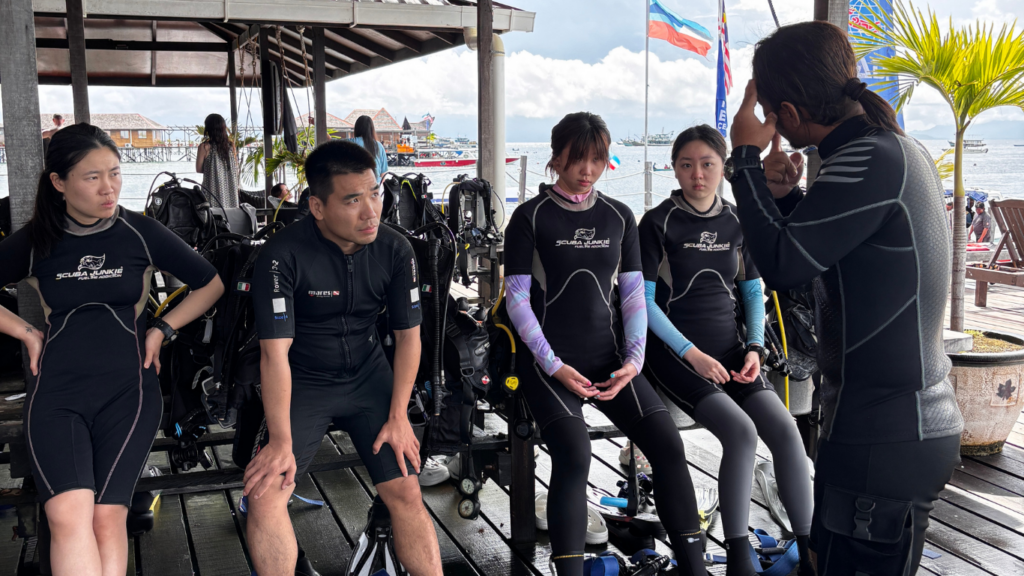
If you’ve felt the call of the ocean and want to take your first step into the underwater world, taking your Open Water Course in Borneo is one of the best ways to begin. Surrounded by warm water, vibrant reefs, and calm training sites, Mabul Island provides the perfect balance between comfort and adventure. At Scuba Junkie Sipadan, learning to dive is not only safe and accessible—it’s fun, relaxed, and unforgettable.
This is where everything starts: your skills, your confidence, and your journey into a lifetime of diving.
One of the biggest advantages of learning with Scuba Junkie on Mabul Island is our underwater training platforms. These stable, purpose-built structures allow students to practice skills comfortably and safely, making the learning process smoother and far less intimidating. For new divers, this setup removes the uncertainty of open-water skill practice and helps build confidence from the very first session.
Mabul offers warm water, excellent visibility, and gentle conditions—exactly what new divers need. Sandy bottoms, slow-moving currents, and natural protection around the island help students relax and focus on mastering their skills.
Our instructors are patient, attentive, and highly experienced. Small group sizes ensure personalized attention, allowing students to learn at their own pace. For many divers, the first few breaths underwater are unforgettable, and having the right support makes all the difference.
To make your time on the island more enjoyable, the course begins with eLearning. You complete all theory online at your own pace before your trip. That way, when you arrive on Mabul, you’re not stuck in a classroom—you’re ready for the water.
Your PADI Open Water Course in Borneo includes three full days of in-water sessions:
These days are designed to be fun, supportive, and full of “wow” moments as you experience the underwater world for the first time.
During the course, you’ll master:
By the end, you’ll have a strong foundation that prepares you for future adventures.
All training dives take place around Mabul, which offers perfect conditions for beginners. The environment is relaxed but still exciting, giving students a real sense of exploration while staying within safe limits.
Even while training, you may see:
Seeing marine life from your very first dives adds a spark of excitement to the learning process.
Sipadan is world-famous for its drop-offs, currents, and exhilarating drift dives. Because of its depth and dynamic conditions, an Advanced Open Water certification is required to dive there. This ensures divers are prepared and confident before taking on more challenging environments.
If Sipadan is your goal—and for many people it is—we offer packages that combine:
This is the ultimate Borneo diving trip, taking you from your very first breath underwater all the way to one of the planet’s most iconic dive sites.
Typically three days on Mabul, plus eLearning completed before arrival.
No—just basic swimming skills and comfort in the water.
No. Sipadan requires Advanced Open Water due to conditions and depth.
Absolutely! Mabul has rich reefs even at beginner depths.
Yes—this ensures more time in the water and less time in a classroom.
Yes, Scuba Junkie offers packages that include OW + AOW + Sipadan.
Choosing to complete your Open Water Course in Borneo is choosing warm water, vibrant reefs, skilled instructors, and the perfect environment for learning. Mabul Island gives beginners the ideal start, and with the option to continue on to Advanced training and Sipadan, your diving journey can expand quickly into unforgettable experiences.
If you feel the call of the ocean, this is where everything begins.
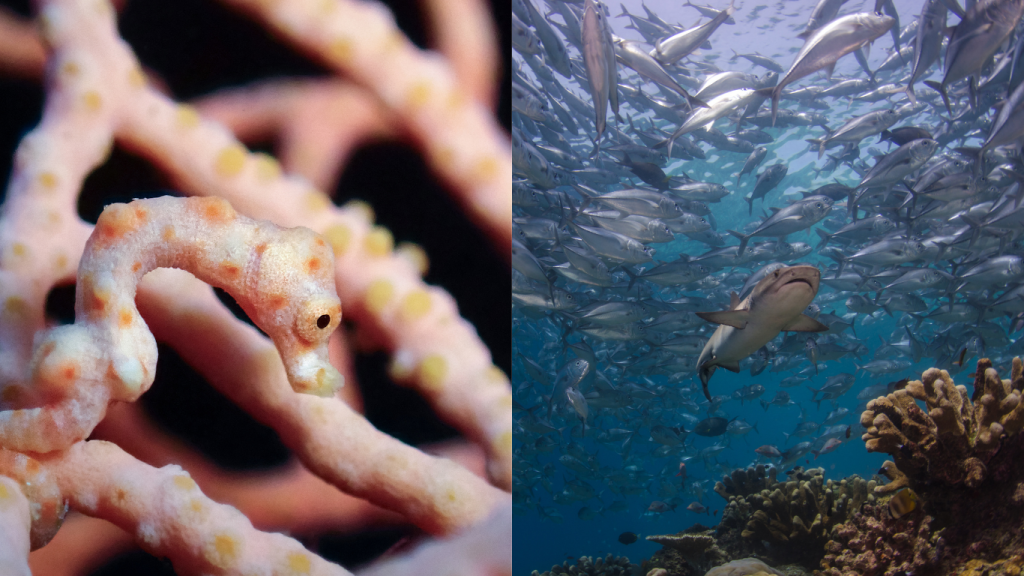
Why Two Dive Destinations Are Better Than One becomes obvious the moment you realize Borneo isn’t just a small dot on the map—it’s the third-largest island in the world, shared by Malaysia, Indonesia, and Brunei. If Sipadan is what caught your attention in the first place, you’re not alone. For many divers, it’s the very reason Borneo enters the bucket list.
But when you zoom out and see that Borneo holds some of the richest marine ecosystems in Southeast Asia, a new idea forms naturally:
If you’ve already come this far… why not see as much as you can?
That’s where the Scuba Junkie Combo Package comes in—not just as a discount, but as a doorway to exploring multiple destinations, two countries, and completely different underwater worlds in a single trip.
Scuba Junkie didn’t choose its locations by accident. Each site—Sipadan, Sangalaki, Komodo Resort, Nusa Penida, Kota Kinabalu—was selected for one reason: marine life that consistently delivers.
This is where the ocean feels alive in every direction. Divers come for:
Sipadan is fast-paced, wild, and unforgettable.
Across the maritime border in Indonesia, Sangalaki offers a calmer, sandy-bottom paradise filled with wildlife encounters you talk about for years. Here, you’ll find:
Sipadan gives you adrenaline.
Sangalaki gives you awe.
Together?
They create the ultimate Borneo diving journey.
Most divers begin planning with a single destination in mind“ Sipadan, I’m coming for you.” But the deeper they explore, the more they realize how much Borneo holds. That’s when they stumble on the Combo Package and discover that Scuba Junkie offers up to 20% off dives when combining locations.
It works like this:
Each location requires 4 dive days minimum, and deposits for all chosen destinations are paid at the same time. Trips can be spread across 12 months, giving you complete flexibility.
Transfers between locations aren’t included, but we help arrange them through local community boats, supporting the families who’ve lived on these waters for generations.
And yes!
If you love one destination so much that you return twice?
You still get the combo discount.
Sipadan requires an Advanced Open Water certification, so many divers begin their journey in Kota Kinabalu—a relaxed, warm-water environment perfect for training.
From there, they move on to Sipadan ready, confident, and excited.
And with the combo discount, KK + Sipadan becomes a smart, affordable progression.
If you’re already in Borneo, you shouldn’t miss the land wildlife. That’s where River Junkie, Scuba Junkie’s sister company, comes in.
Based in Kota Kinabalu, River Junkie arranges Borneo’s best land tours—
and in 2024, they opened Hornbill Lodge on the Kinabatangan River, one of Asia’s richest wildlife corridors.
Think orangutans, hornbills, proboscis monkeys, crocodiles, and pygmy elephants—
all in the same day.
It carries the same Scuba Junkie spirit: ethical, passionate, unforgettable.
(No combo discount here, but worth every moment.)
If your travels start in Indonesia, many divers pair:
Some divers take it even further—
visiting every Scuba Junkie location within a single year.
Malaysia + Indonesia.
Walls + mangroves.
Turtles + tornadoes.
Macro + pelagics.
And yes—
the more destinations you combine,
the bigger your dive discount becomes.
No matter which route you choose, we help you plan everything before you even step on the plane. Every location is different, but the spirit is the same.
We’re thinking of writing a full blog on “Everything You Can See in Borneo (Underwater and On Land)”—
Should we publish it next?
Tell us in the comments!
In the age of social media, we all want to know exactly what to expect before a trip. We research, we scroll, we compare—because holidays are short and we want every minute to count. Your Sipadan diving day should feel effortless from the moment you step on the plane.
That’s why at Scuba Junkie Sipadan we plan with you well in advance, lock in permits, and sort the details before you arrive. So when your Sipadan diving day comes, you’re already in holiday mode—no stress, no guesswork, just diving.
🔔 Note: Sipadan is closed every November for marine restoration.
We only offer Sipadan diving days to divers staying with us in Mabul. Our boats leave early—well before the day trippers from Semporna—so you arrive to calm jetties, gentler seas, and a head start on the action.
05:30 – Breakfast opens
Coffee, tea, eggs, toast, fruit—fuel up for a big day. The sunrise paints the lagoon gold while you eat.
06:00 – Meet at the jetty
A two‑minute barefoot stroll from the resort. Your guide greets you, checks you have a copy of your passport and dive certification (needed for Sabah Parks), and confirms your gear. Our team has already set up your BCD and regulator; you just collect your mask, fins, and weights.
06:15 – Boat briefing & departure
Meet the captain and crew. Expect ~30 minutes to the island in good conditions (up to ~45 with wind and waves). Jacket on, face to the breeze—this is the sunrise you flew across the world for.
06:45 – Arrive at Sipadan
We land, sign in with the rangers, and show your digital passport/license photo. The excitement is real—you can hear the reef before you see it.
Site & safety briefing
A quick history of Sipadan, how the island became a protected park, and what makes today special. Your guide may offer an optional blue dive (a mid‑water deep dive away from the reef, max ~25 m) to search for shy visitors like hammerheads. They don’t appear every day, but even the blue itself—hovering in the deep, scanning the blue‑on‑blue—is a thrill.
07:15 – Dive 1
If the group chooses a blue dive, we’ll do it first while everyone is fresh and the No Decompression Limit is longest. Dives in Sipadan are up to 60 minutes or until the first diver hits reserve. We finish shallow over the reef—an aquarium view of turtles and schools.
08:30 – Second breakfast & log time
Hot drinks, fruit and snacks. We flip through the fish ID books, match species, trade stories.
09:30 – Dive 2
After a one‑hour surface interval, we brief and splash for the second dive. You may drift along a wall of soft light and shadows while reminding yourself that only a limited number of people get to experience a Sipadan diving day each sunrise.
11:15 – Lunch & island wander
Back on the island, we serve lunch with vegetarian and vegan options (we keep a no‑fish policy). If time and conditions allow, your guides may walk you to the turtle hatchery area, past the coconut palms and the military post, often with a cameo from the island’s mischievous cats.
12:30 – Goodbye Sipadan, hello third dive
Sabah Parks limits each diver to two dives at Sipadan. Your package still includes three dives per day, so we make the third on the way home at Mabul or Kapalai. Swap your wide‑angle for macro and let the treasure hunt begin.
14:00–14:30 – Back to Mabul
You return to the same jetty you left, a little saltier, a lot happier, and with a camera full of memories.
We try not to repeat dive sites during your Sipadan diving day, but truthfully, repeat dives can be magic—conditions change, and new actors take the stage. People often ask for Barracuda Point and South Point, and for good reason. Still, at Sipadan it’s less about the name on the slate and more about finding the residents that day.
Residents you might meet:
This is the Sipadan diving day we aim for on a perfect forecast. Times can shift with wind and sea state—especially in January–February and July–August when breezes are livelier. We don’t have monsoons here, but quick showers can roll through.
Bring:
Pro tip: Safety stops are a great moment to practice stillness and buoyancy—you’ll see more when you move less.
Our Sipadan diving day schedule starts early to beat crowds and catch the best windows. That’s why we reserve Sipadan slots for guests staying at our resort in Mabul. It keeps logistics smooth and gives you the unrushed day you came for.
What part of a Sipadan diving day are you most excited about—the blue dive, the jackfish ball, or the third macro dive at Kapalai? If you’ve dived Sipadan with us before, did we nail the vibe here? Drop your wish‑list or memories in the comments—we read every one and plan future guides around your questions.
Permits are limited daily by Sabah Parks. Current fees (subject to change): Divers RM450; Snorkelers RM100.
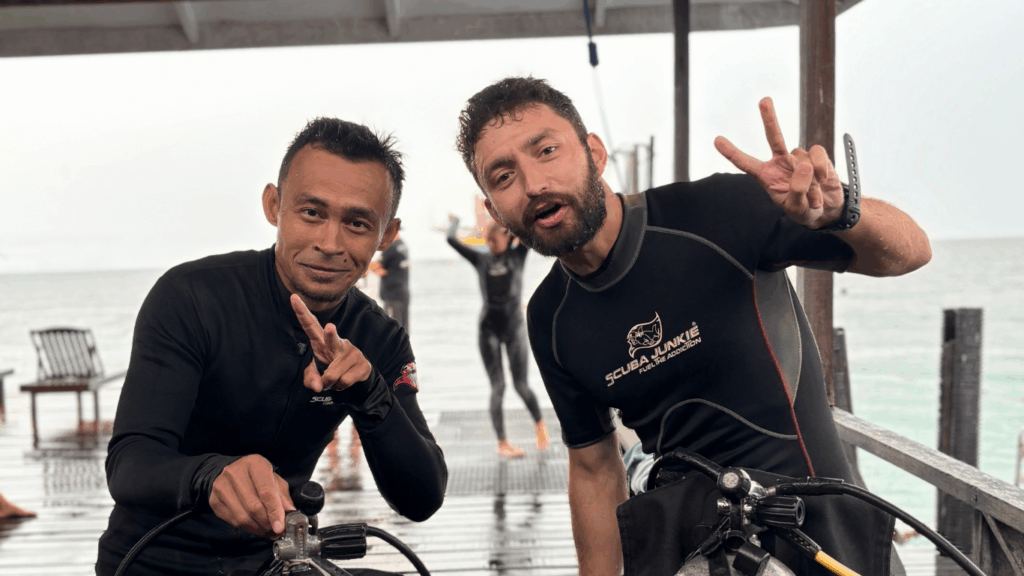
Mabul and Kapalai are beautiful. Si Amil is quiet and full of macro wonders. But Sipadan is the reason divers travel across the world to this corner of Borneo.
That dream? It’s not as easy as jumping in.
With strict regulations from Sabah Parks, diving Sipadan means meeting certain requirements—including holding your advanced open water certification.
But don’t worry—this post has everything you need to know.
🎉 And if you’re ready to book, don’t miss our Festive Flash Promo — 10% to 20% off Sipadan Packages (details at the end).
There was once a time when Sipadan was open and wild. Divers could do training dives, night dives, and even stay in a resort on the island itself. The coral walls were endless playgrounds. Four dives a day? No problem.
Then, in 2002, everything changed. Malaysia won sovereignty over the island, declared it a protected national park, and all resorts were removed. Sipadan was closed for six months while the facilities were dismantled.
By 2008, a permit system was introduced—first 120 permits per day. Later, 176. Then, in 2022, the current rules came in:
It’s still a dream—just one that’s now protected for future generations.
Short answer: No.
As part of Sabah Park regulations, only divers certified as Advanced Open Water (or higher) are allowed to dive Sipadan.
But that doesn’t mean you’re out of options:
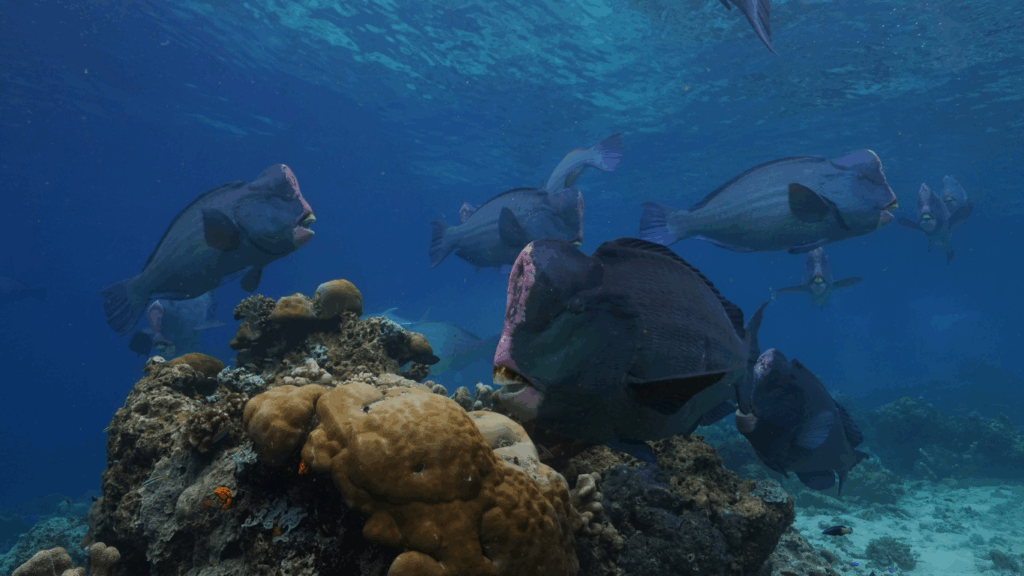
Even without a diving license, you can experience the magic. Shallow reefs are home to schooling jackfish, bumphead parrotfish, and turtles the size of bathtubs.
If you’re an Open Water diver ready for more, we’ve got your back. Our combo packages allow you to take your Advanced Open Water course in Mabul and add Sipadan days right after!
Not certified yet? We’ve thought of that too. You can take both your Open Water and Advanced Open Water certifications back-to-back—then dive Sipadan with confidence.
We call that the ultimate dive holiday!
📌 Sipadan permits:
The Advanced Open Water (AOWC) at Scuba Junkie is 2 full days and includes 6 dives:
*Why we do this? The Peak Performance Buoyancy dive will usually be your first dive. This allows your instructor to assess your level and tailor the rest of the course to help you improve where needed.
Some of the elective options include:
Bonus: No exams! And our instructors make learning fun with challenges and games that help you master your buoyancy and trim.
📌 These rates are based on October 2025 and are for dormitory shared rooms. We offer different room categories—ask us for options!
Packages include:
✔️ Accommodation of your choice
✔️ 3 meals + snacks
✔️ 3 dives per day
✔️ Boat transfers
✔️ Equipment (including dive computer during courses)
✔️ Certification fees
📌 Note: On your Sipadan day, you’ll do 2 dives around Sipadan and 1 dive at Mabul or Kapalai.
📌 Important: Sipadan is only available as part of a package for guests staying at our resort. We do not offer day trips or standalone diving at Sipadan.
Not included:
Book your Sipadan adventure and get up to 20% OFF!
Book ANY Sipadan Package:
Not sure which course or package is right for you? Whether you’re thinking about leveling up your certification or diving for the first time, just send us a message and we’ll help you find the perfect fit.
📣 Is there anything we didn’t cover in this blog that you’d like to know more about? Let us know in the comments or drop us a DM—we’d love to hear from you!
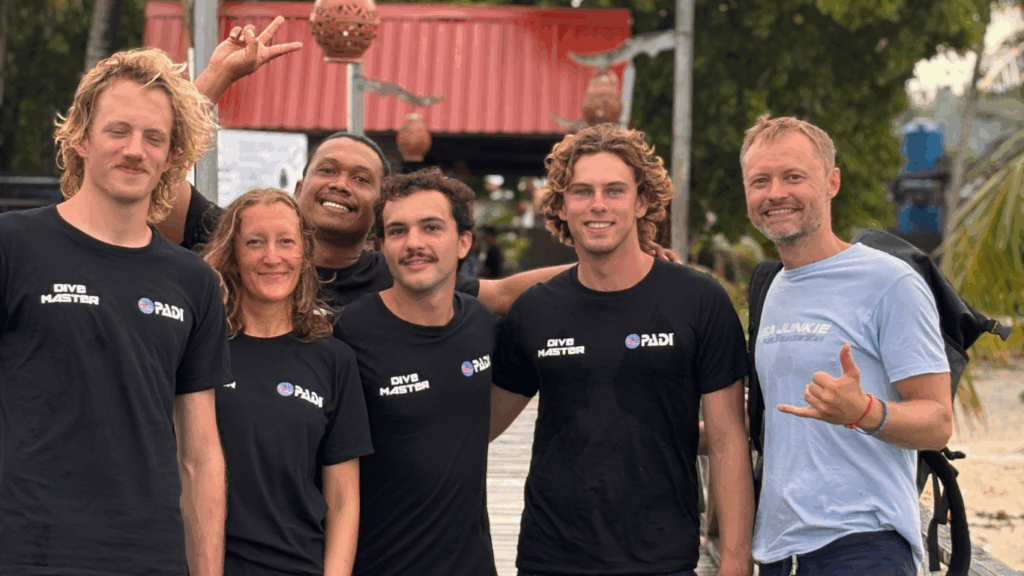
We get it. You’ve scrolled through endless reels of people diving in Indonesia, surfing in Mexico, or sipping coconuts in the Philippines—living the so-called dream life. And every time, you ask yourself:
“How do they afford it?”
Most people assume that full-time travel is only for the lucky few with rich parents, remote jobs, or trust funds. But what if we told you there’s a real, achievable path that lets you travel full-time without money, and even better—get paid to be in the ocean every day?
This isn’t a gimmick. It’s a lifestyle. And it starts with becoming a PADI Divemaster.
The PADI Divemaster Course is the first level of professional dive training. It teaches you how to:
But more than anything—it’s the gateway to living and working in paradise.
Whether you want to freelance your way through Southeast Asia, join a dive shop in the Maldives, or work seasonally on a liveaboard in Mexico… Divemasters are always in demand.
And it all begins in Mabul.
At Scuba Junkie Mabul, we’ve been training Divemasters for over a decade. Here’s what makes our program different:
Our program doesn’t just prepare you for the exam. It prepares you for real life—leading dives, handling gear, working with guests, and being part of a close-knit team.
You’ll come out of the course not just certified—but ready to work anywhere in the world.
*Extra fees will apply
Let’s address the elephant in the room: Money.
Most people delay travel because they think they need to save thousands first. But becoming a Divemaster flips the script. You train once—and then you have a skill that lets you work your way around the world.
Whether it’s:
…as a certified PADI Divemaster, your office becomes the ocean.
The best part? Once you’re certified, you’re qualified for entry-level dive jobs immediately.
So if your dream is to travel full-time without money, the PADI Divemaster Course is your golden ticket.
At Scuba Junkie, the course takes around 4 weeks. You’ll live, breathe, and dream diving. Here’s a glimpse:
Every month, new DMCs (Divemaster Candidates) start their journey with us—and leave not only more skilled, but more confident, connected, and inspired.
You’ll also take part in community initiatives with Scuba Junkie SEAS, learning about marine conservation, coral nursery work, and turtle hatcheries. It’s the kind of education you won’t find in a classroom.
Anywhere.
Divemasters work across six continents. And whether you’re interested in guiding reef dives in Raja Ampat, helping on dive boats in Mozambique, or assisting with courses in Mexico—your certification travels with you.
You’ll gain access to global job boards, local connections, and a worldwide network of divers and professionals.
In fact, many of our past DMCs are now instructors, cruise directors, or dive shop managers all over the globe.
Your journey starts here, but where you go is up to you.
The next time you see a reel of someone diving with turtles, walking barefoot on a jetty, or logging dives in their notebook on a beach…
Remember: That could be you.
You don’t need a trust fund. You don’t need a fancy job. You just need the drive to change your life—and the willingness to take the first step.
Got questions about becoming a Divemaster or what it’s really like to travel full-time without money? Drop them in the comments. Let’s make it happen!

We bring you the secrets to lear the basic scuba diving skills –
You’ve seen them underwater—divers who move with elegance, control, and effortless grace. They hover like astronauts, glide silently, and hardly seem to breathe. Watching them feels like watching a slow, beautiful dance.
How do they do it?
It all comes down to three essential scuba diving skills: Trim, Finning, and Air Control.
These aren’t just advanced scuba diving skills. They’re what separate a diver who survives underwater from one who thrives. And they’re easier to master than you think—once you know what to focus on.
Let’s break them down.
Trim is one of the best scuba diving skills, and it refers to your body position in the water. Ideally, you want to be perfectly horizontal—head, hips, and knees aligned. Why?
A good trim feels like flying. But many divers start out too vertical or too fin-heavy. That’s okay—it’s part of the scuba diving skills learning process.
At Scuba Junkie, we teach proper trim early—during the Peak Performance Buoyancy dive in the Advanced Open Water course. Using platforms and natural swim-throughs in our house reef Awas, we help students fine-tune weight placement, body awareness, and movement.
The result? You glide instead of sink.
Your legs are your engine underwater—but not all engines run the same. Efficient finning isn’t just about power, it’s about control.
We’re not in the water to swim laps—we’re there to observe marine life. The more still you are, the more likely you are to experience close and magical encounters with curious fish or graceful turtles.
As a beginner, you often swim more and faster just to stay level—kind of like balancing on a bicycle. But the real scuba diving skill is learning to stay neutrally buoyant while barely moving. Safety stops are a perfect time to practice this: still, focused, and balanced in place.
During drift dives, this becomes essential. You’ll use your fins only for gentle directional control—never to fight the current. Letting the ocean carry you allows you to follow the reef, not miss it. Here, buoyancy control is everything.
The most common finning styles:
Many beginner divers kick too much, too fast, and from the knees—burning through energy and air. Our instructors (ask Afat or Joshua!) love helping students unlock better finning styles that work for their body and dive type.
It’s not about copying others—it’s about finding your rhythm.
This might sound obvious, but how you breathe underwater makes a huge difference.
Unlike on land, breathing underwater takes intentional awareness. On the surface, breathing is automatic—but beneath the waves, it’s something we must consciously control. At first, it might feel tiring or unnatural. Like learning to ride a bike, it takes focus and practice. But eventually, it becomes second nature.
Relaxed, deep breathing helps you:
We teach divers to breathe using their diaphragm and to pause slightly after each inhale—never holding the breath, but keeping it controlled. As your trim and finning improve, so does your breathing pattern.
The result? Longer dives, more confidence, and less stress.
You don’t need to be an advanced diver to start mastering these essentials. In fact, the sooner you focus on them, the better.
At Scuba Junkie, we emphasize trim, finning, and air control throughout our courses:
Our instructors are obsessed with these skills. It’s not unusual for them to bring rings, hoops, or mini-games to practice during your Advanced Open Water Course.
Want to level up even more? Ask about our Buoyancy Specialty Course, where you get focused coaching over two dives—and a whole lot of fun.
Sipadan is a diver’s dream, but it’s not the place to be learning basic control. The currents, deep walls, and protected marine life demand respect—and skill.
By mastering trim, finning, and air, you:
You don’t need to be perfect. But the better your control, the more Sipadan will open up to you.
Anyone can learn to dive. But when you start mastering trim, finning, and air, diving becomes more than a sport. It becomes art.
Whether you’re preparing for Sipadan, trying to improve your comfort, or just want to feel like a superhero underwater—focus on these three.
They’ll change your diving forever.
Which of the three skills do you want to master most? Tell us in the comments!
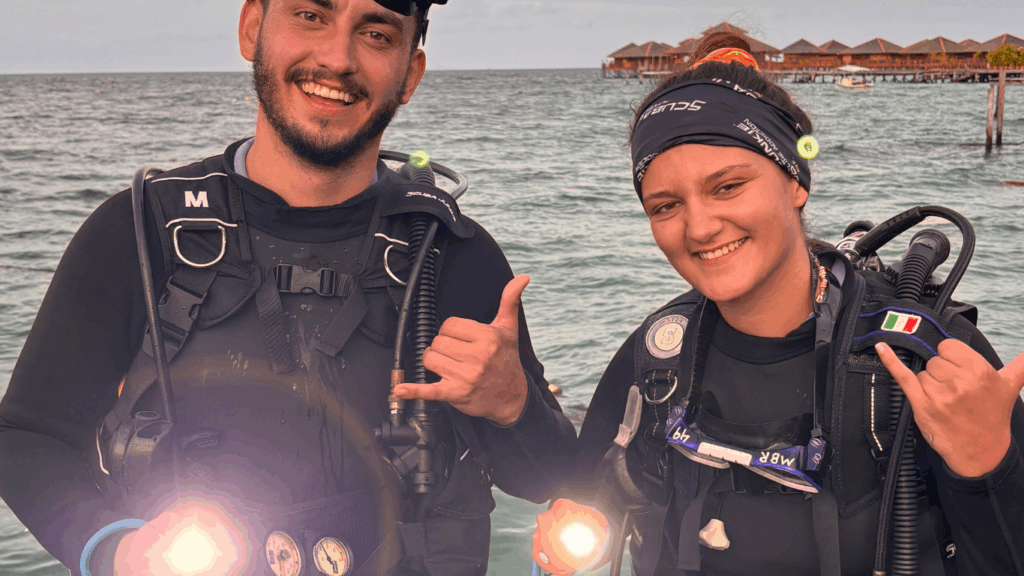
You took your first breath underwater during a Discover Scuba Diving (DSD) experience and something clicked. You fell in love with the quiet, the weightlessness, and the way time slows beneath the waves, and now you’re wondering how to progress your diving?
Your next holiday was already planned—Open Water Certification, of course. And now you find yourself craving more: more skills, more confidence, and yes… Sipadan.
At Scuba Junkie Mabul, the Advanced Open Water course is your next chapter. And we have the perfect package to take you from beginner to advanced, with a dive day at Sipadan to top it all off.
The PADI Advanced Open Water course is a two-day course that includes:
That’s six dives in total—a chance to learn, explore, and gain experience. At Scuba Junkie, we believe education should be hands-on, fun, and unforgettable.
Once you book your course, our dive team sends your PADI learning material directly to your PADI app. This means you complete the theory at your own pace, before arriving. No lost time in a classroom—you came here to dive!
We start where it matters: buoyancy. Although not a required dive by PADI, at Scuba Junkie it’s a must. Why? Because buoyancy is the foundation of every great diver.
You’ll practice hovering in various positions, perfecting trim, adjusting weights, and conserving air. At Awas, our house reef, we have platforms and structures perfect for swim-throughs and instructor-designed games. Some instructors use hoops, others use weights—but all make sure it’s both educational and fun.
Navigation starts on land with your compass. Never used one? No problem—your instructor will explain it clearly before you hit the water. Then it’s time to:
The flat, sandy bottom at Awas makes it ideal for practicing without damaging any reef.
After two dives, your stomach will be ready for our famous buffet lunch. Vegetarian, vegan, and delicious options served up in our eco-friendly restaurant. No seafood here—sustainability is part of our mission.
It’s time to choose your next dive. Here are your options:
Your deepest dive is first of the day—and there’s a reason. After a good night’s rest and time to off-gas nitrogen, your No Decompression Limit (NDL) is longest in the morning.
You’ll descend to 30m and experience:
It’s all taught in a supportive, no-stress way that builds your confidence, not your nerves.
After a surface interval, snacks, and a bit of theory recap, you head out for your last official dive. Another adventure dive of your choice—by now you’ll be moving with more ease, tracking your depth and time like a pro.
The course may be complete, but your day isn’t over. Many guests choose to go for an optional extra dive to cement their new skills. Or you can relax at the beach with a smoothie and a new scuba certification in hand.
At first, your air will disappear fast. You’ll wonder if you’ll ever master hovering. But after six dives, you will be a master in how to progress your diving and everything changes:
We see it every week—divers who arrive unsure and leave transformed.
You did it. You’re certified, confident, and ready. The final day in our Advanced Open Water + Sipadan Package is the cherry on top.
Due to Sabah Parks regulations, you’ll do two dives at Sipadan, followed by a third dive at either Mabul or Kapalai.
At Sipadan, expect:
It’s a celebration of everything you’ve learned—and everything the ocean has to offer.
Choose the package that fits your journey on how to progress your diving:
➡️ See more package options and accommodation types
All packages include:
Excludes:
Note: First day of diving will NOT be at Sipadan or Si Amil due to safety and course requirements. Courses are not conducted at these islands.
Solo traveller? A RM200 supplement applies if you’re the only participant on your dive day.
The journey from DSD to Open Water and then to Advanced Open Water isn’t just about racking up dives. It’s about growing as a diver, building skills, and gaining the confidence to take on new challenges.
And when your final dive of the course ends in Sipadan, with sharks gliding past and jackfish dancing in the blue—you’ll realize you’re no longer a beginner.
Questions on how to progress your diving? Wondering which adventure dives suit you best? Drop your thoughts in the comments below!